Pool Leak Repair Cost in 2026: A Homeowner’s Budget Guide
A comprehensive guide to pool leak repair cost, covering detection fees, repair ranges, and factors that influence pricing. Learn how to budget, compare quotes, and prevent future leaks with practical tips from Leak Diagnosis.


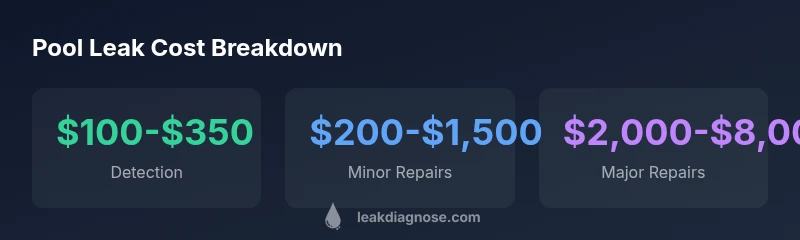
Pool leak repair cost varies widely by leak type and pool material. Detection commonly costs $100-$350, while repairs range from a few hundred dollars for minor fixes to tens of thousands for major structural leaks. Most residential projects land between $2,000 and $8,000, influenced by pool finish and accessibility. Leak Diagnosis Analysis, 2026 indicates these patterns across common scenarios.
Why pool leak repair cost varies
Pool leak repair cost varies widely due to factors like leak type, pool finish, location, and access. The first big driver is the underlying cause: a small surface crack vs. a buried plumbing leak or a major structural compromise. Surface leaks are often cheaper to address than shell cracks or substructure damage. Access constraints can also drive up labor time; a pool built with gunite or plaster might require different repair methods than a vinyl liner pool. Climate and contractor availability influence pricing across regions, and seasonal demand can push estimates higher in peak months. Additionally, the choice of fix—patching, replastering, or full shell repair—significantly changes the total pool leak repair cost. Finally, permit requirements, inspection fees, and water disposal costs can add to the final bill. Understanding these variables helps homeowners budget more accurately and avoids sticker shock when the contractor's quote arrives. In general, homeowners should view this as a staged cost rather than a single fix.
Breaking down the cost by leak type
Different leak scenarios follow distinct cost patterns. Detection is the first step; depending on methods (dye tests, pressure tests, ultrasonic listening), costs typically run $100-$350. For minor surface leaks in tile or plaster, repairs often involve resealing joints or patching, costing $200-$1,500. Plumbing leaks in pipes or fittings can require excavation or trenching, at $400-$2,500. Cracks in the shell or replastering can be a major cost driver: $2,000-$8,000 for replastering, or more if structural reinforcement is needed. In severe cases with significant damage, major structural repairs or complete shell replacement can push total costs into higher ranges, sometimes exceeding $10,000-$15,000 depending on size and materials. In hot climates, saltwater pools may add material costs. Insurance considerations and warranty coverage can also influence the out-of-pocket expense. By categorizing the leak into detection, minor, plumbing, shell, or structural, homeowners can estimate likely costs before requesting quotes.
Typical cost ranges for common fixes
Here is a concise snapshot of what you might expect for common pool leak fixes. Prices assume standard residential pools and typical access. Always request an itemized quote to confirm what is included in each line item.
- Detection & Testing: $100-$350.
- Minor Repairs (tile seals, patching small cracks): $200-$1,500.
- Plumbing Leaks (pipes, fittings): $400-$2,500.
- Shell Cracks/Replastering: $2,000-$8,000.
- Major Structural Repairs: $5,000-$15,000. Note that these ranges can shift based on pool type (concrete, vinyl, fiberglass), finish, and regional labor costs. For example, replastering may be more expensive on a plaster finish than on a fiberglass pool. This variability is why a professional inspection often saves money by identifying the exact source first.
How to diagnose leaks cost-effectively
Start with a careful visual check of the pool area for damp spots, soft decking, or unexplained water loss. Track water usage by noting weekly fill volumes and running rates of features like fountains. A bucket test on the water level can help differentiate evaporation from leaks. If these checks indicate a leak, request a professional inspection that may use dye tests, ultrasonic devices, or pressure tests to locate hidden failures. Avoid expensive exploratory digging unless the spec is clear. Compare multiple quotes and ask for itemized pricing, including any service call fees, diagnostic time, and disposal costs. Finally, consider combining detection with a repair plan to minimize repeated access and returns.
Budgeting and financing options
Plan for pool leak repair cost by building a realistic budget with a contingency. Start with an itemized estimate, then add a 5-15% contingency for unforeseen issues. If the project is large, discuss staged repairs to spread out costs and preserve pool usability. Research financing options such as home improvement loans or contractor financing, and check whether any professional warranties cover partial costs. If you hold a homeowner's insurance policy, ask whether leaks arising from accidental damage are covered; most typical wear-and-tear leaks are not. Compare quotes from at least two licensed contractors and verify licenses and insurance.
Preventive steps to reduce future leaks
Prevention is cheaper than constant repair. Regularly inspect and tighten connections at skimmers, returns, and equipment pads. Use proper chemical balance to minimize corrosion and calcium buildup on plaster or concrete shells. During off-season, winterize equipment, cover the pool, and ensure that decking drainage does not direct water toward the shell. Schedule periodic professional inspections every 1-2 years, especially after major weather events or renovations. Address small issues promptly—early sealing and patching can keep long-term costs lower than waiting for a major failure.
What to expect in a professional quote
A thorough quote should itemize each cost: detection/diagnostics, materials, labor, permits, and disposal. It should specify the leak source, recommended repair method, and the projected timeline. Look for notes on warranties and the possibility of follow-up visits if leaks persist. Ask about potential cost-saving alternatives, such as patching or partial replastering, and request a written plan with milestones. A reputable contractor will explain uncertainties and provide a fair comparison against your documented observations from tests.
Cost breakdown by leak type
| Leak Type | Typical Cost Range | Notes |
|---|---|---|
| Detection & Testing | $100-$350 | Dye tests, ultrasonic devices, pressure tests |
| Minor Repairs | $200-$1,500 | Tile seals, small cracks, resealing joints |
| Plumbing Leaks | $400-$2,500 | Pipes or fittings; excavation may be needed |
| Shell Replastering | $2,000-$8,000 | Concrete/plaster pool finishes |
| Major Structural Repairs | $5,000-$15,000 | Extensive shell or substructure work |
Questions & Answers
What is the average cost to detect a pool leak?
Detection costs typically range from $100 to $350, depending on the method and equipment used. A thorough diagnosis can save money by pinpointing the source before expensive repairs begin.
Detection usually costs between one hundred and three hundred fifty dollars, with savings possible when the source is found quickly.
What factors influence pool leak repair cost?
Key factors include leak type (surface vs. shell vs. plumbing), pool material and finish, accessibility, regional labor rates, and whether replastering or structural work is needed.
Leak type, finish, accessibility, and local labor rates drive the price, plus whether major repairs are required.
Can I DIY leak detection safely?
DIY detection can help with basic observations, like checking for evaporation and performing bucket tests. However, locating hidden leaks often requires professional equipment and expertise to avoid missing the source or causing further damage.
You can do simple checks at home, but hidden leaks usually need a professional with the right tools.
How long does pool leak repair typically take?
Most small-to-mid repairs take days rather than weeks, depending on access and cure times for materials. Major structural work can extend to a couple of weeks or more, especially if permits are involved.
Most fixes take days; bigger structural work can stretch into weeks.
Do homeowners insurance policies cover pool leaks?
Many pool leaks from wear and tear are not covered. Some accidental damages might be covered under specific policies or endorsements. Always check your policy and talk to your insurer before major repairs.
Insurance often doesn’t cover wear-and-tear leaks, but check your policy for any possible coverage.
“Early, accurate leak detection can dramatically cut total pool repair costs by preventing unnecessary digging and misdiagnosis.”
Main Points
- Get professional diagnostic before planning repairs
- Costs depend on leak type and pool finish
- Request itemized quotes and compare
- Invest in preventive maintenance to reduce future leaks