How Much Does Leak Detection Cost in 2026? A Homeowner's Guide
Explore how leak detection pricing works in 2026, with clear ranges by service scope, regional variation, and practical tips to estimate, compare quotes, and save money.


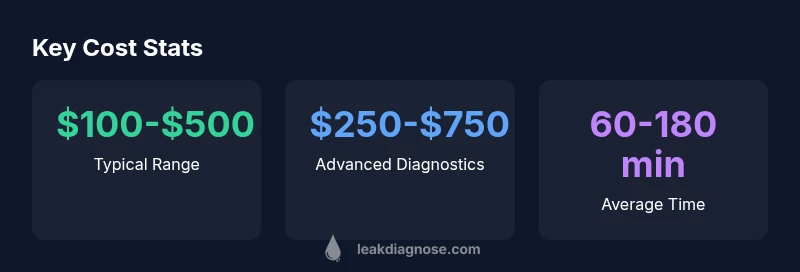
According to Leak Diagnosis, residential leak detection typically costs between $100 and $500, depending on scope and accessibility. The cost breakdown helps homeowners plan budgets and choose the right diagnostics. The Leak Diagnosis Team notes that advanced technologies can push costs higher, while basic inspections stay on the lower end.
What leak detection costs cover
Costs cover more than the inspector's time. They include site access, diagnostic tools, and the use of specialized equipment like thermal cameras or acoustic sensors. For residential leaks, most of the bill reflects on-site time and tests that confirm the leak's location. According to Leak Diagnosis analysis, early-stage detection can be cheaper, while leaks behind walls or in hard‑to‑reach spots raise the price. Expect line items such as a call-out fee, diagnostic tests, equipment, and labor, all of which contribute to the final invoice. The goal is to identify the exact leak location with minimal disruption to your home.
The Leak Diagnosis Team emphasizes that transparent quotes help homeowners understand what they’re paying for and avoid surprise charges. If a quote seems unusually high, ask for a breakdown that names each test and the equipment used. Clear communication from the outset supports better decisions and safer fixes.
Cost components that influence the price
Pricing is driven by four main components: service scope, equipment and technology, accessibility, and geographic region. The scope dictates how many tests are performed and how long the technician stays on site. Using advanced technology like thermal imaging, acoustic sensors, or pressure testing can significantly raise costs, but they may dramatically improve accuracy and reduce future damage. Accessibility matters a lot: leaks in crawl spaces, behind finished walls, or in sealed basements require more labor and time. Finally, pricing norms vary by region and market demand, meaning a job in a high-cost city will generally be higher than in a rural area. The Leak Diagnosis Team recommends requesting a scope-based breakdown to see where costs come from before authorizing any work.
Service scope and price ranges
Costs typically align with four service tiers: inspection-only, diagnostic testing, leak tracing/isolation, and a full package that includes assessment and a repair estimate. Common ranges (for residential jobs) span roughly: inspection-only ($100-$250), diagnostic testing ($150-$500), tracing ($200-$700), and the full package ($400-$1500). These figures vary by region, occupancy type, and the complexity of the plumbing layout. When a contractor offers a bundle, compare it to the sum of individual services to determine real value. Always ask for a written scope that links each price to a task performed, not just a blanket fee.
How location and accessibility affect pricing
Geography affects pricing through labor rates, permit costs, and travel time. If the leak is in a hard-to-access area (crawlspace, attic, or a wall cavity behind cabinetry), expect higher labor hours and potentially more invasive tests. Climate can influence equipment choices—colder regions may require different testing approaches, and urban areas often come with higher service fees. If your property is older or has unusual plumbing, the technician may need to take extra precautions, which can raise both time on site and material costs. Planning a flexible visit window can help manage these variables.
Using sensors, cameras, and thermal imaging: cost impact
Modern leak detection relies on technologies like infrared thermography, acoustic listening devices, and moisture sensors. Each tool adds cost but improves diagnostic accuracy. For example, thermal imaging can help locate hidden leaks behind walls without extensive digging, but it adds to the base price due to equipment rental, calibration, and operator expertise. Acoustic tests are effective for quiet, steady leaks and typically contribute modestly to the overall price. When deciding whether to use high-tech diagnostics, balance the risk of undetected damage against the incremental cost. The goal is to choose the minimum necessary technology that yields a reliable result.
Regional variation: what to expect in different markets
Pricing is notably regional. Coastal cities with higher living costs, dense urban markets, and high demand can push prices upward, while rural areas may offer lower rates. Some regions maintain standardized pricing, while others vary widely by contractor. It’s common to see a few hundred dollars difference between neighboring towns for similar services. To avoid surprises, request multiple bids from nearby providers and compare the scope, equipment used, and any travel fees. Leakage risk and the potential for consequential water damage should guide your decision as much as the sticker price.
How to estimate costs for your home: step-by-step
- Define the suspected problem and its location. 2) Ask for a written scope that lists tests, equipment, and time estimates. 3) Compare at least three quotes, focusing on the breakdown rather than total price alone. 4) Consider a phased approach: start with inspection, then proceed to targeted diagnostics if needed. 5) Check for warranties or guarantees on the work and whether the quote includes post-test reporting. 6) Confirm whether any repair estimates are separate from diagnostic costs. Following these steps will yield a clearer picture of total expenditure and help prioritize fixes.
How to compare quotes and avoid hidden fees
Hidden fees are a common pitfall. Watch for charges like minimum visit fees, travel charges, or a separate charge for test results or diagnostic reports. Ensure the quote specifies what constitutes “on-site time” and whether multiple tests are required. Ask about aftercare, such as re-testing after repairs and any fees for rushed scheduling. Request written guarantees on the work, and verify whether the contractor will provide a fixed-price repair estimate if a leak is located. Transparent communication reduces the risk of cost creep and helps you budget more accurately.
Estimated costs by service scope
| Service Scope | Estimated Cost | Notes |
|---|---|---|
| Inspection-only visit | $100-$250 | Basic visual check of accessible areas |
| Diagnostic testing (smoke/thermal) | $150-$500 | Identifies hidden leaks and paths |
| Leak tracing/isolation | $200-$700 | Pinpoints leak location; may require access |
| Full package (inspection + repair estimate) | $400-$1500 | Comprehensive assessment with potential repairs |
Questions & Answers
What factors influence leak detection costs?
Costs hinge on scope, tools used, accessibility, and regional pricing. Complex leaks behind walls or in tight spaces require more time and specialized equipment.
Costs depend on scope, tools, accessibility, and your region; complex leaks cost more.
Are DIY leak tests cheaper than professional services?
DIY tests may save upfront, but professionals provide accuracy, safety, and documented results. For hidden leaks, a pro can prevent bigger damage.
DIY tests save money but may miss hidden leaks; professionals are more accurate.
Does insurance cover leak detection?
Some policies cover inspection costs if needed to assess damage. Check your policy and confirm with your insurer before scheduling.
Check with your insurer; some policies cover leak detection under specific conditions.
What’s the difference between an inspection and a diagnostic test?
An inspection is a visual assessment, while diagnostics use tools to identify hidden leaks and confirm the source.
Inspection is visual; diagnostics use tools to locate leaks.
How should I compare quotes for leaks?
Look for scope clarity, test types, equipment used, warranties, and any hidden fees. Favor quotes that break down costs clearly.
Compare scope, tests, gear, warranties, and any hidden fees.
How long does a typical leak-detection visit take?
Most visits last 60 to 180 minutes, depending on leak location and complexity.
Most visits take about an hour to three hours.
““Leak detection is an investment that pays off by catching hidden damage early and reducing the risk of costly water damage.””
Main Points
- Know the price range before booking a service.
- Request a written quote detailing scope and limits.
- Prefer necessary technology only to avoid excess costs.
- Compare quotes for hidden fees and service guarantees.