How Much Is a Leak Down Test? Pricing, Process, and Guidance
Learn how much a leak-down test costs for home plumbing, what factors affect pricing, what’s included, and how to prepare. Practical guidance from Leak Diagnosis for homeowners.


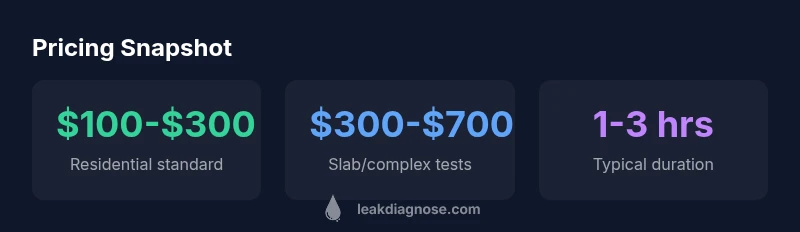
We answer: How much is a leak down test? The typical price for a residential leak-down test ranges from $100 to $300, depending on system complexity, location, and whether a service call is needed. For complex installations or slab leaks, costs can rise to $400–$700. Always request a written quote and ask what’s included (diagnosis, shutoffs, dye testing, and repair estimates).
What is a leak-down test and where it applies
A leak-down test is a diagnostic procedure used to assess the integrity of piping and fixtures by pressurizing a specific section of the system and tracking pressure loss over time. In residential settings, technicians typically perform leak-down tests to locate hidden leaks in supply lines, drainage stacks, and appliances, or to verify the integrity of installed fixtures after repairs. The test helps distinguish between an active leak and transient issues caused by air pockets or temperature changes. For homeowners, understanding when to schedule a leak-down test can prevent water damage, reduce wasted water, and minimize unnecessary repair costs. According to Leak Diagnosis, the test is most effective when paired with a thorough visual inspection and, if needed, dye testing to trace the path of a leak. The process is non-destructive and provides a baseline from which to plan repairs. In some cases, plumbers may use specialized equipment such as pressure transducers, manometers, and inert tracer gases, depending on the pipe material and system design.
How pricing is determined for leak-down tests
Cost is driven by several factors, not just the test itself. First, region plays a major role: urban areas with higher labor rates tend to see higher prices. Second, system complexity matters: a simple faucet supply line is cheaper to test than a long network of buried pipes or a slab foundation run. Third, whether the service includes diagnostic tracing, dye testing, or follow-up repairs will shift the total. Finally, there may be a basic dispatch or diagnostic fee if a technician must visit the home. Based on Leak Diagnosis analysis, you can expect standard residential tests in the ballpark of $100-$300, with more involved scenarios reaching $400-$700. Always ask for a written estimate detailing labor, materials, and any subsequent repair costs so you’re not surprised. For homeowners, this upfront clarity is worth the cost, especially when the test can prevent extensive water damage.
What the test includes: steps and equipment
Typically, a leak-down test follows several steps: pre-inspection, isolating the test zone, applying pressure (air or water), monitoring pressure decay with gauges or digital transducers, and verifying results with dye tracing or direct measurements. Equipment ranges from simple hand-held gauges to digital pressure transducers connected to data-logging software. The method depends on the system: air pressure tests are common for potable lines, while water-column or tracer-based methods are used for drain or gas lines. The goal is accuracy with minimal disruption. In many residential jobs, testers also perform a quick functional check of fixtures and shutoffs to ensure everything resumes normally after testing. Leak Diagnosis notes that combining pressure data with dye tracing yields the most reliable results.
DIY vs professional testing: what to know
While some homeowners attempt basic dye tests or visual checks, a full leak-down test requires specialized equipment, training, and safety considerations. DIY pressures can cause unintended pipe swelling or leaks, misinterpretation of results, or compromising gas or water safety. Hiring a licensed plumber or a leak specialist reduces risk and ensures compliance with local codes. Expect a professional to document the procedure, record pressure readings, and provide a clear report with findings and recommended repairs. Some contractors also offer a bundled service that includes both testing and a repair estimate, which can be more convenient and cost-effective in the long run. Leak Diagnosis emphasizes that safety and accuracy trump speed; a well-executed test may cost more upfront but saves money by preventing undetected leaks and costly water damage.
Common scenarios and typical price ranges
Faucet or supply-line leaks under a sink are common and usually cheaper to test, while slab leaks or buried pipe sections are more challenging and drive up both time and price. Old or mismatched materials may complicate testing and trigger additional diagnostics. In multi-story homes, testers may need access from multiple floors, extending duration and cost. As a general rule, plan for $100-$300 for standard tests, $300-$700 for slab or complex tests, and extra charges if emergency service is required. The range reflects regional differences and the tester’s equipment. Throughout, keep the lines of communication open and request a step-by-step explanation of what each test will entail.
How to prepare for a leak-down test
Before the technician arrives, clear access to test zones; remove valuables; label shutoffs; have recent water usage records ready. Explain what is being tested and avoid turning water on/off during the test unless instructed. If you suspect gas lines or older materials, inform the contractor; testing gas lines requires specialized safety protocols. Collect the relevant permits or insurance documentation if required by your municipality. The goal is to minimize interruptions and ensure accurate results. Leak Diagnosis suggests verifying the test’s scope in advance and confirming what happens if a leak is found (repair estimates, potential follow-up visits).
Reading the results and next steps
After the test, the technician will provide a results summary, indicate leak location if found, and recommend repair options. If no leaks are detected, you’ll typically receive a stamped report and a confidence statement. If a leak is found, expect a detailed plan outlining the repair approach, cost estimates, and a recommended timeline. Some leaks can be resolved with simple tightening or replacing worn seals; others may require pipe replacement or trench/patch work. In all cases, the plan should include post-repair verification testing to confirm the fix. The takeaway is that a leak-down test is a diagnostic tool, not a guarantee; it narrows down the problem and guides effective remediation.
Alternatives and maintenance after testing
Other methods to locate leaks include dye tests, infrared thermography, acoustic listening devices, and pressure-decay testing. Each method has advantages and limitations depending on pipe material, accessibility, and water pressure. After testing, adopt a maintenance routine: inspect fixtures regularly, fix small drips promptly, monitor for damp spots, and schedule preventive inspections every 1-2 years. For ongoing water-damage risk, consider water-sensing devices or smart leak detectors. Throughout, keep a basic inventory of tested zones and the year of test for reference.
How to choose a contractor for leak-down testing
Look for licensed professionals with a proven track record in leak testing, clear written quotes, and a transparent process. Read reviews and request references. Ask about equipment used, test methods, and whether results include a repair plan. Compare multiple quotes to understand price ranges and what is included. Finally, verify that the quote covers both diagnostic and post-test verification to ensure you’re not paying twice.
Pricing snapshot by test type
| Service Type | Typical Range (USD) | Notes |
|---|---|---|
| Residential leak-down test | 100-300 | Isolates area and measures pressure decay |
| Slab leak test | 300-700 | More complex, involves buried piping |
| HVAC/plumbing test | 150-400 | Tests air or refrigerant lines |
| Emergency diagnostic call | 50-150 | Dispatch fee plus initial inspection |
Questions & Answers
What is a leak-down test and why is it used?
A leak-down test assesses piping integrity by pressurizing a section of the system and measuring pressure loss to locate leaks. It helps distinguish active leaks from air pockets and temporary pressure fluctuations.
A leak-down test checks pipes for leaks by pressurizing a section and watching how the pressure holds.
How much does a leak-down test cost on average?
Costs vary by region and project complexity. For most homes, expect about $100-$300 for a standard test, with higher costs for slab leaks or complex networks.
Most homes pay between a hundred and three hundred dollars for a standard test.
Is a DIY leak-down test safe?
DIY testing can pose safety risks if you apply too much pressure or interfere with gas lines. It’s generally safer to hire a licensed professional.
DIY testing can be risky; it's safer to hire a pro.
How long does a leak-down test take?
Duration depends on the size and accessibility of the system. Most residential tests take 1-3 hours.
Most tests take about one to three hours.
What happens if a leak is detected?
The tester locates the leak and provides repair options, costs, and a timeline. A post-test verification confirms the fix.
If a leak is found, you’ll get repair options and a timeline.
“A leak-down test provides a controlled assessment of piping integrity by measuring pressure loss over time, which helps pinpoint hidden leaks without destructive testing.”
Main Points
- Get a written quote before scheduling.
- Expect price ranges vary by system and region.
- Ask what’s included in the test and any follow-up costs.
- Consider professional testing for accurate results and safety.