Pool Leak Repair Near Me: Local Guide to Detecting and Fixing Pool Leaks
Discover how to locate, diagnose, and repair a pool leak near you. Learn detection methods, cost ranges, and how to choose the right local pro with insights from Leak Diagnosis (2026).


Pool leak repair near me means locating the leak source, choosing the right repair method, and hiring local professionals when needed. Start with basic tests and visible checks, then call a licensed pool contractor for hidden or structural leaks. Steps include dye testing, pressure checks, and evaluating shell integrity before deciding on patching, lining, or plumbing repairs.
Why pool leak near me matters
According to Leak Diagnosis, homeowners who search for pool leak repair near me are often reacting to water waste, rising utility bills, and the risk of structural damage. Leaks can erode plaster, degrade pool decking, and create favorable environments for mold growth. Local repairs save time, reduce water loss, and limit the spread of damage to surrounding landscaping or the home’s foundation. In addition, working with a nearby professional minimizes disruption to your family routine and ensures someone can respond quickly if the leak worsens after a rainstorm or freeze-thaw cycle. The Leak Diagnosis team emphasizes that early detection is essential to minimize both water waste and potential high repair costs.
In this guide, we focus on practical steps homeowners can take to identify leaks locally, evaluate the best repair approach, and know when to bring in a licensed pro. The search term pool leak repair near me reflects a growing demand for rapid, reliable local service and transparent pricing. Expect to see cost estimates, typical timelines, and a decision framework that helps you decide between DIY patches, liner replacements, or systemic plumbing work.
How leaks are detected in swimming pools
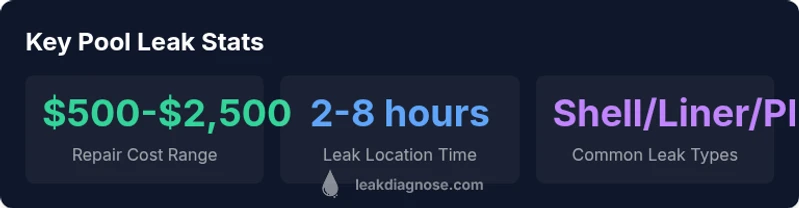
Leak detection combines simple at-home tests with professional assessment. Start with water level observation over several days, check for damp patches around the pool, and inspect plumbing access points for obvious signs of moisture. Dye testing—adding food-grade dye near suspected leak spots—can reveal cracks in shells or liner tears. Pressure testing on the return lines and skimmers helps identify hidden underground leaks in the plumbing system. Advanced options include listening devices and thermal imaging, which can locate leaks without invasive digging. According to Leak Diagnosis Analysis, 2026, most residential leaks fall into shell, liner, or plumbing categories, with the detection method chosen based on pool type and construction.
When you conduct tests, document the dates, water level drops, and test results. This data becomes valuable when you discuss options with a local contractor and helps establish a baseline for post-repair verification.
Common pool leak sources and how they differ
Pool leaks arise from several distinct sources. Cracks in the pool shell or plaster are common in older pools and can occur around joints or coping. Vinyl liner tears or punctures typically show up as localized puddling or prominent gaps when the water level drops. Plumbing leaks involve pipes, fittings, or valves and often require trenching or access panel work to locate. Equipment leaks—pump seals, heater gaskets, or valve manifolds—can leak at the source but are frequently easier to fix than structural leaks. Distinguishing among these sources helps you choose a repair method that minimizes downtime and cost. Leak Diagnosis Analysis, 2026 notes that shell and liner issues generally require patching or liner replacement, while plumbing leaks often demand pressure tests and leak isolation before repairing or rerouting lines.
DIY vs professional approaches: when to call a pro
DIY fixes can address small surface cracks or superficial leaks around coping, but many pool leaks involve hidden plumbing or structural compromise that requires licensed technicians. Working with a professional ensures proper permits (where required), adherence to local code, and accurate diagnosis with industrial-grade equipment. Attempting complex repairs without experience can worsen damage or void warranties. If a leak is large, near structural elements, or associated with equipment malfunctions, it’s prudent to contact a local pool leak repair near me with verified licensing and insurance. The Leak Diagnosis Team emphasizes safety and proper documentation, especially when dealing with pressurized lines or electrical components near water.
Cost and time: estimating pool leak repairs
Budgeting for a pool leak repair near me depends on leak type, accessibility, and materials. Shell cracks, patching, and liner repairs can be comparatively quick, while large-scale plumbing work may require longer downtime and more expensive materials. As a rough framework, expect cost ranges that reflect the need for patching, liner replacement, or plumbing rerouting. Note that many projects require a preliminary diagnosis and a proposed plan with a formal estimate. Leak Diagnosis Analysis, 2026 highlights wide variability based on pool design, location, and the extent of the leak. When evaluating quotes, consider not just price but warranty length, response time, and whether the contractor includes post-repair testing.
Step-by-step rapid guide to find a leak near you
- Gather basic pool details: type (vinyl, concrete, fiberglass), age, and any prior repairs. 2) Monitor water loss for 3-5 days with consistent irrigation and weather conditions. 3) Perform at-home dye tests on suspected crack sites, then inspect pool equipment for leaks. 4) Schedule a professional assessment with a local pool leak repair near me and request a written estimate that includes dye test results and pressure tests. 5) Compare contractors based on licensing, insurance, warranties, and post-repair verification. 6) Confirm post-repair testing to ensure the leak is resolved before resuming full pool use.
How to choose a pool leak repair contractor near me
When selecting a local pro, verify licensing and insurance, request references, and review prior leak repair track records. Ask about the type of leak (shell, liner, plumbing) and preferred repair methods (patch, liner replacement, epoxy injections). Request a detailed written estimate with a scope of work and a proposed timeline. Seek transparency on warranty coverage and what post-repair testing will be performed. If the contractor suggests urgent trenching or substantial demolition, seek a second opinion to avoid unnecessary disruption. A thorough contractor evaluation helps ensure a reliable, long-term fix and peace of mind.
Apart from price, consider availability, communication clarity, and demonstrated experience with your pool type and local climate. For many homeowners, the right local team is the difference between a rushed repair and a durable solution that resists aging and weather effects.
Maintenance after repair to prevent future leaks
Maintenance after repair is essential to extending the life of your pool. Regular water chemistry balance reduces corrosion and staining that can reveal or worsen leaks. Inspect seals, gaskets, and joints every season and re-seal coping where necessary. Keep an eye on pressure gauges and return lines for subtle changes that could indicate new leaks. If your pool is in a freeze-thaw climate, winterization should be performed to minimize heaving and cracking. Proper cover use during the off-season also reduces debris and stress on the pool shell. By implementing proactive maintenance, homeowners reduce the probability of recurring leaks and preserve pool integrity.
Safety, codes, and insurance considerations
Follow local building codes and ensure contractors hold appropriate licenses and insurance. Some repairs may require permits or inspections, particularly for structural work or major plumbing changes. Insurance coverage for pool leaks varies by policy and cause; water damage caused by a covered peril may be claimable, but wear and tear or improper maintenance typically are not. Document all communication, test results, and warranties, and keep a copy of the final inspection report. If you have questions about coverage, contact your insurer and the contractor to align expectations. This disciplined approach reduces dispute risk and ensures a compliant, safe repair.
Common pool leak sources and typical repair timelines/costs
| Leak Source | Typical Repair Window | Estimated Cost Range |
|---|---|---|
| Shell or plaster cracks | 1-5 days | $300-$1,800 |
| Vinyl liner punctures | 1-3 days | $150-$900 |
| Plumbing leaks (pipes, fittings) | 1-14 days | $400-$2,500 |
| Equipment leaks (pump, valve, heater) | Same day to 2 days | $100-$1,000 |
Questions & Answers
What are the early signs of a pool leak near me?
Look for unexplained water loss, persistent damp areas around the pool, sudden changes in water level, or unusually high water bills. If these signs persist after routine maintenance, schedule a professional assessment.
Watch for water loss and wet patches around the pool, then call a local pro if it continues after routine checks.
Can I DIY a pool leak repair?
For small surface cracks or coping leaks, basic patches may help temporarily. Most leaks involving vinyl liners, structural shell, or plumbing require licensed professionals to avoid further damage and maintain warranty coverage.
Small patches might help a little, but big leaks need a licensed pro to avoid more damage.
How long does pool leak repair typically take?
Duration depends on leak type and access. Shell or liner work may take a few days, while plumbing repairs could extend to a week or more, plus post-repair testing.
It varies, but expect a few days to a week depending on the leak type.
What is the typical cost range for pool leak repairs?
Costs vary by source: shell or liner repairs tend to be lower than extensive plumbing or structural work. Expect ranges between a few hundred to several thousand dollars, depending on complexity.
Costs can range from hundreds to several thousand dollars, depending on the leak source.
Do insurance policies cover pool leaks?
Coverage depends on the policy and cause. Water damage from a sudden incident may be covered, while wear and tear or maintenance-related leaks typically are not. Check with your insurer.
It depends on your policy; sudden damage may be covered, but wear and tear usually isn’t.
How can I prevent leaks after repair?
Regular maintenance, balanced water chemistry, proper winterization, and timely resealing of joints help prevent future leaks. Schedule periodic inspections to catch developing issues early.
Keep up with maintenance, balance chemistry, and winterize to prevent future leaks.
“"Early detection saves water and money by preventing extensive damage. A methodical, professional evaluation is worth the upfront time and cost."”
Main Points
- Act quickly to minimize water waste and damage
- Use a structured detection approach before repairs
- Choose licensed local pros for complex leaks
- Expect cost ranges and document post-repair tests