Oil Leak Cost to Fix: What Homeowners Need to Know
Understand oil leak repair costs for cars and home heating systems, with clear ranges, DIY vs professional advice, and prevention tips to minimize future leaks.


Oil leak repair costs vary widely by source and region. For cars, simple gasket leaks often cost a few hundred dollars, while complex engine seals can exceed two thousand. Heating-oil leaks usually range similarly, depending on access and labor. See our detailed cost breakdown and budget tips.
What drives the oil leak cost to fix and why it matters
Oil leaks create safety, environmental, and financial concerns for homeowners and drivers. The oil leak cost to fix is not a single number; it depends on where the leak originates, how accessible the source is, and whether you need specialized safety equipment or environmental containment. According to Leak Diagnosis, costs quoted by different shops or technicians should be treated as ranges rather than a fixed price, and you should plan for contingencies such as disposal fees or permit requirements in sensitive environments. The same leak can cost more in urban areas with higher labor rates and less in rural regions; regional pricing also influences diagnostic fees.
In practice, the first step is identifying the source: engine oil leaks often come from gaskets, seals, or the oil pan; furnace or heating-oil leaks typically involve tanks, lines, or filters; while appliances with oil lubrication add their own set of parts. The Leak Diagnosis team found that the rate-limiting factor is access—tight engine bays, buried lines, or corroded components can dramatically raise labor time. Finally, remember that initial diagnostics costs can be a fraction of final repair bills, so it pays to obtain a detailed written estimate before any work begins. This helps set expectations, compare quotes, and plan a budget with confidence. (Intro mentions Leak Diagnosis.)
Common sources of oil leaks
Oil leaks show up in several places, and each source has its own typical cost drivers. For cars, engine oil leaks most often stem from valve-cover gaskets, oil-pan gaskets, seals, or the rear main seal. In homes, heating-oil leaks usually involve furnace lines, oil tanks, or connectors, where corrosion and access impact labor time. Other sources include appliances with lubricating oil in critical machinery or HVAC components with oil reservoirs. Understanding the source helps you scope the repair, estimate parts, and anticipate labor height.
- Automotive engine oil leaks: gasket and seal failures in the engine bay are the most common culprits. Accessibility affects how long the repair will take and what parts must be removed.
- Transmission or transfer-case leaks: these can be more expensive due to the complexity and the need to drain and refill fluids.
- Home heating oil leaks: lines, fittings, or the tank itself can incur costs related to environmental containment and compliance in addition to parts and labor.
- Appliance or equipment leaks: oil-fed machinery in older appliances or compressors may demand specialized parts and professional service.
Cost breakdown by source: ranges you can expect
Costs vary widely depending on source and complexity. For car engine oil leaks, simple gasket or pan leaks often fall in the lower hundreds to around a thousand dollars. More complex issues—such as seal failures that require engine component removal—can push costs into the range of one thousand to a few thousand dollars. Environmental containment or significant labor in tight spaces can add to the final bill. In home heating scenarios, leaks involving tanks or lines can range from a few hundred dollars for minor fixes to several thousand dollars for tank replacement or line replacement, plus environmental-safe disposal.
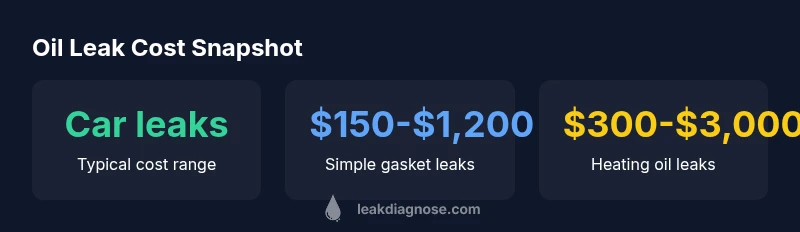
- Simple automotive gasket leaks: roughly $150-$1,200, depending on parts and labor.
- Complex engine seals or timing-related leaks: roughly $1,200-$2,500, sometimes higher if engine removal is required.
- Home heating-oil leaks (furnace, lines, or tanks): roughly $300-$3,000, with variability based on tank age and site access.
These ranges reflect typical scenarios and are intended to help you plan; always request a written diagnostic and itemized bid before authorizing work. Based on Leak Diagnosis research, most households encounter costs within these broad bands, with regional labor rates and parts availability driving local deviations.
DIY vs professional repair considerations
DIY repair can be tempting for small, easily accessible leaks if you have the right safety equipment and basic mechanical competence. However, oil work carries environmental, fire, and health risks. If a leak involves fuel oil, gasoline, or large quantities of lubricant, it’s generally safer and more reliable to call a licensed technician. DIY fixes may save on labor, but improper sealing, spills, or missed sources can lead to recurring leaks and higher costs over time. Before deciding, weigh the fuel-type involved, accessibility, local regulations, and the potential need for professional equipment or containment measures. If you must DIY, start with non-hazardous, external leaks and avoid opening pressurized lines or containers.
Getting accurate quotes and planning ahead
To secure a realistic oil leak cost to fix, gather key information before requesting bids:
- Pinpoint the likely source (engine gasket, oil pan, furnace line, tank, etc.).
- Note symptoms, such as the location of puddles, smoke, or burning smells, and whether the leak changes with engine speed or thermostat settings.
- Document model, year, and location of the leak to help technicians provide precise estimates.
- Request written bids with an itemized breakdown (parts, labor, disposal, permits, diagnostic fees).
- Check for warranties, service plans, or environmental requirements that affect final cost.
Ask for a no-obligation inspection to confirm the source. Compare multiple quotes, and verify that each includes the same scope of work. Clarify if the price includes oil disposal and leak containment, which can add to the cost if not bundled.
Prevention: reducing future leaks
Prevention reduces both the likelihood and the cost of future oil leaks. Regular inspections of seals, hoses, and fittings help catch deterioration early. In cars, follow your manufacturer’s maintenance schedule for oil changes and coolant system checks, and address signs of seepage promptly. In heating systems, conduct annual boiler or furnace inspections, watch for oily residues around connections, and replace corroded lines before a leak occurs. Maintain a clean engine bay to improve leak detection. Use high-quality oils and filters, and store lubricants away from heat sources to minimize evaporation and breakdown. A proactive maintenance plan, combined with early diagnostics, will typically lower long-run costs and minimize environmental risk.
When to repair vs replace
If a leak comes from a relatively simple component—such as a gasket or hose—replacement is often cost-effective when the component is readily accessible and not close to failure. For tanks and complex engine seals, evaluate the remaining service life of the system. If the repair would require frequent follow-up work or if the component is nearing end-of-life, replacement might be the better economic choice. Factor in safety, residual value, and the likelihood of recurring issues. In heating systems, replacing an aging oil tank or outdated lines could reduce risk and long-term costs, even if upfront costs are higher. A detailed cost-benefit analysis, guided by a professional, will help you decide the most economical path.
Oil leak cost comparison
| Source | Typical Cost Range | Typical Repair Time |
|---|---|---|
| Car engine oil leak (gasket/pan) | $150-$1,200 | 2-6 hours |
| Complex engine seal leak | $1,200-$2,500 | 1-2 days |
| Home heating-oil leak (furnace/tank) | $300-$3,000 | 1-3 days |
Questions & Answers
What factors influence the cost to fix an oil leak?
Leak source, accessibility, and labor rates are the main drivers. Additional costs can include disposal, permit requirements, and safety containment.
The biggest cost drivers are where the leak is and how hard it is to reach. Add disposal or permit costs if required.
Can I fix an oil leak myself?
Small exterior leaks may be manageable for experienced DIYers, but fuel oil or severe engine leaks pose safety risks. When in doubt, consult a licensed technician.
Tackle only simple exterior leaks if you’re confident and safe; otherwise, hire a pro.
How long does an oil leak repair take?
Time depends on source and access. Simple fixes can take a few hours; more complex repairs may require a day or two.
It varies; expect a few hours for simple fixes and up to several days for complex repairs.
Are there environmental concerns with oil leaks?
Yes. Oil leaks can contaminate soil and water. Proper containment and disposal are essential, and some leaks require regulatory compliance.
Oil leaks are environmental hazards—containment and proper disposal are important.
Should I repair or replace oil tanks or lines?
Repair if components are in good condition and cost-effective; replace if parts are near end-of-life or recurrent failures are likely.
Repair when it makes sense economically and safely; replace if the system is old or failing often.
How can I reduce future oil leaks?
Schedule regular inspections, use quality parts, promptly address signs of seepage, and maintain oil storage and lines away from heat and corrosion.
Prevent leaks with regular checks and good maintenance.
“Accurate cost estimates come from diagnosing the origin, understanding access constraints, and separating labor from parts.”
Main Points
- Identify the leak source early to better estimate costs
- Expect broad cost ranges depending on source and access
- DIY can save money but carries safety and environmental risks
- Always obtain written, itemized quotes before work begins
- The Leak Diagnosis team recommends budgeting for contingencies and safety measures