How Much Is an Oil Leak? Costs, Causes, and Fixes
Estimate the cost to fix an engine oil leak, including diagnosis, parts, and labor. Learn factors affecting price, typical ranges, DIY tips, and when to hire a pro.


An engine oil leak repair typically costs between $150 and $1,200, depending on leak location, severity, and whether parts must be replaced. Early diagnosis helps minimize labor and prevent additional engine damage. Major gasket or timing-cover leaks raise costs quickly, whereas simple seal leaks can be cheaper to fix. If you’re asking how much is an oil leak, the total price hinges on source and access. Professional inspection can also identify related issues such as worn seals or oil leaks from gaskets.
What constitutes an oil leak and why costs vary
Oil leaks happen when seals, gaskets, or oil lines fail, letting lubricant escape into the engine bay or onto the ground. If you’re asking how much is an oil leak, costs vary widely based on where the leak originates, how quickly it’s addressed, and the extent of any collateral damage. A quick diagnostic can stop the problem from cascading into more expensive repairs, such as damaged seals or warped components. In practice, fixes range from a simple seal replacement to a full gasket job or timing-cover work. The goal is to restore a clean seal and prevent further oil loss while minimizing downtime and engine risk. Early action tends to save money and reduce the chance of oil contamination that could affect sensors or catalytic converters.
How repair costs are estimated
Repair cost is a blend of diagnostic time, parts, and labor. Start with a diagnostic fee to locate the source, then add parts (seals, gaskets, lines) and labor based on the repair’s complexity. Labor costs vary widely by region and shop, and some leaks require engine disassembly, increasing both time and expense. Don’t forget potential add‑ons like oil pan removal, cleaning, or sensor checks. When you get quotes, ask for itemized lines so you can compare precisely what you’re paying for. Remember that a leak from a rarely accessed area may be cheaper to diagnose than to repair due to labor intensity.
Common sources of engine oil leaks
The most frequent culprits are the oil pan gasket, valve cover gasket, and rear main seal. Other common sources include the front timing cover seal, oil cooler lines, and the crankshaft seal. Each location has a different access path and replacement complexity, which directly affects cost. For many vehicles, minor leaks from valve covers or small seals can be addressed quickly, while leaks requiring pan removal or timing-cover work are more expensive. Documenting symptoms and oil level changes helps the mechanic pinpoint the source more rapidly and accurately.
Regional and vehicle-specific cost drivers
Repair costs vary by geography, shop type (dealership vs independent), and the vehicle’s design. Urban areas with higher labor rates will see higher quotes, while older or simpler vehicles may have cheaper parts and labor. Vehicle type matters: performance engines, luxury models, and diesel engines often involve more expensive seals and specialized parts. Availability of OEM parts or aftermarket equivalents also shifts price. A reputable shop will explain how your model’s layout affects access and labor time, which in turn shapes the final bill.
Practical cost scenarios: sample estimates
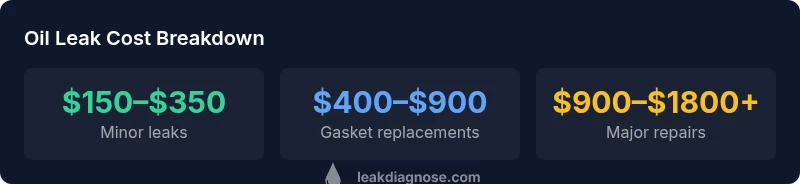
Scenario A: Minor leak from a simple seal or gasket that can be resealed without disassembly. Expected cost range: roughly $150–$350, depending on shop rates and the need for a quick refill. Scenario B: Gasket replacement on a common passenger car (e.g., valve cover gasket). Expected cost range: about $400–$900, with parts and moderate labor. Scenario C: Oil pan gasket or timing-cover seal requiring disassembly or additional replacements. Expected cost range: $900–$1,800 or more, particularly on complex engines or premium vehicles. These figures are rough estimates to illustrate the tiered nature of leaks; your exact price will come from a formal quote after diagnosis.
DIY considerations and safety
DIY fixes can be tempting for minor leaks, but they carry risk. Without proper tools, cleaning, and safety measures, you may misdiagnose the source or create new leaks. Prevent accidental engine damage by avoiding work on a hot engine or systems under pressure. Always consult the vehicle’s service manual and consider a professional inspection if the leak is near critical components, like the timing cover or crank seals. A professional can verify the leak’s source and ensure that the repair won’t void warranties or create safety hazards.
How to get an accurate quote
To get a precise estimate, prepare a basic intake: describe symptoms, note oil color and smell, and share vehicle year, make, model, and mileage. Ask shops for a present diagnostic fee and an itemized estimate that lists parts, labor, and potential ancillary checks. If possible, request photos or a video of the leak source. Compare at least two quotes, focusing on source confirmation, parts quality, and any warranty on repair work.
Maintenance to prevent future leaks
Regular oil changes, timely gasket inspections, and periodic hose or line checks reduce leak risk. Use the recommended oil grade and filter for your vehicle, and replace worn gaskets proactively when you notice costly signs like sudden oil loss or a persistent oil smell. Keeping the engine clean helps you spot drips early. A proactive maintenance plan is the best defense against repeated leaks and escalating costs.
Quick checklist before scheduling service
- Confirm the leak source with a diagnostic; avoid guessing.
- Ask for an itemized quote (parts, labor, diagnostic).
- Check for warranty coverage on parts or related repairs.
- Request a written timeline and a test‑drive confirmation after repair.
- Inquire about long-term maintenance plans to prevent future leaks.
Cost components and typical ranges for engine oil leaks
| Component/Service | Typical Range | Notes |
|---|---|---|
| Oil pan gasket replacement | varies widely | Major job; may require oil pan removal |
| Valve cover gasket replacement | varies widely | Common source of minor leaks |
| Sealant/dielectric seal kit (DIY) | varies | For minor leaks if you have the right skills |
| Labor cost (hourly rate) | varies by region | Labor charges influence total cost |
Questions & Answers
What is the average cost to repair an engine oil leak?
Costs vary widely by source and vehicle. Minor seal leaks may cost a few hundred dollars, while gasket failures or timing-cover issues can push prices higher. A professional diagnosis yields a precise range tailored to your car.
Oil leaks can cost anywhere from a few hundred to a few thousand dollars, depending on the source and vehicle. A precise quote needs a diagnostic check.
Can I fix an oil leak myself?
DIY fixes are sometimes possible for simple leaks from accessible seals, but many leaks require special tools and safety precautions. For major leaks or if you’re unsure, hire a pro to avoid engine damage.
You might fix small leaks yourself, but bigger leaks should be handled by a professional.
How can I tell if I have an oil leak?
Look for puddles beneath the vehicle, a sudden oil level drop, and fresh dark spots on the engine. A burning oil smell or smoke can indicate a leak near hot components.
Watch for puddles under the car and drops on the driveway. If you smell burning oil, get it checked.
Is an oil leak dangerous?
Yes. Oil leaks can cause engine damage, fire risk, and environmental harm. Prompt diagnosis and repair reduce risk and protect nearby components.
Oil leaks are risky—address them quickly to avoid engine damage or a fire.
What maintenance helps prevent oil leaks?
Regular oil changes with the correct oil type, timely gasket inspections, and hose checks help prevent leaks. Replacing worn seals at recommended intervals lowers future risk.
Keep up with oil changes and inspect seals regularly to prevent leaks.
How should I choose a repair shop for oil leaks?
Choose ASE-certified technicians, ask for transparent quotes, and request a warranty on repairs. Read reviews and verify the shop’s experience with your vehicle type.
Find a shop with proven expertise and clear quotes.
“Oil leaks should never be ignored. A precise diagnosis paired with a thoughtful repair plan protects engine health and helps keep repair costs reasonable.”
Main Points
- Get a professional diagnosis before repairs
- Costs depend on leak source, severity, and parts
- Address leaks early to prevent engine damage
- DIY fixes save money but carry risk
- Request itemized quotes and compare options