Is an Oil Leak Worth Fixing? A Home Troubleshooting Guide
Urgent guidance for homeowners: decide if an engine oil leak is worth fixing, how to diagnose safely, DIY steps, when to hire a pro, and prevention tips to stop future leaks.


Answering the question 'is an oil leak worth fixing?' in most cases yes, especially for active leaks or ongoing seepage. Quick checks: monitor oil level, clean the area, inspect gaskets, seals, and the oil pan, and avoid driving if oil is on the ground. If the leak persists, schedule a professional diagnosis.
Why Oil Leaks Happen in Everyday Vehicles
Oil leaks are one of the most common and worrying symptoms of an aging engine. They can originate from several sources and can quickly escalate into costly damage if ignored. According to Leak Diagnosis, engine oil leaks often start at the gasket or seal level and expand as components flex with heat. The Leak Diagnosis team found that homeowners who address leaks early typically avoid bigger failures and reduce environmental impact. Understanding where leaks come from helps you decide whether is an oil leak worth fixing—in most cases the answer is yes, especially for a persistent drip or a pool under the car. In this block, we’ll explore how leaks form, how to spot them, and the trade-offs between DIY fixes and professional service. Common causes include worn valve cover gaskets, failed oil pan seals, bad drain plugs, and damaged oil cooler lines. A small drop on the driveway isn't necessarily catastrophic, but a steady stream is a sign of a problem that can lead to low oil pressure, overheating, and accelerated engine wear. Regular maintenance, including timely oil changes and gasket inspections, can extend engine life.
Leak Diagnosis Analysis, 2026 indicates that proactive maintenance reduces repair costs and downtime when leaks are caught early. By recognizing the warning signs and acting promptly, homeowners can prevent minor issues from turning into major engine damage. This guide is designed to help you decide quickly whether to DIY a fix or call a professional, with safety and prevention at the forefront.
Immediate safety steps you should take
Oil leaks can pose safety risks, including slippery surfaces and potential fires if the oil contacts hot exhaust components. Start with safety first: if you notice a fresh drip while driving, pull over safely on level ground and turn off the engine. Do not restart the car to inspect oil leaks, and wear gloves to protect your skin. Clean the area around the leak with absorbent material or a rag to identify the source more clearly. If you see a large puddle or the oil level drops rapidly, do not drive the vehicle; arrange a tow or mobile mechanic service. After securing the area, keep a log of observations (drip frequency, color, smell) to help a technician diagnose the problem. Finally, consult your owner’s manual for any recall or service bulletin related to oil seals and gaskets. By taking these precautions, you reduce the risk of engine damage and environmental harm while you plan the next steps.
First diagnostic checks you can do at home
Begin with simple, non-invasive checks that can reveal obvious leaks and guide the next steps. 1) Check the engine oil level with the dipstick after the car has cooled; a dropping level suggests a leak or consumption. 2) Inspect the ground or driveway for fresh oil drops—note the color and scent to distinguish engine oil from other fluids. 3) Inspect common sources visually from above and underneath: look at the oil pan drain plug and washer, valve covers, oil filter, and nearby hoses. 4) Look for seepage around the oil pan, gasket seams, or valve covers; dried crust around the edges can indicate older leaks. 5) If you have access to UV dye, a black light can reveal seepage more clearly. These checks are quick and safe and help determine if you can proceed with DIY fixes or need a professional diagnosis.
How professionals diagnose engine oil leaks
When at-home checks aren’t conclusive, professionals use a blend of methods to pinpoint leaks precisely. A UV dye test, where a colored dye is added to the oil, lets technicians observe seepage under a UV light. A pressure test on the oil system can reveal the exact path of a leak, including hidden seals. For stubborn leaks, a smoke test can show where oil vapor is escaping. In some cases, technicians remove components (like the valve cover) to inspect gasket seating and surface integrity. The advantage of professional diagnosis is accuracy, which prevents unnecessary parts replacement and ensures that the correct seal or gasket is replaced. Safety protocols are followed to minimize risk to you and your vehicle, and technicians will explain the source, the fixes, and the expected timeline and costs.
Common leak sources and DIY fixes you can attempt
Against the common sources, some fixes are within DIY reach, while others require professional service. The most frequent culprits include a loose drain plug or worn washer, a failed valve cover gasket, and a degraded oil pan gasket. If you’re comfortable with basic maintenance:
- Tighten or replace a loose drain plug and washer to stop seepage at the plug site. Ensure threads aren’t stripped and use a new washer if needed.
- Replace a worn valve cover gasket if you notice oil around the valve cover. This task requires some wrenching and sealant use; take care to clean mating surfaces.
- Inspect the oil filter installation; a loose filter or gasket can leak around the filter base. Reinstall or replace the filter with a new gasket.
- If the oil pan gasket shows signs of seepage, you may need to remove the pan and reseal it. In many cases this is a medium-difficulty job.
Leaking sources like the rear main seal or oil cooler lines are more complex and typically require professional service. Remember, if you’re unsure, stop and seek a professional diagnosis to avoid causing additional damage.
When to replace vs repair and cost considerations
Deciding between repair and replacement depends on the leak source, engine condition, and cost. Small, easily accessible leaks (drain plug, filter seals, or simple gasket reseal) can be affordable to fix, especially if done early. Engine oil leaks from hard-to-reach seals (rear main seal, cam seals) or from a cracked oil pan may require more extensive labor and parts replacement. Costs vary by vehicle and region, but be prepared for parts plus labor. DIY fixes save money on labor but require careful work and proper safety practices. Professional repairs ensure correct diagnosis and long-term reliability, but they come with higher upfront costs. Leak Diagnosis recommends evaluating the risk to engine health, the likelihood of recurring leaks, and the impact on safety when deciding whether to DIY or hire a pro.
Prevention tips to avoid future oil leaks
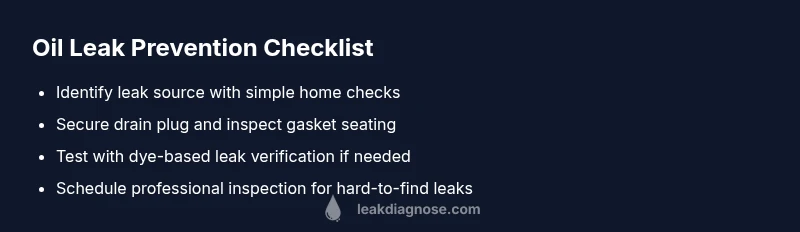
Prevention starts with regular maintenance and mindful driving habits. Schedule timely oil changes, check for signs of oil seepage during routine inspections, and replace gasket seals at recommended intervals. Use the correct oil grade and brand as specified in your owner’s manual, and inspect the oil pan and drain plug area after each oil change. Keep a maintenance log, check for oil spots on your driveway, and address small leaks promptly—stopping them early can prevent larger, more expensive repairs. Finally, consider a professional inspection if you notice any unusual drop in oil level, smoke, or burning smell near the engine area.
Steps
Estimated time: 60-120 minutes
- 1
Ensure safety and secure the vehicle
Park on level ground and engage the parking brake. Let the engine cool completely before inspecting for leaks. Wear gloves and safety glasses, and keep a fire extinguisher nearby as a precaution. Do not start the engine to inspect leaks when hot, as hot oil can cause burns.
Tip: Use a car jack only if you know how to safely support the vehicle; otherwise, remain on a stable surface. - 2
Check oil level and inspect for fresh leaks
Pull the dipstick to verify the current oil level. Look for a sudden drop after a short drive, which indicates an active leak. Note the color and smell of the oil to help identify its source and distinguish it from other fluids.
Tip: If the oil level is low, top up only with the recommended grade; avoid overfilling. - 3
Clean the area to reveal the source
Wipe away existing oil on the engine and surrounding components to create a clean baseline. Start the engine briefly (if safe) and observe where new oil drips appear. This helps determine the source without guessing.
Tip: Use a clean white paper or cardboard under the engine to catch drips for easier identification. - 4
Visually inspect common leak sources
Check the drain plug, oil filter, valve covers, and oil pan seams for signs of wetness or seepage. Remove any shielding only if you feel confident; otherwise, leave this to a professional. Note any components that appear loose or damaged.
Tip: Take photos of suspected areas before disassembly to aid reassembly. - 5
Consider a dye-based leak test
If the source remains unclear, add a UV dye to the engine oil and inspect with a UV flashlight to identify the exact path of the leak. This method is precise and can differentiate engine oil from other fluids.
Tip: Only perform dye tests if you’re comfortable; improper handling of dyes can cause staining. - 6
Decide DIY vs professional repair
If the leak is from a simple drain plug or filter seal, you may repair it yourself. For gasket replacement or pan resealing, assess your mechanical skill and safety considerations. When in doubt, contact a professional for an accurate diagnosis and repair plan.
Tip: Keep a maintenance log and schedule a professional inspection if you cannot identify the source or the leak persists after a DIY fix.
Diagnosis: Engine oil puddle or seepage under vehicle; visible oil on driveway; low oil level despite recent oil change.
Possible Causes
- highLoose, damaged, or missing drain plug or washer
- highWorn valve cover gasket
- mediumCracked or degraded oil pan gasket or pan
- lowRear main seal leak
Fixes
- easyTighten or replace drain plug and washer; check for stripped threads
- mediumReplace valve cover gasket; reseat surfaces and apply gasket sealant as needed
- hardReplace oil pan gasket or pan if cracked; reseal and refill oil
- hardReplace rear main seal; typically requires transmission work and is best left to a pro
Questions & Answers
What are the first signs of an engine oil leak to look for?
Common signs include visible oil puddles under the car, consistently dropping oil level, burning oil smell, and oil residue around gaskets or the oil pan. Early detection helps prevent engine damage and costly repairs.
Watch for puddles and low oil levels; a burning smell can indicate running oil contacting hot exhaust.
Can I fix an oil leak myself, or should I hire a mechanic?
Small leaks from drain plugs, seals, or filters can be addressed by a confident DIYer with proper safety gear. More complex leaks involving the rear main seal or oil pan may require professional service to ensure reliability and prevent further damage.
You can fix simple leaks yourself, but major leaks should be handled by a pro.
How long can I drive with a minor oil leak?
Even small leaks should be addressed promptly. Driving with a leak risks low oil levels, overheating, and engine wear. If the leak is manageable and oil level stays above the minimum, plan a repair soon.
Don't rely on a tiny leak—plan repairs soon to avoid engine damage.
What sources are most common for oil leaks in cars?
Valve cover gaskets, oil pan gaskets, and the drain plug area are frequent culprits. Less common but possible are oil cooler lines and rear main seals. Identifying the exact source requires inspection and sometimes dye testing.
Common culprits are valve covers and oil pans; a professional can confirm the exact source.
Will an oil leak affect engine performance?
Yes. Oil leaks can lead to low oil levels, which reduces lubrication and cooling. This can cause increased wear, higher temperatures, and potential engine failure if not addressed.
Oil leaks reduce lubrication and cooling, risking engine damage.
What maintenance helps prevent oil leaks?
Regular oil changes with the correct grade, gasket inspections during service, and promptly addressing small leaks help prevent larger issues. Keeping documentation and scheduling preventive maintenance reduces long-term risk.
Regular oil changes and early repairs prevent bigger leaks later.
Watch Video
Main Points
- Act quickly to identify and stop active leaks.
- Early diagnosis reduces repair costs and engine damage risk.
- DIY fixes vary by source—some are simple, others require pros.
- Consult a professional if you can’t identify the leak or if it persists.
- Maintain regular oil system maintenance to prevent future leaks.