Radiator Stop Leak Costs: What to Expect in 2026 and Beyond
Learn radiator stop leak costs, price ranges, and practical tips. This Leak Diagnosis guide covers product vs. service costs, safety notes, and when replacement is the better option.


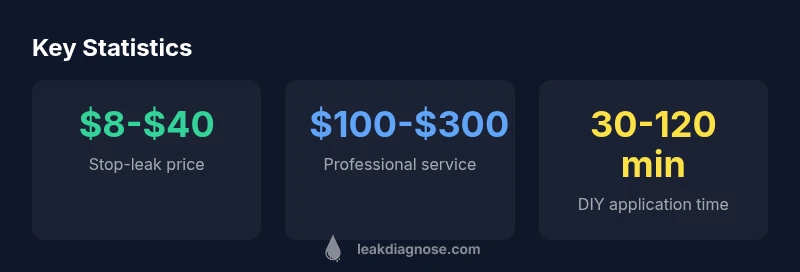
Radiator stop-leak products typically cost between $8 and $40 per bottle, while professional repairs and flushing can run $100–$300. The total expense depends on leak severity, radiator type, and whether additional parts or coolant must be replaced. For many homeowners, a DIY approach with a marketed stop-leak product can be cost-effective, but limitations apply.
What radiator stop leak is and how it works
Radiator stop-leak products are formulated to travel with coolant and seal small leaks by forming a temporary gasket on the inside of the cooling system. They are commonly used in automotive cooling systems and occasionally marketed for home heating radiators, depending on the system material. When you add a stop-leak product, it circulates with coolant and can seal pinhole leaks in hoses, radiator cores, or heater cores. This approach is typically a short-term measure intended to buy time until a longer-term repair is possible. Caution: using incompatible sealants can cause residue buildup, clog passages, or damage water pumps. Always verify compatibility with your radiator material (aluminum, copper, brass) and check that the product is designed for your system's coolant type (ethylene glycol vs propylene glycol). In addition, never mix a stop-leak product with other additives unless the manufacturer approves; mixing can create sludge or pressure issues. The bottom line is that while stop-leak can reduce visible drips, it is not a universal cure, and a persistent leak usually requires professional diagnosis. According to Leak Diagnosis, a precautionary test and monitoring plan helps homeowners decide whether to continue with stop-leak or seek a proper repair.
Price ranges: how much is radiator stop leak? Budgeting for radiator stop leak
People often ask how much is radiator stop leak. The short answer is: price ranges vary by product type, brand, and whether you are buying a single bottle or engaging a service. For DIY users, stop-leak additives typically cost between $8 and $40 per bottle, depending on concentration and volume. A typical flush or coolant treatment may cost extra if you pursue a combined approach. If you opt for professional diagnosis and repair, the costs rise to roughly $100 to $300, depending on the leak location, required cooling-system work, and local labor rates. While retailers market products for do-it-yourself use, not every leak is safely treated with a bottle alone, especially if the radiator or heater core has multiple cracks or significant corrosion. The decision should consider practical factors like coolant type, compression leaks, and whether the system has aluminum components. If you want a quick decision framework, consider whether the leak is small and intermittent or ongoing and sizable; in the latter case, a professional evaluation is usually the better value. Leak Diagnosis notes that while DIY solutions are appealing for cost, persistent leaks necessitate accurate diagnosis to avoid longer-term damage.
Factors influencing cost and value
Cost is driven by leak severity, location, and the radiator type (e.g., aluminum vs copper/brass). Car systems may require different stop-leak chemistries than home radiators, and some formulations perform poorly with certain metals or antifreeze types. If you need a flush, coolant replacement, or pressure test, add this into the total. The presence of a known coolant leak, damaged heater core, or a cracked radiator can dramatically shift the cost from a simple sealant to a full replacement. Efficiency of the repair, accessibility of the leak site, and regional labor rates also play a role. For homeowners, it’s important to note that a small, slow leak may respond well to a stop-leak additive, while a rapid or high-volume leak is less likely to be resolved without professional intervention. According to Leak Diagnosis analysis, always verify compatibility with your coolant type and system materials before purchasing a product, and plan for a potential future repair if the leak recurs.
Step-by-step: applying stop-leak safely
- Ensure the engine and radiator are cool before opening the cap to avoid burns or pressure release. 2) Add the stop-leak product as per the label, using the correct ratio for your system. 3) Refill coolant if required and run the engine to circulate the additive for the recommended time. 4) Check for leaks and monitor over the next 24-72 hours, refilling as needed. 5) If the leak persists or you notice overheating, stop the engine and seek professional evaluation. 6) After a stop-leak treatment, consider a coolant flush and replacement to prevent sludge buildup. Safety note: never mix multiple sealant products, and avoid using stop-leak in systems not specified by the product. This method is best used for small leaks and as a temporary measure; major leaks require a professional fix.
Alternatives and when to avoid stop-leak
Stop-leak products are not a universal fix. If you observe a large, active leak, overheating, or visible physical damage to the radiator, heater core, or hoses, do not rely on stop-leak alone. In some cases, sealants can clog passages, reduce heat transfer, or cause blockages in the water pump, radiator, or heater core, potentially leading to more expensive repairs. A professional evaluation is advised when leaks are persistent, when you’re uncertain about coolant type, or when the radiator shows signs of corrosion or cracking. If you have an older cooling system with repeated leaks, it may be more cost-effective in the long run to pursue a permanent repair or radiator replacement rather than ongoing sealants.
How to choose a stop-leak product
Choose a product that is compatible with your coolant type (ethylene glycol vs propylene glycol) and radiator material. Look for third-party testing or brand reliability, ease of use, and clear maintenance guidance. Avoid products with strong solvent odors or abrasive particles that can damage seals. Check for a warranty or money-back guarantee, and ensure the product is appropriate for your system (car radiator vs home heating radiator). Finally, consider the total cost of ownership, including any necessary coolant replacement, flushes, and potential future repairs.
Cost comparison for radiator stop leak options
| Option | Low estimate | High estimate | Notes |
|---|---|---|---|
| Product additive | $8 | $40 | Does not fix major leaks; seals tiny gaps |
| Professional leak repair (diagnosis + flush) | $100 | $300 | Includes inspection and coolant replacement |
| DIY with stop-leak product + coolant flush | $140 | $360 | Time varies; ensure compatibility with coolant type |
| Total project cost range | $108 | $360 | Depends on services and leaks severity |
Questions & Answers
Is radiator stop leak a permanent fix?
Generally, stop-leak products are not a permanent fix. They can seal small leaks temporarily, but a persistent or large leak usually requires a professional repair or radiator replacement.
Usually not a permanent fix; leaks that persist typically require a professional repair.
Can stop-leak damage my cooling system?
Yes, some sealants can clog passages or react with certain metals and coolants. Always check compatibility with your system and avoid mixing products. If in doubt, consult a pro.
Yes—some sealants can cause clogs, so check compatibility and avoid mixing products.
How long does it take to apply and see results?
Most products are quick to apply, typically within 15–60 minutes, followed by a short run-time to circulate. Visible changes may take hours or days depending on leak size.
Most take a short time to apply, with results sometimes visible within hours.
When should I avoid using stop-leak products?
Avoid with large cracks, severe leaks, or if the radiator shows obvious physical damage. For ongoing overheating, seek professional evaluation rather than relying on sealants.
Avoid if you see large cracks or overheating; call a pro instead.
Should I flush the cooling system after using stop-leak?
Flushing and replacing coolant after a stop-leak treatment is often recommended to prevent sludge and ensure proper cooling efficiency. Follow the product and vehicle manufacturer's guidance.
Yes—flush and replace coolant when advised to prevent buildup.
“Stop-leak products can be a practical stop-gap, but they are not a substitute for proper diagnosis and repair. Always validate the root cause of a leak before proceeding.”
Main Points
- Start with a diagnostic check for persistent leaks.
- DIY stop-leak products are inexpensive but not universal fixes.
- Professional evaluation is recommended for ongoing or severe leaks.
- Always verify coolant compatibility before using any product.
- Consider long-term repair or radiator replacement if leaks recur