Is Stop-Leak Good for Your Radiator? A Practical Troubleshooting Guide
Urgent troubleshooting guide: learn if stop-leak is good for your radiator, its risks, safer alternatives, and when professional repair is required.


Stop-leak products are not a universal fix for radiator leaks. They can temporarily seal small leaks, but they may clog passages, cause overheating, and void warranties. For many radiators, the safest course is a proper repair or replacement and a cooling-system check by a professional. Start with diagnosing the leak and plan for a durable fix; if you must use stop-leak, follow the manufacturer’s guidance and monitor the system closely.
The Practical Reality: Stop-Leak Is Often Temporary
According to Leak Diagnosis, stop-leak products are not a universal fix for radiator leaks. They can seal small leaks temporarily and may buy you time in a pinch, but they come with downsides. They can clog tiny passages, create air pockets, and may hinder future repairs. For many radiators—especially modern aluminum or plastic tanks—the safest course is a proper repair or replacement and a cooling-system check by a professional. Always base your decision on the severity and location of the leak, coolant condition, and how the car is used. If your objective is to prevent a roadside breakdown, you might reach for a temporary stop-gap, but you should plan for a fix as soon as possible. Leak Diagnosis recommends consulting a professional if you’re unsure.
How Stop-Leak Works and What It Does to Your System
Stop-leak products work by circulating through the cooling system and using additives that swell, seal, or plug small cracks and pinholes. Some formulations create a polymer film, others bind with minerals in the coolant to form a seal. While this can stop small leaks, it also changes the flow dynamics inside hoses and the radiator core. In some cases, the sealant may break loose later and flow to heater cores or the water pump, causing blockages or reduced heat transfer. Always read the product instructions and never exceed the recommended amount, as more isn’t always better and can worsen cooling performance.
Common Risks: Clogs, Corrosion, and Warranty Void
The most common risk with stop-leak products is clogging. Sealant particles can accumulate at bends, valves, or the heater core, reducing coolant flow and triggering overheating. Some formulations can interact with metal surfaces, accelerating corrosion in aluminum radiators or plastic-tank systems. Using sealants can void warranty coverage if the vehicle is still under factory protection, and it may complicate future professional repair. If you notice sudden temperature spikes, a sweet-smelling coolant, or unusual engine noise after applying a product, stop using it and seek professional diagnosis immediately.
Safer First Steps If You Suspect a Leak
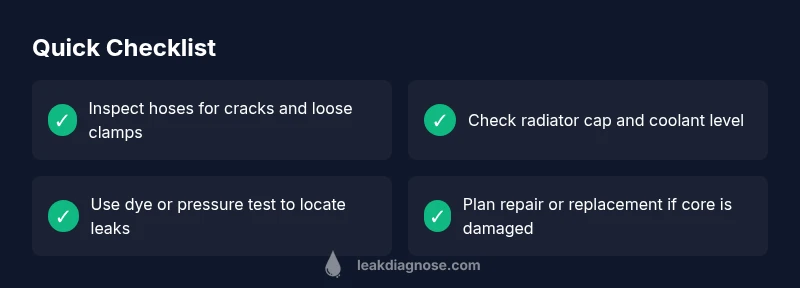
Before reaching for a sealant, perform a quick diagnostic at home. Check coolant level in the reservoir, inspect hoses for cracks or loose clamps, and look for damp spots around the radiator, hoses, and cap. Ensure the engine is completely cool before opening the radiator cap to avoid scalding. If you can safely isolate the leak to a hose or clamp, a simple tightening or replacement may be enough. If the leak appears to be in the core or a weld, you’re likely facing a bigger repair that requires professional service.
Safer Alternatives to Stop-Leak: Fix, Not Patch
In many cases, replacing a leaking radiator, blown hose, or failing cap is the most reliable approach. Flushing the cooling system and refilling with the correct coolant mix can restore proper heat transfer and prevent overheating. If you’re uncomfortable performing repairs, schedule a professional cooling-system inspection. Some shops offer a diagnostic that locates leaks using dye and UV light. While stop-leak may be a temporary measure, a permanent fix stabilizes engine temperature and protects your vehicle’s longevity.
At-Home Diagnostic Checks You Can Do Now
Start with a visual inspection of the radiator, hoses, clamps, and cap. With the engine cold, run the engine briefly and observe for dripping at hose connections or the core. Use coolant dye or a leak-detecting tablet if you have the tools to identify small leaks. A hand-held cooling-system pressure tester is a useful DIY tool that presses the system to reveal leaks without running the engine. If you’re unsure, don’t push your luck—safely park the car and contact a professional.
When to Seek Professional Help and What to Expect
If you see persistent coolant loss, overheating, or you cannot locate the leak, professional diagnosis is essential. A shop will typically pressure-test the system, inspect the radiator, hoses, and cap, and determine whether the leak is repairable or requires component replacement. Expect clean handling of coolant waste and a recommended sequence for parts replacement. The goal is a durable fix that preserves engine cooling efficiency and prevents future breakdowns.
Steps
Estimated time: 30-60 minutes
- 1
Cool the engine and locate the leak
Park the vehicle in a safe area and let the engine cool completely. Visually inspect the radiator, hoses, clamps, and cap for damp spots or obvious drips while the engine is cold. Note where the leak is most active to prioritize your next steps.
Tip: Never open the radiator cap while the engine is hot; scalding coolant can cause severe burns. - 2
Check clamps and hoses first
Tighten any loose clamps and replace damaged hoses. A quick hose replacement can stop many leaks without more invasive work. Refill coolant to the proper level after tightening and check for further seepage.
Tip: Carry a small flashlight and clean rags to inspect tight spaces without removing parts unnecessarily. - 3
Run a basic pressure test
If the leak isn’t obvious, perform a cooling-system pressure test with a tester kit. This approach can reveal hidden leaks mid-core or at the cap. Follow the kit instructions and monitor the gauge for a steady reading.
Tip: If you’re not comfortable using a pressure tester, take the vehicle to a shop for this step. - 4
Evaluate the cap and coolant
Inspect the radiator cap and replace it if the seal is deteriorating or the pressure rating is changed. Also verify you’re using the correct coolant type and concentration for your vehicle. Mismatched coolant can cause leaks and poor cooling.
Tip: Always use fresh coolant from a sealed container; old coolant can degrade and cause issues. - 5
Decide on repair vs. replacement
If evidence points to a cracked core, damaged tank, or persistent leaks despite fixes, plan a radiator replacement. For minor leaks, a professional repair may suffice, but long-term reliability often requires a full replacement.
Tip: Document symptoms and tests to share with the technician for faster diagnosis. - 6
Post-repair checks and road test
After repairs, refill coolant to correct level and perform a short road test with monitoring of temperature and coolant level. Recheck for leaks at the end of the test before driving longer distances.
Tip: Keep an eye on temperature gauge during the drive and pull over if it climbs unexpectedly.
Diagnosis: Visible coolant leak under the radiator or engine bay, or unexplained coolant loss accompanied by overheating
Possible Causes
- highPinhole crack in radiator core or tank
- highLoose or cracked radiator hose clamp
- mediumRadiator cap failing under pressure
- lowHeater core leak or gasket failure
Fixes
- easyTighten or replace leaking hose clamps and inspect hoses
- mediumPressure test the cooling system to locate the exact leak
- hardReplace a cracked radiator or radiator hose
- easyReplace radiator cap with a correctly rated pressure
Questions & Answers
Is stop-leak safe for all radiator types?
Not always. Some radiators, especially aluminum or plastic tanks, can react with certain sealants or become clogged. Always check compatibility with your specific radiator material and follow product instructions. When in doubt, consult a professional.
Not always; check compatibility with your radiator and follow the product instructions. When in doubt, seek professional guidance.
Will stop-leak permanently seal a crack?
Usually not. Stop-leak may slow or stop a small leak temporarily, but cracks generally require a repair or replacement for a durable fix. It should not be treated as a permanent solution.
Usually not - leaks from cracks need a proper repair to be permanent.
What risks does stop-leak pose to the cooling system?
Sealants can clog passages, reduce heat transfer, and potentially damage the water pump. They may also void warranties and complicate future repairs. Always weigh risks before using a product.
Sealants can clog and cause overheating; they can also void warranties.
When should I call a professional?
If the leak persists, you notice overheating, or you cannot locate the source, professional diagnosis is essential. A shop will perform pressure tests, inspect components, and recommend the right repair path.
If the leak persists or overheating occurs, you should call a professional.
Can I drive with a radiator leak safely?
Driving with a leak is risky and can lead to engine damage from overheating. If you must move the vehicle, do so only for short distances and with careful monitoring; otherwise, seek roadside assistance.
No—driving with a leak is risky; seek help and avoid long drives.
How should I dispose of coolant and old sealants?
Coolant is toxic. Collect waste and take it to a recycling or hazardous waste facility. Do not pour it on the ground or down drains.
Coolant is toxic; recycle it properly and never pour it down drains.
Watch Video
Main Points
- Avoid long-term reliance on stop-leak.
- Schedule professional radiator inspection when in doubt.
- Monitor coolant level and temperature after any fix.
- Replace damaged radiator or hoses promptly.
- Test after repairs to confirm a durable fix.