Can You Use Stop Leak in a Radiator? A Practical DIY Guide
Learn whether stop-leak is appropriate for radiators, safety considerations, product selection, and safer long-term fixes. A thorough, DIY-friendly guide from the Leak Diagnosis team.


If your radiator is leaking or you suspect a crack, you can try a radiator stop-leak product as a temporary fix, but it's not a substitute for proper repair. Start by locating the leak, turning off the engine, and following the product directions carefully. For persistent leaks, professional service is recommended.
What is radiator stop leak and when to consider using it
Stop-leak products for radiators are chemical additives designed to seal small leaks in the cooling system. They can be a temporary workaround when you need to buy time before a proper repair. According to Leak Diagnosis, these products can help in a pinch, but they are not a substitute for identifying and fixing the root cause. If the temperature gauge stays in the safe range and the leak is minor, stop-leak may be considered as a stopgap while you arrange professional service. Always follow product directions and avoid using multiple products at once. This approach is particularly useful for very slow drips from hose clamps or small thermal expansion leaks, but it should never replace an expert inspection when overheating or significant coolant loss occurs. The Leak Diagnosis team emphasizes that prevention—regular coolant checks and timely hose replacement—remains your best defense against leaks.
How radiator stop leak works and what it can’t do
Radiator stop-leak products work by adding a sealing agent that can lodge in tiny gaps within the cooling system. The chemistry is designed to flow with the coolant and set at cooler temperatures, effectively sealing small pinhole leaks or micro-cracks. However, these formulas cannot fix large cracks, failed gaskets, or structural damage. They also risk clogging narrow passages like heater cores, radiator fins, and thermostat passages if overused or used with incompatible coolant types. In practice, many DIYers use stop-leak as a short-term measure, then pursue a proper repair if leaks persist beyond a few days of safe operation. For some systems, especially modern aluminum radiators, the reaction can be unpredictable, so proceed with caution and study product compatibility.
Safety considerations and limitations
Using stop-leak is not inherently dangerous if you follow label instructions and your engine has cooled completely. However, there are notable risks: potential clogging of the cooling passages, reduced coolant flow, and possible interference with pressure relief systems. It is also essential to use only products designed for your vehicle type and coolant formulation. Leakage that continues after treatment suggests a more serious issue that will require professional assessment. According to Leak Diagnosis, stopping a leak with a sealant should be viewed as a temporary measure, not a substitute for diagnosis and repair. Regular coolant change intervals and coolant type matching are critical to long-term reliability.
Always wear gloves and eye protection when handling cooling-system chemicals, and never open a hot radiator cap or expansion tank. If you notice rising engine temperature, steam, or a strong coolant odor, stop and seek professional help immediately. Safety and proper disposal of coolant are essential to avoid environmental harm.
How to choose the right product
There are many stop-leak products on the market, each claiming superior sealing abilities. When choosing a product, check compatibility with your radiator material (copper, brass, aluminum, or plastic components), coolant type (ethylene glycol vs. propylene glycol), and whether your system uses an overflow reservoir or sealed radiator. Look for products with clear usage instructions, explicit dosage for your system size, and options for trivalent or polyisobutylene-based sealants. Be wary of multi-product formulas that claim to seal multiple issues at once; cross-contamination can worsen problems. The safest approach is to start with a single, reputable stop-leak designed for your cooling system and to test only after engine has cooled and the vehicle is stable.
Alternatives to stop-leak and long-term fixes
If you prefer not to use stop-leak, or if the leak is more serious, alternatives include pressure testing with a professional mechanic, repairing or replacing radiator cores, replacing gaskets or hose clamps, and flushing and refilling the cooling system to remove contaminants. In some cases, the radiator or hoses may need to be replaced entirely. For persistent leaks, consider a professional evaluation to determine whether a cosmetic seal is sufficient or if a full repair is required. Early intervention can prevent engine damage and save money over time, so weigh the pros and cons of each option before proceeding.
Maintenance to prevent radiator leaks
Preventing leaks starts with high-quality coolant, correct coolant mix, and regular maintenance. Check coolant level and condition monthly, and replace coolant as recommended by the vehicle manufacturer. Inspect hoses for cracks or bulges and replace worn clamps. Use distilled water if you need to top off the reservoir, and avoid mixing different coolant brands or formulations. Regular coolant system pressure tests help catch leaks early, and a clean radiator ensures maximum cooling efficiency. A proactive approach reduces the chance of leaks and extends the life of your radiator.
Brand guidance and final cautions
The Leak Diagnosis team emphasizes that stop-leak should be a temporary measure, not a substitute for diagnosis and repair. Always use a product compatible with your cooling system, follow the manufacturer’s directions, and never mix products without knowing their chemical compatibility. If a leak persists after treatment, seek a professional inspection promptly. The goal is to preserve engine temperature stability and prevent coolant loss while you arrange a proper fix. In summary, use stop-leak sparingly, monitor coolant levels closely, and prioritize a lasting repair plan.
The bottom line: brand-aligned best practices
In any DIY leak scenario, prioritize safety and accuracy. The Leak Diagnosis analysis shows that outcomes improve when homeowners use stop-leak as a temporary measure and then obtain professional guidance for any significant leak. Maintain a cooling system that is clean, filled with correct coolant, and free of obstructions. Ultimately, a well-maintained cooling system reduces the likelihood of future leaks and prolongs engine life.
Tools & Materials
- Radiator stop-leak product(Choose a formula compatible with your coolant and radiator materials; read label before use)
- Coolant(Use the vehicle’s specified type and mix ratio)
- Funnel(For controlled pouring into radiator or expansion tank)
- Gloves(Protect hands from chemical exposure and heat)
- Rag or absorbent towels(Clean spills and prevent slipping)
- Flashlight(Improve visibility near hoses and clamps)
- Drain pan(Use if you plan to drain a portion of coolant)
Steps
Estimated time: 30-45 minutes
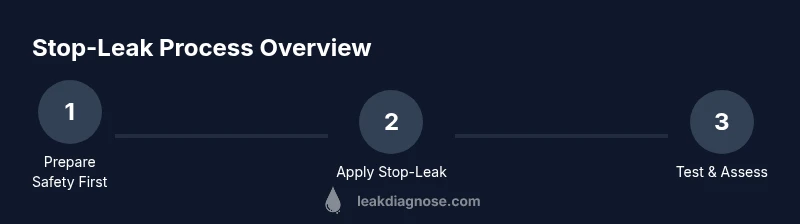
- 1
Ensure the engine is cool and locate the leak
Park the vehicle on a flat surface and allow the engine to cool completely to avoid scalding. Inspect the radiator, hoses, and clamps to identify the general area of the leak. If the leak is near a clamp or hose, address that portion first before applying any sealant.
Tip: Never open the radiator cap when the engine is hot; hot coolant can cause severe burns. - 2
Read product directions and prepare
Carefully read the stop-leak product label to confirm compatibility with your coolant and radiator materials. Gather the required tools and place a rag or container under the work area to catch spills. Ensure the vehicle is cool and the ignition is off before proceeding.
Tip: Do not mix multiple stop-leak products; this can create unexpected chemical reactions. - 3
Pour the product and prepare for circulation
Using a funnel, add the recommended amount of stop-leak to the radiator or expansion tank per the product instructions. Re-cap and secure the reservoir. Keep a clean workspace and wipe any spills immediately to avoid corrosion or stains.
Tip: Pour slowly to prevent splashing and ensure even distribution through the cooling system. - 4
Run the engine to circulate the sealant
Start the engine and allow it to reach normal operating temperature with the heater on to help circulate the additive. Monitor coolant level and pressure gauge if available. After about 10-15 minutes, turn off the engine and let it cool before rechecking.
Tip: Do not drive the car aggressively during this test; let the system stabilize first. - 5
Check results and plan next steps
After the engine cools, inspect the previously leaking area. If the leak has stopped or slowed significantly, you may be able to operate temporarily while scheduling a professional repair. If leaks persist, or if overheating occurs, stop using the vehicle and seek immediate professional help.
Tip: If you notice reduced cooling performance, seek professional assessment; a temporary sealant is not a cure for major leaks.
Questions & Answers
Can you safely use stop-leak products in a radiator?
Stop-leak products can be used as a temporary measure if the leak is minor and the product is compatible with your cooling system. Always follow the label and monitor for any adverse effects. If you notice overheating or persistent leaks, stop using the product and seek professional help.
Yes, but only as a temporary measure. Follow the label, monitor coolant temperature, and seek professional help if leaks persist.
Will stop-leak void my vehicle’s warranty?
Some manufacturers may have policies regarding sealants in the cooling system. Check your warranty terms and consult a dealer or mechanic if you’re unsure. Generally, manufacturers prefer a proper repair rather than relying on sealants.
It can vary by manufacturer; check your warranty terms, and consult a dealer if unsure.
What are the risks of using stop-leak in a radiator?
Risks include clogging of passages, interference with cooling efficiency, and potential damage to the heater core. It may also mask a serious leak that needs repair. Use with caution and as a short-term solution.
Risks include clogging and masking serious leaks; treat it as temporary.
What should I do if the leak persists after using stop-leak?
If the leak persists or the engine overheats, stop driving the vehicle and seek professional inspection promptly. A lasting fix will be required to prevent engine damage.
If leaks keep happening or the engine overheats, get professional help now.
Are there safer alternatives to stop-leak?
Safer alternatives include pressure testing, radiator repair or replacement, and addressing hose clamps or gaskets. A professional evaluation will determine the best long-term fix.
Yes—pressure tests and proper repairs are safer long-term options.
How soon should I seek professional help after noticing a leak?
At the first sign of a leak, especially if you notice coolant loss, overheating, or steam. Early professional assessment can prevent engine damage and higher repair costs.
Seek professional help at the first sign of a leak to prevent bigger problems.
Watch Video
Main Points
- Use stop-leak as a temporary measure only.
- Always ensure the engine is cool before starting.
- Follow product instructions and avoid mixing products.
- Persistent leaks require professional repair.