How Much Does Leaking coolant Cost? A Homeowner's Guide
Discover how much leaking coolant costs, from diagnostics to common repairs, with practical ranges, budgeting tips, and steps to prevent future leaks in your vehicle's cooling system.


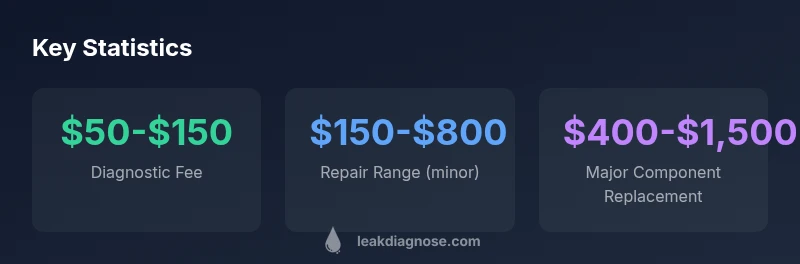
The cost to fix a coolant leak typically ranges from $150 to $1,000 for most common repairs, with diagnostic fees often adding $50 to $150. Minor hose leaks may fall under $200, while a radiator or water pump replacement can push total costs toward $800–$1,500. Location and labor rates greatly affect final price.
What drives coolant leak costs
Understanding how much does leaking coolant cost starts with recognizing the main cost drivers. The total price is not a single figure; it hinges on diagnostic steps, where the leak is located, the parts required, and the labor rate in your area. In practical terms, many homeowners ask this exact question when a dashboard light flickers or the coolant reservoir drops. The answer varies by scenario, but you can anticipate several constants: diagnostic work helps pinpoint the leak quickly, minor hose or clamp issues cost far less than a radiator or heater-core replacement, and labor can swing prices by 20–50% depending on where you live and which shop you choose.
- Diagnostic steps can include pressure testing, dye tracing, and heat testing. These tests establish whether the leak is active and where it's coming from. If you catch a leak early, you often save money by fixing a small hose or seal rather than resorting to a more extensive repair.
- Location matters. A hose or radiator cap leak is typically cheaper to fix than a failed heater core or a leaking water pump, which often requires more labor and parts.
- Parts and materials: hoses, clamps, thermostats, radiators, and water pumps contribute differently to your bill. Even small components, if replaced as part of a larger repair, add to the total cost.
- Labor rates: regional differences and shop type (independent shop vs. dealership) can lead to notable price variance. In many regions, labor costs account for a large portion of the final bill, especially on major components.
If you’re trying to estimate the cost before a service, plan for a diagnostic fee upfront and then a price bracket for the repair based on the likely component involved.
Diagnostic costs and value
A precise diagnosis is the foundation of a fair repair cost. Expect a diagnostic fee in the moderate range, typically about $50–$150, depending on the shop and whether the diagnostic is credited toward the repair if you proceed with the fix. Diagnostics help confirm whether the leak is a minor hose issue or a sign of a more serious problem in the cooling system. In some cases, shops may offer bundled inspections or dye-based leak testing to improve accuracy, which can slightly increase the upfront cost but save you from paying for multiple tests later. Quick, accurate diagnostics reduce the risk of replacing the wrong component, which saves time and money in the long run.
- Pressure tests and dye tracing are common methods used to locate leaks.
- A thorough inspection can reveal secondary issues (low coolant, corroded clamps, or degraded coolant) that might influence the overall repair plan and cost.
- If you already know the leak’s location, you can request a targeted quote, which can help prevent sticker shock at the repair bay.
Common repair scenarios and price ranges
Coolant leaks span from small, inexpensive fixes to major component replacements. Here are typical scenarios you may encounter, with broad ranges to help you budget:
- Minor hose leak or clamp issue: $150–$500. Often the cheapest fixes, involving replacing a hose section, clamps, or a seal.
- Radiator leak (external): $300–$900. Depending on access and whether the radiator can be repaired or must be replaced, costs vary.
- Water pump seal or impeller leak: $400–$1,100. The water pump is a common failure point, especially in aging engines; replacement can be labor-intensive.
- Thermostat housing or coolant control valve leak: $200–$600. Typically part of routine cooling system maintenance.
- Heater core leak: $800–$1,500. This is a labor-intensive repair that often involves dashboard disassembly.
- Engine block or head/gasket leak (serious, rare): $1,000–$3,000+. These are severe issues that require significant time and parts.
In many cases, the repair path is decided by the leak’s location and the condition of surrounding components. If a leak is discovered early and addressed promptly, you may avoid pricier jobs down the line.
Radiator, hoses, and clamps: cost drivers
The cooling system relies on several common components that frequently contribute to leaks. Radiator hoses, clamps, radiator caps, and hose connectors are the most frequent culprits. Replacing a worn hose and clamps is usually cheaper than a radiator replacement, but even small hose work adds to labor if the job requires engine access.
- Hoses and clamps: Typical cost range is moderate, with parts often inexpensive and labor moderate.
- Radiator: Replacing a radiator is a mid-range repair, with costs depending on whether the radiator is aluminum, plastic, or a hybrid construction, and whether the radiator requires additional hardware.
- Radiator cap and coolant: The cap is cheap but essential; inaccurate cap pressure can cause persistent leaks or overheating if not addressed.
Choosing quality replacement parts can affect longevity and reduce the chance of a repeat leak, which is especially important in high-mileage vehicles where cooling system wear is cumulative.
Major component failures: water pump, heater core, radiator
When leaks involve major components, the price escalates due to both parts and time. A typical water pump replacement includes gasket sealing and, in some vehicles, an accompanying timing belt or chain service. Heater core leaks are notoriously expensive due to interior cabin access requirements; radiators can require substantial disassembly in some makes and models. In many shops, the total bill for a major component replacement combines parts, coolant flush, and labor, sometimes exceeding the $1,000 mark.
- Water pump: Expect costs in the mid-range for parts and labor, with additional charges if timing belts or tensioners require replacement.
- Heater core: Labor-intensive; the cluster of components behind the dashboard can add to both time and labor costs.
- Radiator: Replacement costs vary by vehicle make, core size, and the need for auxiliary parts such as fans or shrouds.
If you’re unsure whether your leak requires a major repair, ask the technician about a staged plan: part replacement first, with a contingency for additional work after inspection.
Labor rates by region and shop type
Labor costs account for a substantial portion of coolant leak repairs and vary widely by region and shop type. Dealerships typically charge more per hour than independent repair shops, though they may offer specialized expertise for certain makes. Rural regions often have lower hourly rates than urban centers, which can significantly affect the final bill when two shops quote similar parts and jobs. Some shops provide flat-rate pricing for certain cooling-system tasks, which can help you estimate the cost more precisely. When comparing estimates, ensure you’re comparing like-for-like items: same part quality, same diagnostic scope, and same warranty terms.
- Independent shops: Generally lower hourly rates, similar warranty coverage for typical repairs.
- Dealerships: Higher rates but specialized expertise and OEM parts.
- Regional variation: Expect price differences across states and metropolitan areas.
If you’re price-sensitive, ask for itemized quotes and inquire about the possibility of sourcing aftermarket parts or performing staged repairs to control costs.
DIY considerations and safety
A DIY approach to small coolant-leak issues can work for certain tasks, especially simple hose replacements or clamps. However, many coolant-system repairs involve pressurized cooling loops and hot coolant, which pose burn and environmental hazards. If you are not comfortable with automotive fluids, ensuring you have the right tools, PPE, and a safe workspace is crucial. Always consult your vehicle’s service manual and consider a professional inspection if the leak is frequent, persistent, or located near critical components. When in doubt, defer to a pro to avoid accidental engine damage and costly mistakes. If you do DIY, start with the least invasive remedy first and monitor the system closely after refilling coolant.
- Work in a well-ventilated, well-lit area.
- Properly dispose of old coolant according to local regulations.
- Never open a hot cooling system; allow the engine to cool before starting work.
- Keep a detailed log of what you replaced and when.
How to get a precise estimate and avoid overcharges
To obtain a precise estimate, gather your vehicle’s make, model, year, and current mileage before visiting a shop. Ask for an itemized quote that lists parts, labor, diagnostic fees, and any shop supplies. Request price matching or alternatives for aftermarket parts if OEM parts prove expensive, and inquire about bundled service plans that include coolant flushes and future inspections. It’s also wise to obtain at least two quotes to compare. When you have a diagnosis in hand, request a written estimate for the recommended repairs before authorizing any work. Finally, if a leak is urgent, prioritize safe drive conditions and obtain containment guidance from a qualified technician to minimize risk and further damage.
- Bring any prior maintenance records related to the cooling system.
- Ask about warranty coverage on both parts and labor.
- Clarify whether the estimate includes a coolant flush and disposal fees.
- Confirm the projected timeline for the repair and any potential follow-up checks.
Preventive steps to minimize future coolant leaks
Prevention is the best cure for expensive coolant leaks. Routine cooling-system maintenance—such as checking hoses for wear, inspecting the radiator and coolant reservoir for cracks, and replacing worn clamps—can prevent many leaks from developing into more serious problems. Regular coolant flushes according to your vehicle’s maintenance schedule help remove contaminants that can corrode hoses and small passages. Keep an eye on the temperature gauge and coolant level, and address any sudden drops promptly. If you notice steam, sweet-smelling exhaust, or visible leaks under the vehicle, pull over safely and seek professional help. Small, proactive interventions reduce the odds of major repairs and extend the life of cooling-system components.
Typical cost ranges by common coolant-leak scenarios
| Scenario | Estimated Cost Range | Common Parts | Notes |
|---|---|---|---|
| Diagnostic visit only | $50-$150 | N/A | Often credited toward repair if proceeding |
| Minor hose leak | $150-$500 | Hose, clamps | Labor usually moderate |
| Radiator leak (external) | $300-$900 | Radiator | Possibly repairable or replaceable |
| Water pump leak | $400-$1,100 | Water pump, gasket | Labor-intensive in many engines |
| Heater core leak | $800-$1,500 | Heater core | High labor cost due to dash access |
Questions & Answers
What factors influence the cost of repairing a coolant leak?
Several variables determine the final price: leak location, required parts, labor rates, diagnostic scope, and whether it’s a minor hose leak or a major component replacement. Understanding these factors helps you budget more accurately.
Cost factors include the leak’s location, the parts needed, the shop’s labor rates, and the diagnostic scope. Minor hose fixes cost less than major component replacements.
Is a coolant leak a safety issue?
Yes. Coolant leaks can lead to engine overheating, damaged gaskets, or warped components if ignored. Prompt inspection and repair protect your engine and prevent more expensive problems.
Yes. A coolant leak can cause overheating and engine damage, so address it promptly.
Can I DIY a coolant-leak repair safely?
Some minor hose leaks may be tackled by a confident DIYer with proper safety gear and a service manual. Most repairs—especially radiator or heater-core work—are best left to professionals to avoid burns and engine damage.
Some small hose fixes can be DIY, but major repairs should be done by a pro.
Will cooling system leaks affect my warranty?
Warranty outcomes depend on the policy and cause. Check your warranty terms and keep receipts for parts and labor in case coverage applies.
Warranty impact depends on your policy; check terms and keep documentation.
How long does a typical coolant-leak repair take?
Minor hose repairs can take 1–2 hours, while radiator or heater-core work may require several hours. Complex repairs could span a day depending on vehicle access.
Most fixes take a few hours; major parts can take a day.
“Accurate diagnosis is the cornerstone of an affordable coolant-leak repair. Start with a precise assessment to avoid paying for unnecessary parts or labor.”
Main Points
- Identify the leak location early to limit costs
- Expect diagnostic fees even before major repairs
- Minor hose fixes are far cheaper than heater-core work
- Labor rates vary by region and shop type
- Ask for an itemized, written estimate before work