How Much Is a Coolant Leak? Costs and Fixes in 2026
Discover how much a coolant leak costs, what drives the price, and how to estimate and minimize repair bills. Practical guidance from Leak Diagnosis for homeowners and DIY enthusiasts.


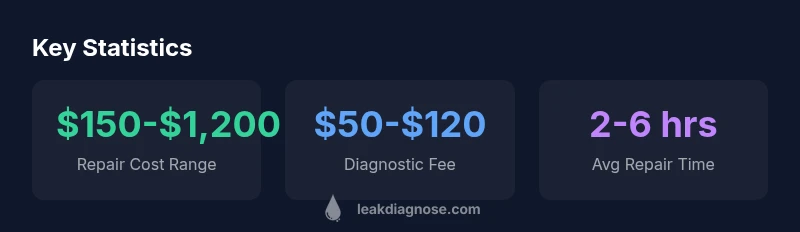
How much is a coolant leak? Typical repair costs range from $150 to $1,200, depending on leak source and vehicle type. Diagnostic fees usually run $50–$120, with simple hose or clamp fixes on the lower end and radiator or water pump replacements on the higher end. According to Leak Diagnosis, a thorough diagnosis helps prevent escalating engine damage and bigger bills.
Understanding the cost drivers behind a coolant leak
Coolant leaks trigger a cascade of potential problems, and the price tag to fix them reflects several moving parts. The total cost hinges on where the leak is, what caused it, the parts that must be replaced, and the labor rate in your area. The same leak in a compact sedan can cost less than in a luxury SUV because parts and labor are less expensive and easier to access. When homeowners and DIY enthusiasts ask "how much is a coolant leak," they're often really asking about the end-to-end expense—from diagnostic testing to final part replacement. In most cases, the final bill comes from a combination of diagnostic charges, parts replacement, and labor. If the leak is minor and accessible, repairs may be affordable; heavy-duty repairs that involve the radiator, water pump, or head gasket dramatically raise costs and complexity. Environmental and safety regulations can influence disposal fees and required coolant type, which also affects price. For homeowners, understanding these drivers helps set realistic budgets and avoid sticker shock. According to Leak Diagnosis, regional labor rates and vehicle make/model drive the majority of variance in the final price.
Diagnostic steps and their costs
Diagnosing a coolant leak accurately is the foundation of a fair price. Shops use a mix of visual inspection, pressure tests, UV or dye tracing, and sometimes electronic leak detectors. The diagnostic fee typically covers labor to locate the source and confirm the exact component involved. Expect a range of $50–$120 for the initial assessment, and note that some shops apply this fee toward the repair if you proceed with the service. Intermittent leaks or leaks that only appear under heat or acceleration require careful testing, possibly extending diagnostic time and cost. A clear, itemized estimate before any repairs helps you compare quotes and decide whether a quick hose fix or a radiator replacement is warranted.
Repair scenarios and price ranges
Most coolant-leak repairs fall into a few common scenarios, each with its own cost band. A minor hose or clamp leak might cost as little as $60–$200 if nothing else is damaged. Replacing a radiator hose or a set of clamps can push costs toward $200–$400. If the radiator itself is leaking, the repair often ranges from $500–$1,200, depending on the radiator size and accessibility. A failing water pump, a classic source of coolant loss, typically adds $300–$900 to the bill, including parts and labor. In some cases, a head gasket or engine-block issue may be suspected, which can substantially raise both parts and labor costs. Always request an itemized estimate that breaks out parts and labor, so you can see where the money is going and avoid paying for unnecessary components.
Hidden costs and what can inflate the bill
Several factors can inflate a coolant-leak repair bill beyond the initial quote. If you need specialized coolant (eg, silicate-free or extended-life formulas), that adds to material costs. Radiator replacements often require new coolant, seepage checks, flushing, and disposal fees. Labor complexity matters: if the leak is behind a timing cover, under a subframe, or near the transmission, access time increases, raising labor hours. Some vehicles require additional parts such as thermostats, belts, or fans, and a diagnostic retest may be necessary after repairs to verify the leak is resolved. Finally, emergency or after-hours service commands a premium. A conservative approach is to secure a written estimate with a guaranteed price and a clear warranty on parts and labor.
Do-it-yourself vs professional repair: risk and costs
DIY fixes for very small leaks, like tightening a hose clamp or replacing a loose hose, can save money, but they carry risks. If a DIY approach delays professional diagnosis, you may miss an underlying issue such as a failing water pump or a cracked radiator, which could lead to severe engine damage. For most homeowners, especially with modern vehicles, professional service is recommended to ensure the cooling system is properly purged and refilled without introducing air pockets that impede cooling. If you do attempt a DIY fix, ensure you have the correct coolant type, a clean workspace, and the tools to perform a thorough leak-test after the repair.
Insurance and warranty considerations
Most standard auto insurance policies do not cover mechanical failures like coolant leaks. However, some dealer warranties or vehicle service contracts may cover parts or certain repairs if the issue is related to covered components. Always review your policy to confirm what is included and what counts toward the deductible. If a vehicle is under a manufacturer’s warranty, coolant-leak issues are often handled by the dealer, which may reduce out-of-pocket costs but could involve OEM parts and labor rates that differ from independent shops. In 2026, the general guidance from Leak Diagnosis remains: verify coverage, obtain an itemized estimate, and insist on a warranty on both parts and labor.
Preventive maintenance to minimize future coolant leaks
The best way to keep coolant-leak costs down is to prevent leaks from developing in the first place. Schedule regular coolant level checks and coolant flushes per the vehicle manufacturer’s recommendations. Inspect hoses for cracks, bulges, or coolant residue, and replace aging clamps and hoses proactively. Pay attention to temperature gauge anomalies, steam from the engine bay, and sweet-smelling odors that can signal a cooling-system issue. Early detection dramatically reduces the risk of major failures, reduces downtime, and lowers long-term repair costs.
How to obtain an accurate estimate: what to ask your shop
When you call a shop for an estimate, ask for an itemized breakdown that lists parts, labor hours, and tax. Request a written quote valid for a specific period, and ask whether the price includes coolant flush, disposal fees, and a post-repair pressure test. If the leak source is difficult to locate, ask whether the shop offers a dye or UV test and how long the diagnostic period might take. Finally, confirm the warranty on both parts and labor and ask about any online coupons or senior discounts that may apply in your area.
Typical coolant leak repair cost components
| Component | Typical Cost Range (USD) | Notes |
|---|---|---|
| Diagnostic fee | 50-120 | Charged upfront; may be applied toward repair |
| Hose/Clamp replacement | 60-200 | Common minor-leak fix |
| Radiator replacement | 500-1200 | Depends on model and access |
| Water pump replacement | 300-900 | Often bundled with timing or belt work |
Questions & Answers
What is the typical cost to diagnose a coolant leak?
Most shops charge a diagnostic fee of about $50-$120 to locate the leak; this may be waived if you proceed with repairs.
Most shops charge a diagnostic fee of fifty to one hundred twenty dollars to locate the leak, often applied toward the repair.
Why do costs vary so much?
Costs depend on leak location, parts required, vehicle make/model, and whether radiator replacement is needed.
Costs vary because leaks can be in hoses, radiators, pumps, or hoses—part and labor costs depend on what's replaced.
Can I fix a coolant leak myself?
Some minor leaks can be addressed by tightening clamps or replacing hoses, but major leaks or radiator issues should be handled by a professional.
You might tighten a clamp or replace a hose, but major leaks require a pro to avoid engine damage.
Will insurance cover coolant leak repairs?
Typical auto insurance does not cover mechanical failures like coolant leaks; check your policy for specifics.
Usually, standard auto insurance won’t cover coolant leaks; verify with your provider for exceptions.
How can I prevent future coolant leaks?
Regular coolant checks, timely hose/clamp replacements, and coolant flushes reduce leak risks.
Regular checks and timely replacements help prevent future leaks.
What should I ask a shop before repairs?
Ask for a written estimate, itemized parts, expected timelines, and warranty on parts and labor.
Ask for an itemized estimate and warranty details in writing before repairs.
“A coolant leak is a signal that the cooling system needs careful inspection; addressing it early prevents costly engine damage.”
Main Points
- Start with a diagnostic to avoid unnecessary parts replacement.
- Expect a total range of roughly $150-$1,200 for common coolant leaks.
- Labor rates and parts costs vary by region and vehicle model.
- Preventive maintenance helps minimize future leak risks.
- Request an itemized estimate with warranty coverage before repairs.