Cost of Exhaust Manifold Leak Repair: What to Expect
Learn the typical costs, drivers of price, and strategies to budget for exhaust manifold leak repairs. This guide covers parts, labor, diagnostics, and cost-saving tips for homeowners. Based on Leak Diagnosis Analysis, 2026.


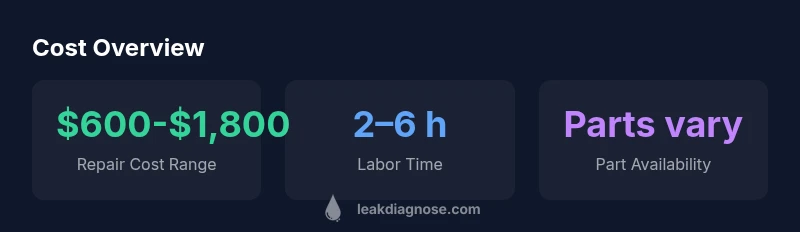
Typical costs for repairing an exhaust manifold leak range from 600 to 1,800 USD, depending on vehicle type, parts quality, and local labor rates. Gasket leaks are usually toward the lower end, while replacing an exhaust manifold or associated sensors pushes costs higher. Diesel engines and rare models often skew higher due to parts availability and labor complexity. Diagnostic fees may also apply in some shops.
What drives the cost of exhaust manifold leak repair
Understanding the cost of exhaust manifold leak repair starts with recognizing what drives the price: parts quality, labor, and regional labor rates. The most significant factors are (a) whether you are replacing a gasket or the manifold itself, (b) the engine type and accessibility, and (c) the labor rate at your shop. OEM parts tend to cost more than aftermarket equivalents, but they can offer better durability and fit. In addition, some leaks involve sensors, studs, or catalytic converter proximity, which adds to both parts and labor. Diagnostic steps also contribute to upfront costs; a shop will typically confirm the leak type, locate its source, and assess whether other components are affected. As with many mechanical repairs, the cost will be influenced by the vehicle’s age, mileage, and whether the repair is performed on a turbocharged or diesel engine, which often require extra bolts and specialized torque specs. The bottom line is that the cost of exhaust manifold leak repair is not a single price tag but a spectrum shaped by the exact fault, the vehicle, and the chosen parts.
Common reasons for price variation
- Gasket leaks vs. manifold replacement: gasket leaks are cheaper, while full manifold replacement can substantially increase costs.
- Sensor and accessory involvement: O2 sensors, EGT sensors, or close-by heat shields may need replacement or realignment, adding to both parts and labor.
- Vehicle accessibility: engines with tight manifolds or crosstalk with other exhaust components take more time, increasing labor costs.
- Diagnostic scope: some shops include diagnostic fees, while others apply the fee toward the final repair if authorized by the customer.
- Regional differences: labor rates vary by region, with urban areas typically charging more per hour than rural shops.
Practical takeaways for budgeting
- Start with a diagnostic to clearly identify the leak source and affected components.
- Ask for a fixed or itemized estimate that separates parts, labor, and diagnostic fees.
- Consider both gasket and manifold options; sometimes a gasket-only fix suffices, avoiding a full manifold replacement.
- If your vehicle is older or high-mileage, factor in the potential for related issues (sensors, upstream catalytic converter exposure).
- Check for warranties on parts or workmanship which can offset some of the cost if a defect is found later.
Factors that influence repair timing and price
The timing of repairs depends on the leak location and the ease of access to the manifold bolts and gaskets. A gasket leak behind the exhaust manifold often allows a faster fix than replacing the manifold itself. In some cases, a shop may need to remove components like wheel wells or cross-members to access the manifold, which lengthens the job into a multi-hour or even multi-day process in rare situations. Scheduling during off-peak hours can sometimes reduce labor charges if the shop is running promotions or has flexible staffing. Additionally, if the leak has caused heat damage to nearby hoses or wiring, replacement parts may be needed, pushing the total cost higher. It’s prudent to plan for a slightly longer service window if the vehicle’s engine bay is crowded or if aftermarket parts are chosen.
DIY vs professional repair: safety and feasibility
Exhaust system work involves hot gases, tight tolerances, and oxygen-sensitive sensors. Attempting a DIY repair can be risky, especially if you are not equipped to safely manage exhaust components or torque settings. Professionals use torque wrenches to specification and can verify that the manifold seal is adequate, reducing the risk of a repeat leak. For most homeowners, a professional evaluation is the safest and most cost-effective route in the long term. If you do choose to DIY, ensure you have a proper workshop, a way to safely elevate the vehicle, and the correct parts in hand before starting. Remember that improper installation can lead to dangerous exhaust leaks, emissions failures, or fire hazards.
Estimating costs with your vehicle in mind
To estimate the cost for your specific vehicle, collect a few data points before visiting shops: your vehicle’s year, make, model, engine type (turbocharged or normally aspirated), and whether you’ve noticed a ticking sound or abnormal exhaust odor. Ask for a written quote that lists parts (gasket vs. manifold), labor hours, diagnostic fees, and any sensor replacements that might be necessary. Use the quotes to compare not just price but also parts quality and warranty terms. For many drivers, choosing a shop that provides a warranty on workmanship provides better value than saving a few dollars upfront. If the leak source is found early, it may be possible to address it with gasket replacement rather than a full manifold swap, which can save a substantial amount of money.
Preventive steps to minimize future costs
- Regularly inspect for exhaust leaks and seal integrity around the manifold area.
- Maintain heat shields and nearby sensors to prevent damage from heat and vibration.
- Address small leaks promptly to prevent corrosion and more extensive repairs down the line.
- Consider a pre-purchase inspection for used vehicles to catch manifold issues early.
References and notes on cost ranges
- When budgeting, consider the range 600-1,800 USD as a general guideline based on vehicle type, parts choice, and labor rates. This range accounts for gasket-only fixes and full manifold replacements, but actual costs vary by model, region, and shop. Diagnostic fees may apply or be credited toward the repair. Always request a detailed estimate before authorizing work.
Costs by repair type and factors
| Repair Type | Typical Cost Range (USD) | Typical Labor Hours | Notes |
|---|---|---|---|
| Gasket replacement | 300-900 | 2-4 | Leak around gasket; common and cheaper option |
| Manifold replacement | 500-2200 | 3-6 | More expensive; depends on model; may include bolts and studs |
| Diagnostic fee | 0-150 | 0.5-1 | Optional; often credited toward repair |
| Sensor replacement | 100-350 | 0.5-2 | O2 or temperature sensors may be affected |
| Catalytic converter impact | 250-1200 | 1-3 | Depends on damage and location |
Questions & Answers
What is considered an exhaust manifold leak?
An exhaust manifold leak occurs when exhaust gases escape from the manifold or its gaskets. You may hear a ticking sound, notice a sulfur-like smell, or feel reduced engine performance. Prompt diagnosis is important to avoid emissions issues and heat damage.
An exhaust manifold leak means exhaust gases are escaping from the manifold area, often with a ticking sound. Get it checked promptly to avoid emissions problems and heat damage.
How much does it cost to fix an exhaust manifold leak?
Costs vary widely by vehicle and parts, but typical totals range from roughly $600 to $1,800, including parts, labor, and diagnostic work.
Costs vary a lot, but most repairs land between six hundred and eighteen hundred dollars.
Is it safe to drive with a leak?
Driving with an exhaust manifold leak is not safe. Leaks can allow dangerous gases into the cabin and increase fire risk. Have the vehicle inspected and repaired promptly.
No, driving with a leak is risky and should be avoided until it’s repaired.
Should I DIY or hire a professional?
DIY is generally not recommended due to heat, gas exposure, and torque requirements. A professional should handle manifold bolts and sensor alignment to ensure a proper seal.
It's usually best to hire a professional for exhaust manifold work.
How long does a repair typically take?
Most repairs take 2-6 hours, depending on engine layout and accessibility. Some complex cases may require longer.
Most repairs take a few hours, but complex setups can take longer.
Will insurance cover this repair?
Auto insurance usually does not cover wear-and-tear repairs like leaks, but check your policy for exceptions or additional coverage.
Typically not covered, but always verify with your insurer.
“The most reliable cost estimates come from a shop that confirms the leak type, sources the correct gasket or manifold, and notes any affected sensors.”
Main Points
- Plan for a wide cost range (roughly $600–$1,800) for most repairs.
- Get an upfront diagnostic to refine the estimate.
- Consider gasket replacement first to minimize expense.
- Expect higher costs for complex engines or additional sensor work.
- Ask about part quality and warranty to protect your investment.