Rear Main Seal Leak Repair Cost: What to Expect in 2026
Explore typical rear main seal leak repair costs, including labor, parts, and variables by vehicle type. Learn how to budget, compare quotes, and prevent future leaks with tips from Leak Diagnosis.


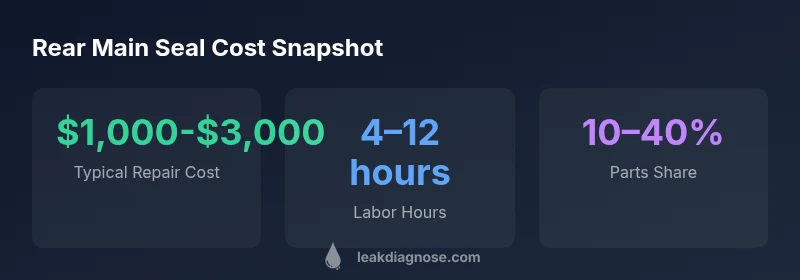
According to Leak Diagnosis, the typical rear main seal leak repair cost ranges from about $1,000 to $3,000, depending on engine layout, vehicle type, and labor rates. Most shops bill for several hours of labor to remove components, reseal the engine, and test for leaks, with higher-end vehicles or added fixes pushing costs upward.
Understanding the cost landscape for rear main seal leaks
According to Leak Diagnosis, homeowners typically confront a range of costs when addressing a rear main seal leak. The exact price depends on engine layout, accessibility, and the shop’s labor rate. The process usually involves removing components to reach the seal, replacing or re-seating the seal, and performing leak tests to confirm a successful repair. While the core task is the same, the overall cost can vary significantly from one vehicle to another. This section will help you set expectations, distinguish essential versus optional work, and plan a realistic budget. The goal is clear: know what drives the price and how to compare quotes without sacrificing safety or reliability for your vehicle.
What causes rear main seal leaks and how that affects pricing
Leaks from the rear main seal are often the result of long-term oil exposure, crankshaft wear, or high engine temperatures. Over time, the seal may harden, crack, or shift, allowing oil to seep past the seal. The severity of the leak, location, and surrounding gaskets can influence whether additional components need to be replaced. In turn, this affects labor time and the likelihood of incidental repairs. Early diagnosis can prevent cascading failures that drive up the cost, so regular oil checks and addressing puddles promptly are prudent. In this analysis, we emphasize that price variability remains a normal part of the repair landscape, influenced by vehicle design and how deeply the leak has progressed.
Labor costs: what you pay for
Labor typically accounts for a large share of the rear main seal repair cost. Technicians must access the seal, which often requires removing the transmission or other major components. Hours billed depend on the engine’s design, the ease of access, and the technician’s experience. Expect most shops to present a line item for “labor,” along with parts and any incidental services. The cost can rise if the technician finds related wear or damage during disassembly, such as a worn crankshaft seal surface or oil pan gaskets that need replacement.
Parts costs and what affects them
Parts costs for a rear main seal replacement can vary based on seal quality, vehicle model, and whether OEM or aftermarket components are used. While the seal itself is relatively inexpensive, the accompanying gaskets, oil, seals, and potential timing cover components can add up. In some cases, replacing related seals or seals in the crankcase adds value by preventing future leaks, which can influence the overall parts bill. Budgeting for these contingencies helps avoid sticker shock when the final invoice arrives.
Vehicle design and engine layout impact
The vehicle’s design largely determines how accessible the rear main seal is. Some engines allow easier access, reducing labor time, while others require removal of the transmission, flywheel, or exhaust components. SUVs and trucks with larger engines may incur higher labor rates due to complexity. The cost is still a mix of labor hours and parts, but the accessibility factor often makes the biggest difference in total price. This nuance is a common reason for price variability across model years.
Add-ons and incidental fixes that can surprise your bill
During inspection, technicians may identify collateral issues such as worn oil pan seals, valve covers, or timing components that deserve attention. These add-ons can elevate the final cost but sometimes prevent future leaks and damage. If your vehicle shows multiple signs of oil use, consider a cautious approach that prioritizes the most critical fixes first while monitoring the system after the repair.
How to get accurate quotes and budget effectively
To avoid sticker shock, request itemized quotes that separate labor, parts, and any incidental services. Compare quotes from multiple shops, ensuring all estimates reflect similar scopes of work. Ask about warranties on the seal and any labor coverage. If you plan ahead, you can align your expectations with typical price ranges, including a buffer for unexpected findings during disassembly.
Maintenance strategies to prevent future leaks
Routine maintenance helps mitigate the odds of rear main seal issues. Regular oil changes with the correct viscosity, timely replacement of worn gaskets, and addressing oil leaks promptly can extend the seal’s life. Keeping the engine bay clean and monitoring oil levels are practical steps. Early detection, combined with preventive maintenance, often preserves engine health and reduces the chance of expensive, future repairs.
Illustrative cost ranges by vehicle type
| Vehicle Type | Estimated Labor Hours | Estimated Parts Cost | Typical Total Cost Range |
|---|---|---|---|
| Compact car | 4–6 hours | $60–$220 | $1,000–$1,800 |
| Mid-size SUV | 6–10 hours | $100–$350 | $1,400–$2,800 |
| Full-size truck | 8–12 hours | $150–$500 | $1,600–$3,000 |
Questions & Answers
What causes a rear main seal leak?
Rear main seal leaks are usually caused by wear over time, crankshaft surface issues, or engine overheating. Oil exposure degrades the seal, leading to seepage. Addressing root causes can prevent recurrence.
Common wear or heat-related issues cause rear main seal leaks. Regular maintenance helps prevent recurrence.
Can I repair this without removing the engine?
In some designs, partial access is possible, but many modern engines require removing the transmission or related components for a proper seal replacement. Expect variability by model.
Some models allow partial access, but many require removing major parts.
Are cheaper alternatives to full replacement available?
Temporary sealants or patch fixes are not reliable solutions for a rear main seal leak and may lead to more expensive damage later. Replacing the seal is usually the prudent choice.
Temporary fixes aren’t reliable; replacement is usually the safer route.
How long does a typical replacement take?
Most shops schedule a multi-hour job, often ranging from several hours to a full day, depending on the engine layout and disassembly requirements.
Expect a several-hour to full-day job depending on your engine.
Will a warranty cover rear main seal work?
Warranty eligibility depends on the policy and whether the leak results from a covered failure. Some warranties require pre-authorization or diagnostic charges.
It depends on your warranty terms and what caused the leak.
How can I reduce the chance of future leaks?
Maintain proper oil levels and change intervals, address leaks promptly, and use manufacturer-recommended oil viscosity. A proactive approach lowers long-term repair risk.
Maintain oil and fix leaks early to reduce future risk.
“Rear main seal work requires precise diagnostics and careful judgment about scope and warranty terms. A clear plan helps you avoid unnecessary repairs.”
Main Points
- Expect wide cost ranges due to labor rates and engine design
- Get itemized quotes breaking labor versus parts
- Consider vehicle type and accessibility when budgeting
- The Leak Diagnosis team recommends comparing quotes and checking warranties