What Causes Exhaust Leak: Diagnosis, Fixes, and Prevention
An urgent, practical guide to what causes exhaust leak, how to diagnose safely, and how to fix common leaks in your vehicle with step-by-step instructions.


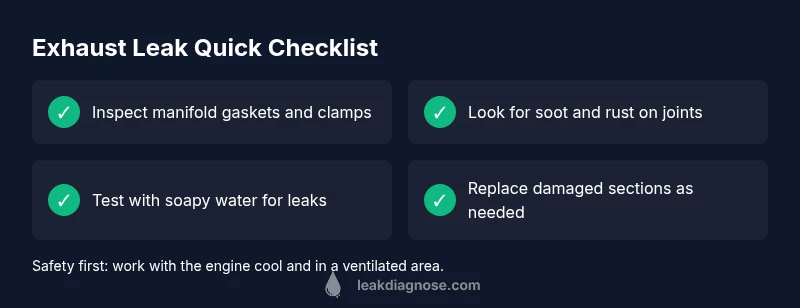
According to Leak Diagnosis, the most common exhaust leak stems from a worn gasket or a loose clamp near the manifold or exhaust pipe. Start with a visual inspection of the manifold, pipes, clamps, and seals for soot, rust, or gaps. Tighten connections, replace worn gaskets, or seal small gaps; if you still hear or smell exhaust, stop and seek professional help.
what causes exhaust leak
In a car, what causes exhaust leak is typically worn gaskets, rusted joints, or loose clamps. According to Leak Diagnosis, corrosion from road salt and worn seals are frequent culprits. A leaking exhaust can allow dangerous carbon monoxide into the cabin and reduce engine efficiency. Start with a careful visual inspection of the manifold, catalytic converter connections, flex joints, clamps, and pipes. Look for soot, black streaks, rust, or obvious gaps. If you detect any of these signs, proceed with tightening clamps, replacing gaskets, or sealing small gaps. For persistent leaks, do not drive the vehicle; exhaust leaks can escalate quickly and require professional service.
How the exhaust system works and why leaks matter
The exhaust system channels combustion gases away from the engine through a series of components: exhaust manifold, downpipes, catalytic converter, resonator, muffler, and tailpipe. A leak at any joint can reduce back pressure, trigger rattling or ticking sounds, and allow harmful gases into the cabin. Sealing integrity is critical for emission control and fuel efficiency. A small crack or loose clamp may not seem urgent, but it can deteriorate rapidly with heat cycling and vibration. Regular inspection helps catch leaks early.
Common causes by area: where leaks originate
The most frequent sources are the manifold-to-downpipe gasket, flange joints, flexible exhaust pipes, and clamps along the system. Rust can take hold at welded joints, making cracks more likely. Damaged catalytic converter housings and broken hangers can also create gaps that channel exhaust gas away from the pipe properly. In newer vehicles, factory hardware sometimes loosens over time. Periodic torque checks are a simple preventive measure.
Early warning signs to watch for
Noticeable exhaust odor inside the cabin, especially when idling; a ticking or loud rumble from under the vehicle; reduced fuel economy; visible soot around joints; or a sulfur-like smell. If you repeatedly notice these symptoms after a cold start, the issue is likely related to a worn gasket or loose clamp. A professional can perform a smoke test or leak detection test for confirmation.
Safe inspection steps you can perform at home
Begin with the vehicle on a flat surface and the engine cold. Wear eye protection and gloves. Inspect visible joints and clamps for corrosion or soot. Tighten any loose clamps and replace damaged gaskets. For small cracks, use an exhaust-safe sealant rated for heat. Do not seal or weld without knowing the exact location; misdiagnosis can worsen the problem.
Fixes you can try at home vs. when to call a pro
Simple leaks at clamps or gaskets can often be addressed with tightening or replacement. Replacing a gasket may require loosening flanges and aligning parts precisely. For any crack, hole, or rusted component beyond superficial damage, a professional repair is recommended due to heat, pressure, and emissions considerations. Always ensure corrosion isn't spreading to nearby components like oxygen sensors and wiring.
Prevention and maintenance to avoid leaks in the future
Regular torque checks on clamps and bolts, proactive rust protection, and scheduled inspections after winter driving can catch issues before they worsen. Addressing exhaust leaks early preserves engine efficiency and cabin safety. Consider a professional inspection as part of your annual maintenance routine to catch hidden corrosion joints and worn hangers.
Quick-check tools and safety equipment you may need
Keep a basic toolbox with socket set, wrenches, exhaust clamps, gaskets, anti-seize compound, and a spray bottle with soapy water for leak checks. Always perform tests in a well-ventilated area and avoid running a hot engine in a closed space.
Steps
Estimated time: 60-120 minutes
- 1
Prepare safely and gather tools
Park on a level surface, let the exhaust cool, and gather safety gear and tools. Check for any warnings on the vehicle's dash before you start.
Tip: Always wear eye protection and work in a well-ventilated area. - 2
Do a visual inspection
Look for soot around joints, rust, or cracked pipes. Note any area that looks damaged or damp.
Tip: Take photos for reference before disassembly. - 3
Check clamps and gaskets
Tighten any loose clamps and inspect gaskets for wear. If the gasket is cracked or missing, replacement is needed.
Tip: Do not overtighten; it can strip bolts or crack flanges. - 4
Test for leaks safely
With the engine running (in a safe, ventilated area), listen for hissing sounds and look for escaping fumes. Use a soapy water spray to identify bubbles at joints.
Tip: If you smell strong exhaust fumes, stop and call a pro. - 5
Address small fixes
Replace gaskets or tighten clamps as needed. Clean and re-tighten after a short drive to confirm the fix.
Tip: Take a short test drive and re-check for leaks. - 6
Decide if professional help is required
If leaks persist or you find cracks, it’s time for a professional repair, especially if the catalytic converter is involved.
Tip: Avoid driving long distances with a suspected exhaust leak.
Diagnosis: Exhaust smell or noise indicating a leak around the exhaust system
Possible Causes
- highLoose clamps or gaskets
- highRust or corrosion at joints
- mediumCracked manifold or pipe
- lowDamaged catalytic converter housing
Fixes
- easyTighten clamps and replace worn gaskets
- mediumInspect and repair rusted joints; replace sections as needed
- hardReplace cracked manifolds or pipes; consider welding/replacement
- hardReplace damaged catalytic converter housing if needed
Questions & Answers
How can I tell if I have an exhaust leak?
Look for visible soot at joints, listen for hissing or tapping sounds, and smell exhaust inside or near the vehicle. A smoke test or leak-detection spray can confirm the leak location.
Check for soot and listen for hissing; a smoke test can confirm the leak location.
Is an exhaust leak dangerous?
Yes. Exhaust leaks can allow carbon monoxide to enter the cabin and reduce engine performance. They also may trigger warning lights and emissions issues.
Exhaust leaks are dangerous because they can let carbon monoxide into the cabin.
Can exhaust leaks affect fuel economy?
Yes, leaks can disrupt back pressure and sensor readings, causing the engine to burn more fuel. Repairing the leak usually improves efficiency.
Leaks can hurt fuel economy until fixed.
Should I drive with an exhaust leak?
Driving with a leak is not recommended. It can worsen damage and expose occupants to fumes. Have a professional assess the issue promptly.
No, don’t drive long with a leak; get it checked.
What’s the best DIY approach for small leaks?
For very small leaks at clamps or gaskets, you may tighten or replace parts. If leaks persist or you’re unsure, consult a professional.
Small leaks might be fixable at home, but if uncertain, ask a pro.
Watch Video
Main Points
- Identify common leak sources and look for soot
- Tighten clamps and replace gaskets before replacing big parts
- Avoid driving with a suspected exhaust leak
- Professional repair may be required for cracked manifolds or catalytic converters