Manifold Exhaust Leak: Diagnosis, Fix & Prevention
Learn to diagnose and fix a manifold exhaust leak safely with practical checks, a step-by-step workflow, and prevention tips from the Leak Diagnosis team.


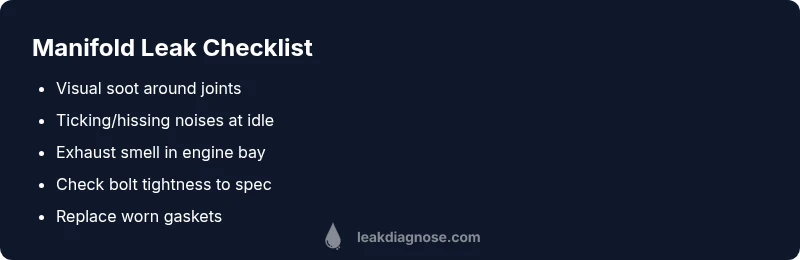
Most manifold exhaust leaks are caused by a cracked exhaust manifold, a failed gasket, or loose bolts at the flange. Start by visually inspecting the manifold area for soot and listening for a ticking sound at idle. If you confirm a leak, tighten bolts only if you know the correct torque, replace gaskets, and seek professional service for a full repair.
What is a manifold exhaust leak?
A manifold exhaust leak occurs when exhaust gas escapes from the junction where the exhaust manifold connects to the engine. This can happen at the gasket, a cracked manifold, or a warped flange. The leak introduces hot gases into areas not designed to contain them, which can damage nearby components and increase exhaust noise. The manifold is responsible for directing exhaust from each cylinder into the exhaust system; when a leak forms, the flow becomes irregular, reducing backpressure and causing symptoms that homeowners notice as ticking sounds at startup, a sulfur-like smell under the hood, or a noticeable drop in fuel efficiency.
According to Leak Diagnosis, a manifold exhaust leak is often caused by corrosion from heat cycling, road salt, and vibration over time. Small cracks or gasket failures may be invisible, but you can sometimes spot dark soot around joints or hear a high-pitched hiss when the engine is under load. Early detection matters: a leak allows exhaust gases to bypass the catalytic converter, potentially triggering check engine lights and increasing emissions. If you notice signs, address it promptly because neglect can lead to warped components, heat damage to wiring, or a failed emission test.
Causes and risk factors
Manifold exhaust leaks can develop from multiple sources. The most common is a failing gasket between the cylinder head and the exhaust manifold, which weakens over time due to heat cycling. Corrosion from road salt and moisture accelerates metal fatigue, especially on older vehicles. A cracked or warped exhaust manifold, loose flange bolts, or a failed heat shield can also create an unintended path for exhaust gases.
From a risk perspective, a manifold exhaust leak poses safety and environmental concerns, including the potential release of carbon monoxide into the engine bay and under-hood components. Regular maintenance reduces risk, and catching leaks early often prevents more extensive repairs later. Based on Leak Diagnosis analysis, history of frequent temperature swings and lack of gasket replacement are strong indicators a manifold leak could develop if not addressed.
Signs to look for (and safety considerations)
Recognizing a manifold exhaust leak early can save time and money. Key signs include a distinct exhaust smell under the hood or on start-up, a ticking or tapping sound from the engine bay that grows with RPM, and reduced engine performance or fuel economy. Soot around the manifold joints is a telltale physical clue. If you notice a MIL (check engine light) or emissions failure, a leak could be part of the problem. Safety comes first: never place yourself near a hot exhaust system; always allow the engine to cool before touching any components. If you detect a strong exhaust odor inside the cabin, it may indicate a more serious leak or failed heat shield, which warrants prompt attention.
DIY checks you can perform safely
Begin with the engine off and the car cool. Visually inspect the exhaust manifold and surrounding joints for soot, cracks, or corrosion. Wiggle accessible bolts to gauge looseness, but avoid forcing hardware that may snap. For a non-destructive test, you can use a helper to run the engine briefly at idle while you listen for a hiss near the manifold with a mechanic’s stethoscope; never put your face near a running exhaust system. If you find significant soot, audible hiss, or misfiring symptoms, mark the area and plan repairs. Always use proper PPE and work in a ventilated space to avoid inhaling exhaust fumes.
When to call a professional
A manifold exhaust leak can be dangerous due to hot gases and CO exposure. If you observe a large crack, a separated flange, or if the leak is at the head connection, professional service is strongly advised. A shop will typically perform a pressure test to locate the leak precisely and replace gaskets or weld cracks as needed. For vehicles under warranty or with complex exhaust routing, professional service is essential to ensure safety and compliance with emission standards.
Steps
Estimated time: 2-4 hours
- 1
Prepare and safety check
Park on a flat surface, engage the parking brake, and disconnect the battery if you’ll be removing components. Allow the exhaust to cool completely before touching anything hot. Gather gloves, eye protection, and basic hand tools.
Tip: Always work with a cool engine to avoid burns. - 2
Locate the leak area
visually inspect the exhaust manifold area for soot and corrosion. Use a flashlight to inspect the joints between the head and manifold and locate the most prominent sign of leakage.
Tip: Note any signs of damage or missing hardware. - 3
Inspect bolts and gaskets
Check the manifold bolts for tightness to the manufacturer torque specs. Examine the gasket between the manifold and head; look for breaks in the gasket material or dark residue that indicates a leak.
Tip: Do not reuse a compromised gasket. - 4
Decide on a repair path
If bolts are loose, tighten to spec and recheck. If the gasket shows wear or the manifold is cracked, plan to replace the gasket or manifold as needed. For minor issues, a gasket replacement might suffice.
Tip: If you’re unsure about torque specs, consult service manuals. - 5
Perform the repair
Install a new gasket or manifold as required. Re-torque bolts after a short test run, and inspect for any new signs of leakage. If welding is required, seek professional service.
Tip: Use new hardware and sealants where recommended. - 6
Test and verify
Run the engine and listen closely for any remaining hiss or ticking near the manifold. Re-inspect joints after cooldown to confirm the leak is resolved.
Tip: Take a short test drive to ensure there are no abnormal noises.
Diagnosis: Exhaust smell under hood, ticking noise at idle, or reduced engine performance
Possible Causes
- highCracked exhaust manifold or gasket failure
- mediumLoose bolts or warped flange
- lowDamaged heat shield or damaged pipe near manifold
Fixes
- easyTighten bolts to spec if torque is known and bolts are simply loose
- mediumReplace the exhaust manifold gasket or the manifold itself if cracked
- hardWeld or replace a cracked manifold or flange
Questions & Answers
What causes a manifold exhaust leak?
Common causes include a failed gasket, cracks in the exhaust manifold, warped flanges, or loose bolts. Corrosion from heat and road conditions accelerates wear. Regular maintenance helps catch issues before they become leaks.
Common causes are gasket failure, cracks, and loose bolts; corrosion accelerates wear.
How can I tell if my manifold has a leak?
Look for soot around joints, listen for ticking or hissing noises at startup, and smell exhaust in the engine bay. A check engine light can also indicate an exhaust issue.
Soot around joints and a ticking noise at startup are key signs.
Can I fix a manifold leak myself?
Small leaks from gaskets may be DIY friendly with proper torque and gasket replacement, but cracks in the manifold or structural damage usually require professional service to ensure safety and emissions compliance.
Some gasket leaks can be DIY if you have the right tools, but cracks need a pro.
Is it safe to drive a car with a manifold leak?
Driving with a leak can expose you to hot exhaust gases and carbon monoxide. If you notice strong smells or loud noises, limit driving and seek professional assessment promptly.
Limit driving and get a professional check if you detect a leak.
How much does it cost to repair a manifold leak?
Costs vary by vehicle and repair type, from gasket replacement to full manifold replacement. For budgeting, expect a range that reflects parts and labor; consult a local shop for a precise quote.
Costs depend on the fix; a quick gasket job is cheaper than a full manifold replacement.
What maintenance helps prevent manifold leaks?
Regularly inspect exhaust components, address corrosion early, keep heat shields intact, and follow the manufacturer’s torque specs during any manifold work. Timely gasket replacement extends manifold life.
Regular checks and proper torque help prevent leaks.
Watch Video
Main Points
- Inspect early to prevent further damage
- Cracked manifolds and worn gaskets are common culprits
- Professional help ensures safety and compliance
- Regular maintenance reduces future leaks