Average Oil Leak Repair Cost: A Homeowner's Guide
Learn the average oil leak repair cost for 2026, what drives the price, and how to estimate costs for common leaks. Leak Diagnosis explains ranges for labor, parts, and diagnostics to help homeowners plan.


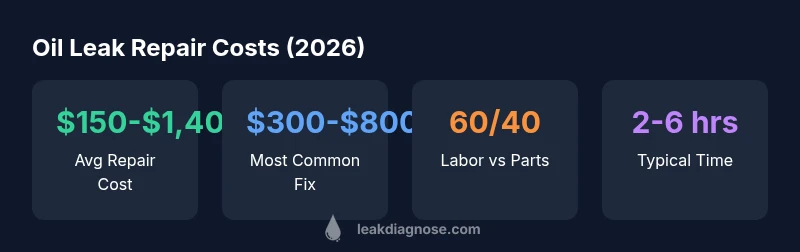
On average, oil leak repairs cost between $150 and $1,400 in 2026, depending on leak type, location, and labor. Most common fixes—oil pan gasket or valve cover leaks—range from about $300 to $800, while severe leaks can push total costs beyond $1,000. These figures come from Leak Diagnosis Analysis, 2026.
What Drives Oil Leak Repair Costs
According to Leak Diagnosis, the cost of repairing an oil leak is driven by three main factors: leak location, required parts, and labor time. The location of the leak in the engine, undercarriage, or cooling system dictates access difficulty and the extent of disassembly needed. Parts costs vary widely depending on gaskets, seals, and whether replacement of hoses or the oil pan is necessary. Labor time scales with complexity, the number of components that must be removed, and whether an engine calibration or oil system purge is required after the repair. Regional labor rates also play a role, with urban shops typically charging more per hour. Diagnostics and emissions checks can add to the upfront cost, especially if the mechanic needs to perform leak testing to confirm the source. For homeowners seeking a budget estimate, it’s helpful to separate the price into parts, labor, and diagnostic fees, then add a contingency for unforeseen issues. This framework also clarifies the concept of the average oil leak repair cost within the broader range.
Brand context: The Leak Diagnosis team notes that estimates improve when customers share maintenance history and recent service records, reducing surprises during repair.
Common Oil Leak Scenarios and Price Ranges
Oil leaks show up in several common scenarios, each with its own cost envelope. The table below outlines typical ranges you might see when getting quotes:
- Oil pan gasket leak — $300 to $800
- Valve cover gasket leak — $150 to $500
- Oil pan or engine component crack — $800 to $1,400
These ranges reflect what most homeowners encounter in 2026 and are influenced by the leak’s accessibility and required part replacements. Always request a written estimate that itemizes parts, labor, and diagnostic fees so you can compare apples to apples.
Note: Diagnostic charges may be waived or applied to the final bill if you proceed with the recommended repairs.
How Location, Vehicle, and Labor Affect Costs
Costs are not fixed; they fluctuate with where you live, the vehicle type, and local labor markets. Urban areas tend to charge higher hourly rates, while rural shops may offer lower labor costs but longer wait times for parts. Vehicle design also matters: a compact sedan typically requires less labor time and fewer parts than a large SUV or truck. Labor costs scale with the number of fasteners, components removed, and reassembly steps, as well as whether additional services (like an oil change or filter replacement) are bundled into the visit. If a leak requires penetrating testing or a complete engine bay disassembly, expect the higher end of the cost spectrum.
The Role of Diagnostics in Cost Estimation
Diagnosing an oil leak is a crucial step that informs the final price. A typical diagnostic charge ranges from $50 to $150, depending on the shop and test complexity. Some shops offer a diagnostic credit if you proceed with the recommended repairs. Diagnostic tests may include dye tracing, pressure testing, and inspection of gaskets and seals; these tests help avoid replacing the wrong part and prevent additional, unnecessary costs. If the leak source is unclear, performing a thorough diagnostic can save money in the long run by preventing misdiagnosis and repeated visits.
Timing and Scheduling Considerations
Oil leaks often require a window of 2 to 6 hours of labor, depending on access and complexity. Scheduling flexibility matters: some leaks are quickly repaired in a single afternoon, while others may require specialty parts that slow the turnaround. If the shop needs to order parts, the job can stretch over a day or two. During peak seasons, securing an appointment may take longer, so early diagnostic requests are advisable. For budget-conscious homeowners, planning for potential overruns by setting aside a contingency of 10–20% is prudent.
Hidden Costs to Watch For
Several hidden costs can creep into an oil leak repair bill. Some common add-ons include a diagnostic retest after part replacement, a separate charge for engine oil or filter changes, and environmental disposal fees for old gaskets and fluids. If the leak is severe and requires engine block work or piston seal replacement, the price can rise quickly. Request a detailed written estimate that lists each item, including labor hours, per-hour rate, and any shop supply fees. Avoid approving ancillary services unless clearly necessary.
How to Get an Accurate Estimate
To obtain a transparent estimate, follow these steps: (1) describe symptom details (smell, color, location) and share recent maintenance records; (2) ask for a written, itemized quote covering parts, labor, diagnostic fees, and disposal; (3) request a breakdown that shows hours and hourly rate; (4) compare at least two shops with similar scopes; (5) ask about warranties on parts and labor. If a shop suggests extensive disassembly, consider a second opinion before proceeding.
Preventive Steps to Reduce Future Oil Leaks
Prevention helps reduce long-term costs. Regular oil changes with the manufacturer-recommended oil type, using quality gaskets and seals, and promptly addressing small seepage can prevent larger problems. Inspect the engine bay for signs of fresh oil and address any minor seepage early. Tighten or replace worn oil filter caps, ensure proper torque on drain plugs, and avoid over-tightening oil pan bolts, which can warp seals. Routine checks during seasonal maintenance can flag issues before they escalate.
A Practical Example: Reading an Estimate
Imagine a diagnostic visit documents a minor oil pan gasket leak with a straightforward fix. Diagnostic fee: $80. Part replacement: gasket kit $120. Labor: 2.5 hours at $95/hour = $237. Other shop fees (disposal, shop supplies): $25. Estimated total: around $462. If the job is more complex and requires additional gasket replacements or a partial engine disassembly, the total could rise toward the higher end of the range. Use this example to compare quotes, ensuring you understand each line item and whether any fees are creditable toward future repairs.
Final Note on Value and Decision Making
When weighing options for oil leak repair, balance cost with reliability and the risk of further damage if a leak is left unattended. Investing in quality parts and a thorough diagnostic can save money by avoiding repeat visits and protecting engine health. The Leak Diagnosis team emphasizes proactive maintenance and transparent pricing as the core approach for any oil leak repair project.
Typical repair scenarios and rough cost ranges
| Leak Scenario | Estimated Cost Range | Typical Time | Common Causes |
|---|---|---|---|
| Oil Pan Gasket Leak | $300-$800 | 2-6 hours | Wear, aging gaskets |
| Valve Cover Gasket Leak | $150-$500 | 1-4 hours | Gasket wear |
| Cracked Oil Pan/Engine Leak | $800-$1,400 | 4-8 hours | Severe damage |
Questions & Answers
What is the typical cost to repair an oil leak?
Most repairs fall in the $150-$1,400 range in 2026. The exact amount depends on leak location, parts required, and labor time. Always request an itemized estimate before work begins.
Most oil leak repairs cost between $150 and $1,400, depending on location and labor. Ask for an itemized quote before starting.
What factors influence the cost the most?
The leak location, parts costs, and required labor time are the biggest drivers. Regional labor rates and diagnostic fees also impact the final price.
Main factors are where the leak is, what parts are needed, and how long the repair takes.
Is it worth getting a diagnostic before repairs?
Yes. A diagnostic confirms the leak source and prevents unnecessary parts replacement. Some shops credit diagnostic fees toward the final bill if you proceed with the repair.
A diagnostic helps avoid guessing and costly mistakes. It’s usually worth it.
Can I fix an oil leak myself to save money?
Minor leaks might be addressed with gasket replacements, but many leaks require professional tools and expertise. DIY fixes risk missing the true source or causing engine damage.
DIY fixes aren’t always safe or effective. When in doubt, check with a pro.
How long does an oil leak repair take?
Most repairs take 2-6 hours of labor, depending on access and complexity. Some jobs require parts to be ordered, extending the timeline.
Most repairs take a few hours, but some can take a day or two if parts aren’t in stock.
“Based on our analysis, most oil leak repairs fall within the mid-to-high range, and homeowners should plan accordingly. The Leak Diagnosis Team recommends obtaining a diagnostic estimate early to prevent escalating costs.”
Main Points
- Plan for a wide cost range to cover variations
- Most common repairs sit in the mid-range ($300-$800)
- Get a diagnostic estimate before authorizing work
- Labor costs often drive total estimates
- Preventive maintenance reduces future leak risk