Why Would a Toilet Leak from the Bottom? A DIY Troubleshooting Guide
Discover why a toilet leaks from the bottom, common causes like wax rings and flange damage, and a practical, step-by-step approach to diagnose, fix, and prevent future leaks safely.


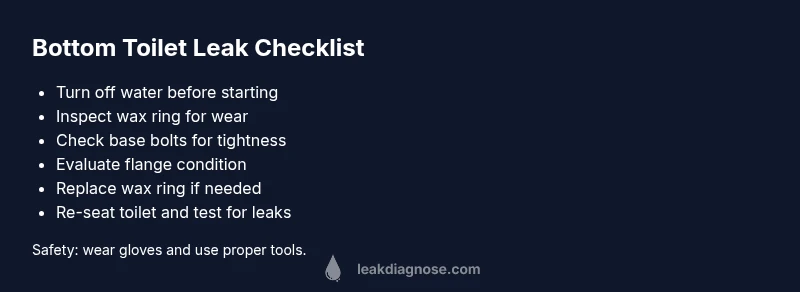
Bottom toilet leaks are usually caused by a failing wax ring or loose mounting bolts at the base. Start by turning off the water, drying the floor, and inspecting the flange. If the bolts are loose, snug them evenly; if the wax ring is worn, replace it. Check for cracks in the toilet or flange and repair as needed.
Why Bottom Leaks Happen
A toilet that leaks from the bottom usually means the seal between the toilet and the drain flange is compromised, not a spill from the tank. According to Leak Diagnosis, most bottom leaks start with gradual wear to the wax ring or a loose toilet base bolt that allows the toilet to rock slightly. Over time, that movement breaks the seal and lets wastewater escape onto the floor. A damaged flange, a corroded or cracked toilet base, or a warped toilet wax ring can also cause leaks to appear at the bottom. In older homes, the flange itself may be recessed, corroded, or covered by a thick layer of tile adhesive, which can prevent a proper seal. Other less common culprits include a deteriorated supply line, a faulty shut-off valve, or a crack in the porcelain near the base. The key to stopping the leak is to identify whether water is entering from the seal area or from a nearby connection. Leak Diagnosis emphasizes safety and accurate diagnosis before any removal.
Common Immediate Causes
When water pools around the base after use, the most common culprits are the wax ring, the mounting bolts, and the flange. The wax ring creates a seal between the toilet and the drain pipe; it can degrade from age, heat, or improper installation. Loose bolts let the toilet rock and break the seal; overtightening can crack the toilet or strip threads. A damaged flange, especially one that is corroded or too high/low, prevents a tight seal. In some cases, the floor itself is uneven or the toilet is installed on a warped subfloor, causing micro-movements that damage the seal. Finally, a leaking supply line or shut-off valve under the tank can show up as a leak at the base if it drips onto the floor near the toilet. We recommend starting with the simplest checks: inspect bolts for tightness, look for visible signs of wax ring wear, and listen for hissing noises that indicate a slow leak.
How to Spot a Failing Wax Ring
The wax ring provides a cushion between the toilet and the drain flange. If it dries out, becomes compressed, or is damaged during installation, it can no longer seal properly. Look for water around the base after flushing, floor staining, and, in some cases, a sewer-like odor—these can indicate a failed wax ring. A quick test is to gently rock the toilet (while supported) to see if there is movement; movement increases the likelihood of a compromised seal. Note that wax rings are inexpensive and replaceable, but they require removing the toilet. Since wax rings compress over time, even a small tilt or wobble can be enough to break the seal.
Checking the Toilet Bolts and Base
Begin by turning off the water and removing the fill valve cap to access the mounting bolts. Tighten bolts gradually and evenly; overtightening can crack the porcelain or strip the thread. If the toilet base wobbles easily, there may be an issue with the bolt flanges or the flooring underneath. Always use a rubber washer and ensure the nuts are snug but not overtight. If you detect persistent seepage around the base after tightening, you may need to replace the wax ring and reseat the toilet. Safety tip: support the toilet when lifting to prevent injury and damage to the floor.
Inspecting the Flange and Drain Pipe
The flange sits in the drain pipe and forms the critical seal with the wax ring. A damaged flange—cracked, broken, or corroded—will allow leaks to occur around the base. If the flange is recessed or too high, the wax ring won’t seal correctly. In some homes, metal flanges corrode faster, especially in humid bathrooms, leading to leaks. Inspect the surrounding flooring for softness or rot, which could indicate water damage and a compromised subfloor. If you notice a rusted or broken flange, plan for replacement by a qualified professional.
Other Potential Causes
If the base isn’t the source, consider other possibilities: a cracked toilet bowl or tank, a failing supply line connection, or a loose shut-off valve. Condensation caused by temperature differences can appear as a leak on the floor, but it’s not wastewater. A slow drip from the supply line can travel along the wall and mimic a bottom leak. In older plumbing, waste lines may attract mineral buildup, potentially masking a subtle leak. By narrowing the source with careful observation, you’ll know whether you need to reseal, replace the wax ring, or address the flange.
DIY Fixes You Can Try
Begin with the simplest fix: ensure the water supply is off and the area is dry. If the base is stable, tighten the mounting bolts evenly and inspect for moisture around the wax ring area. If water continues to appear after flushing and reseating, you’ll likely need to remove the toilet to replace the wax ring and inspect the flange. When removing the toilet, place it on a padded surface to avoid cracks and keep the wax ring level. Replace the wax ring with the correct type for your flange height, then reattach the toilet with even pressure on all bolts. Finally, reconnect the water line, turn on the supply, and test for leaks. If you’re not comfortable with lifting a heavy toilet, or if you see damage to the flange or subfloor, stop and call a licensed plumber. Leak Diagnosis guidance emphasizes safety first and avoids over-tightening that could cause fractures.
When to Call a Professional
Some leaks are straightforward, but others involve damaged flanges, cracked toilets, or compromised subfloors. If you notice persistent leaks after a wax ring replacement, see water damage on the floor, or detect structurally compromised flooring, contact a licensed plumber immediately. A professional can assess flange height, subfloor integrity, and create a permanent seal while preventing future issues. The Leak Diagnosis team recommends getting a professional opinion when you encounter difficult-to-access plumbing or signs of structural damage.
Prevention Tips to Avoid Future Leaks
To reduce future bottom leaks, inspect your toilet connection annually, replace wax rings with the correct size, and ensure bolts are snug but not overtightened. Use a gasket seal or wax ring kit appropriate for your flange height and type. Maintain a dry floor by wiping up spills promptly and check for signs of water damage around the base. Consider installing a floor sealant or wax-free gasket if you anticipate frequent resealing. Regular maintenance and careful installation are the best defenses against future leaks.
Steps
Estimated time: 60-120 minutes
- 1
Turn off water and drain the toilet
Shut off the supply at the valve, flush to remove as much water as possible, and mop up remaining moisture. This reduces mess and protects the floor. Have towels ready and wear gloves.
Tip: Always verify the valve is fully closed before starting. - 2
Disconnect the supply line and remove the toilet
Disconnect the supply line with an adjustable wrench, then unbolt the base from the floor. Lift the toilet straight up and place it on a cushioned surface. Keep the wax ring intact for inspection, or set it aside if you’re replacing it.
Tip: Have a helper hold the toilet to prevent it from tipping. - 3
Inspect flange, bolts, and wax ring
Examine the flange for cracks or height misalignment, check that the mounting bolts are intact, and assess the wax ring for wear. Take photos for reference before removing the old wax ring.
Tip: Note the orientation of the wax ring to ensure proper replacement. - 4
Replace the wax ring and bolt kit
Install a new wax ring of the appropriate type and place the new bolts into the flange. Ensure the flange is seated flat and no gaps exist around the base.
Tip: Don’t reuse old wax rings as they lose sealing ability. - 5
Re-seat the toilet and tighten bolts evenly
Lower the toilet and press down firmly to seal the wax ring evenly. Tighten bolts in a cross pattern to avoid cracking the porcelain. Reconnect the supply line.
Tip: Avoid overtightening; snug is enough to prevent leaks. - 6
Test for leaks
Turn the water back on and flush several times. Watch the base closely as the tank refills. Check around the bolts and wax ring area for any wetness or puddling.
Tip: If you see seepage, turn off water again and recheck bolts and seating. - 7
Address flange issues if leaks persist
If the base still leaks, the flange may be damaged or misaligned. Consider flange repair or replacement, which may require removing the toilet again.
Tip: Flange work is easier with a helper and proper tools. - 8
Consider subfloor or base replacement
If there is soft flooring or rot, repair or replace the subfloor before reinstallation. Structural issues require professional assessment.
Tip: Address subfloor damage promptly to avoid recurring leaks. - 9
Final reinstall and cleanup
Secure the toilet again, check the floor for dryness, and reinstall any flooring materials as needed. Ensure no tools or waste remain around the area.
Tip: Keep spill-proof containers handy during cleanup.
Diagnosis: Toilet leaks from the bottom
Possible Causes
- highFailing wax ring or wax ring degraded over time
- highLoose mounting bolts causing base movement
- mediumDamaged or misaligned drain flange
- lowCracked toilet base or flange-related porcelain damage
- lowLeaking supply line or shut-off valve near the base
Fixes
- easyTurn off water, dry the area, and snug bolts evenly; reseating the toilet can stop minor leaks
- mediumRemove toilet and replace wax ring; inspect flange and re-seat with proper height
- mediumRepair or replace damaged flange; ensure flange is flush with the floor
- hardReplace damaged toilet or consult a professional for flange or subfloor repair
Questions & Answers
What is the most common cause of a toilet leaking from the bottom?
The most common causes are a worn wax ring and loose base bolts. Both issues compromise the seal at the toilet flange and can lead to water pooling at the base.
The most common causes are a worn wax ring and loose base bolts, which compromise the seal and cause leaks near the toilet base.
Can a bottom leak indicate a cracked toilet?
Yes, a cracked base or porcelain damage near the base can cause bottom leaks, though it’s less common than wax ring or bolt issues. Inspect for visible cracks and or movement.
Yes, cracks in the base are possible but less common. Look for visible cracks and movement.
Is it safe to use the toilet while diagnosing the leak?
Limit use while diagnosing to avoid worsening a leak. If you must flush, do so with the water off and the area dry to minimize water damage.
Limit use during diagnosis and be careful when flushing if the leak persists.
Do I need to remove the toilet to replace the wax ring?
Yes, replacing the wax ring typically requires removing the toilet to access the flange and properly reseal the connection.
Usually yes, you need to lift the toilet to replace the wax ring properly.
What tools should I have on hand for this repair?
You’ll want an adjustable wrench, putty knife, wax ring kit, replacement bolts, towels, and a bucket. Having a helper is also beneficial.
Have a wrench, putty knife, wax ring kit, replacement bolts, towels, and a bucket handy.
When should I call a professional?
If the flange is damaged, the subfloor is soft or warped, or leaks persist after a wax ring replacement, contact a licensed plumber for a professional assessment.
Call a pro if you find flange damage or persistent leaks after basic fixes.
Watch Video
Main Points
- Shut off water before starting any fix.
- Most leaks start at the wax ring or base bolts.
- Inspect the flange and subfloor for hidden damage.
- Call a professional if flange or base is damaged.