Toilet Leak Troubleshooting: Quick Fixes and Step-by-Step Guide
Urgent, practical guide to diagnose and fix a toilet leak. Learn common culprits, simple tests, step-by-step fixes, safety tips, and prevention strategies by Leak Diagnosis.


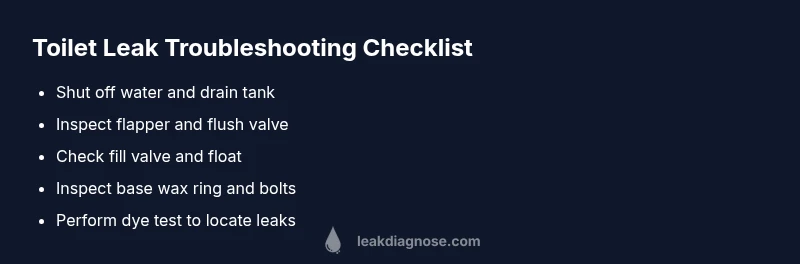
According to Leak Diagnosis, a toilet leak is usually sparked by a worn flapper or a faulty fill valve. Start by shutting off the water supply, flushing to empty the tank, and inspecting the flapper for cracks or glazing. If needed, replace the flapper and check the fill valve seals; for persistent leaks, inspect the wax ring and base seal.
Why toilet leaks happen
A toilet leak in the middle of your home isn't a mystery you want to solve later. It frequently comes from aging gaskets and valves, but other issues can contribute. In practice, you’ll find that a toilet leak is not always dramatic; sometimes the leak is tiny and silent, slowly increasing your water bill. According to Leak Diagnosis, a toilet leak is most often caused by a worn flapper or faulty fill valve. In this guide, we unpack how toilets function, the typical failure points, and how to quickly verify where water is escaping. A standard gravity-fed toilet has several critical parts: the tank, the fill valve, the flapper or seal at the bottom of the tank, the supply line connections, and the wax ring at the base sealing against the floor. Each part can fail with age or mineral buildup. Signs your toilet is leaking include a continuously running fill mechanism, water dripping from the tank, damp floors around the base, and a sudden rise in your water bill. Before touching any parts, locate the shut-off valve behind the toilet and turn it clockwise until it stops. Once the water is off, flush the tank to drain it and inspect the seals safely. This groundwork reduces guesswork and helps you target the right component first.
Common culprits and how to spot them
To diagnose a toilet leak efficiently, start with the most common culprits and confirm with simple checks. The most frequent failure is a worn or mis-seated flapper—the rubber seal at the bottom of the tank. If the flapper is stiff, cracked, or gummy, it won't seal properly, and water will flow into the bowl. A faulty fill valve or misadjusted float can cause the tank to refill too much or too little, which can manifest as a continuous roar or a tank that refills slowly. A loose or cracked supply line connection can drip at any time, especially after flushing. The wax ring at the base can fail if the toilet rocks or is imbalanced, allowing waste water to seep at the seam. More rarely, a hairline crack in the porcelain tank or bowl or a loose bolt can create a leak. Inspect visually: look for moisture around the flapper, at the flush valve, and along the base on the floor. A good check is to perform a quick dye test: place a few drops of food coloring in the tank and wait 10-15 minutes without flushing; if colored water shows up in the bowl, the leak is inside the tank. If water appears at the base after a gentle wiggle of the toilet, the wax ring may need replacement.
Quick diagnostic tests you can perform at home
You don’t need fancy tools to confirm a leak. Start with a simple dye test: add a couple of drops of food coloring to the tank and wait 10–15 minutes without flushing; if color appears in the bowl, the tank seals are leaking. Check the fill valve and float by lifting the float arm; if the tank overfills, the float or valve is misadjusted. Inspect the base by placing a dry towel around the foot of the toilet and watching for dampness during and after flushing. Listen for a soft hiss—the telltale sound of a slowly leaking fill valve. If you notice water pooling near the base after flushing, the wax ring or mounting bolts could be compromised. For persistent issues, consider tightening bolts gently in a crisscross pattern, then recheck with dye. If water continues to leak despite these checks, it’s time to move to fixes or call a pro.
Safety and maintenance checks before you start
Safety comes first when working on a toilet. Wear gloves and use eye protection if possible. Shut off the cold-water supply at the valve behind the toilet and drain the tank by flushing with the valve closed. Have towels or a bucket handy to manage residual water. Work on a dry, non-slip surface and avoid using abrasive cleaners that could damage seals. If you smell gas or suspect a gas line near the work area, stop and call a licensed professional. Never attempt repairs on an older toilet with a cracked tank or compromised base without thorough assessment. Keep replacement parts organized and double-check sizes—flappers and fill valves vary, and wrong parts can cause more leaks.
Prevention tips to stop future leaks
Preventing leaks starts with regular checks and smart maintenance habits. Schedule a quick visual inspection every six to twelve months: look for water staining, rust on metal fittings, or slow drips from supply lines. Replace worn flappers and faulty fill valves promptly, and avoid overtightening mounting bolts which can crack the porcelain. Maintain proper toilet seating by ensuring the wax ring seal remains intact; if the toilet rocks, shim and relevel before replacing the ring. Use high-quality sealants only as recommended, and never mix different brands of wax rings with incompatible seals. Periodically test the toilet with a dye test after any repair to confirm a solid seal. Finally, keep a small repair kit on hand so you can address minor issues quickly and prevent a larger leak from taking hold.
When to call a professional
Some leaks are easy fixes, but others require an expert. If you notice persistent leaking after replacing flappers or seals, if the porcelain shows cracks, or if the base leaks despite a reseal, a licensed plumber is the safest option. Also call a pro if you’re not comfortable working with plumbing shutoffs, if you suspect the leak stems from behind the wall, or if water damage has already occurred. A professional can perform a leak test with professional-grade dye and pressure methods, evaluate structural concerns, and ensure the water supply is safely reconnected.
Steps
Estimated time: 30-60 minutes
- 1
Shut off water and drain the tank
Locate the shut-off valve behind the toilet and turn it clockwise until it stops. Flush the toilet to empty the tank, then use a sponge or towel to remove remaining water. This creates a dry work surface and reduces the risk of splashing during repairs.
Tip: Have a bucket and towels ready; wear gloves to protect hands from sharp edges. - 2
Inspect the flapper and flush valve seal
Lift the tank lid and examine the flapper for signs of wear, cracking, or stiff movement. If the seal feels brittle or glazing is visible, the flapper likely needs replacement. Check the flush valve seat for mineral buildup that could prevent a tight seal.
Tip: Note the chain length and attachment before removing the old flapper to ensure proper reattachment. - 3
Replace the flapper
Install a new flapper of the correct size for your flush valve. Fit the new seal evenly and ensure the chain has slight slack when the flapper sits closed. Test by flushing and watching for a perfectly quiet refilling cycle.
Tip: Take the old flapper to the hardware store to match size and type; universal kits can work if compatible. - 4
Check the fill valve and float
Inspect the fill valve assembly and float arm for signs of wear or mineral buildup. If the tank overfills or refuses to stop, adjust the float or replace the fill valve. Reassemble and test the refill rate after adjustments.
Tip: Turn off water briefly while adjusting to avoid splashing; use the small screw on the fill valve to set the correct level. - 5
Inspect the supply line and mounting hardware
Check the nut connections on the water supply line for tightness and corrosion. If you see leaks at the fittings, snug gently with a wrench and replace washers or seals if needed. Do not overtighten, which can crack fittings.
Tip: Use two adjustable wrenches—one to hold the shut-off valve and one to tighten the nut evenly. - 6
Evaluate the base seal and wax ring
If moisture appears around the base, you may need to reseal with a new wax ring. This often requires lifting the toilet to replace the ring and tighten mounting bolts in a crisscross pattern. Check the floor for level surfaces to ensure a proper seal.
Tip: Plan for a short helper session; removing and reinstalling a toilet is easier with two people. - 7
Test and verify the repair
Turn the water back on and flush several times to validate the fix. Place dye in the tank and wait for 10-15 minutes without flushing; if color shows in the bowl, recheck the seals. If leaks persist, consider professional evaluation.
Tip: Document what you did with photos; this helps if you need to escalate to a plumber.
Diagnosis: Toilet keeps running or shows visible leaks around tank/base
Possible Causes
- highWorn or mis-seated flapper
- mediumFaulty fill valve or incorrect float adjustment
- lowLeaking wax ring or loose base bolts
- lowCracked tank or damaged supply line connection
Fixes
- easyReplace the flapper and/or adjust the flush valve seal; reseat the valve if needed
- easyReplace or repair the fill valve; adjust float to correct fill level
- mediumReplace the wax ring and tighten base bolts; reseal with appropriate sealant
- hardInspect for cracks in the tank or base, replace components as necessary, or call a professional
Questions & Answers
Why is my toilet leaking after replacing the flapper?
A flapper can leak if it doesn’t seal properly or if the flush valve seat is dirty or damaged. Ensure the new flapper fits the valve and clean the seat before seating the new part.
If water still leaks after a new flapper, check that it matches your flush valve and that the seat is clean.
Can a toilet leak waste water quickly?
Yes. Even a small, persistent leak wastes water and raises your bill. Address leaks promptly to minimize waste and potential damage.
Even small leaks add up fast—fix promptly to save water and money.
Is DIY safe for toilet leak repairs?
DIY is safe for simple fixes like flappers and fill valves. For wax rings, base leaks, or cracks, weigh the risks and consider a plumber for safety and reliability.
DIY works for basics, but larger issues may need a pro.
What tools do I need for toilet leak repair?
You’ll typically need an adjustable wrench, pliers, a screwdriver, a replacement flapper, a wax ring kit, and silicone or plumber’s putty for sealing.
Common hand tools plus the right replacement parts will handle most fixes.
How long does a wax ring repair take?
Most wax ring replacements take about 30-60 minutes for a single toilet, depending on access and floor conditions.
Usually half an hour to an hour, depending on space and access.
When should I replace the toilet rather than repair?
If the porcelain is cracked, the base is repeatedly unstable, or repeated leaks occur after repairs, replacement is more reliable.
If cracks or frequent issues keep returning, replacement is wiser.
Watch Video
Main Points
- Identify the leak source quickly by checking the tank and base.
- Perform a dye test to confirm tank leaks before replacing parts.
- Replace worn flappers and faulty fill valves to stop most leaks.
- Tighten base bolts and wax rings if the leak is at the base.
- The Leak Diagnosis team recommends regular maintenance to prevent leaks.