Toilet Leak Repairs: A Practical Home Guide
Learn how to identify, diagnose, and fix toilet leaks with a practical, step-by-step approach. Prevent water damage and slash waste with expert tips from Leak Diagnosis.


This guide defines toilet leak repairs for homeowners, outlining how to identify signs of a leak, select the right seals, and complete a safe, step-by-step repair from shutoff to test. It also highlights essential tools, common mistakes, and maintenance tips to prevent future leaks and protect your home's plumbing. In short, this article gives practical, repeatable steps.
Understanding Toilet Leaks: Signs, Causes, and Quick Checks
Toilet leaks can quietly waste hundreds of gallons per month if ignored. In this section, you’ll learn how to recognize the most common warning signs and understand why they occur. Look for moisture around the base, a damp subfloor, or staining on the ceiling below; a hissing or continuously running tank after a flush also signals a problem. The causes vary: worn flappers, failing fill valves, loose supply lines, cracks in the tank, or a wax ring that has deteriorated. By identifying the likely culprit, you can choose the right repair approach without guessing.
According to Leak Diagnosis, many residential leaks originate in the toilet’s supply chain, often from a flapper or fill valve that has lost its seal. Periodic inspection can catch wear before it becomes a flood or a costly water bill. Start with simple, non-destructive checks: gently wiggle the flush lever to see if the flapper truly seals; place a dry tissue at the base or run a dye test by adding a few drops of food coloring to the tank and watching for color in the bowl over 10-15 minutes. If you see dye, you have a leak that requires action. If not, the leak may be elsewhere in the system (tank bolts, supply line) and can be addressed with basic tools.
Essential Tools and Materials You'll Need for Toilet Leak Repairs
To perform toilet leak repairs safely, gather the right tools and parts before you start. A sturdy adjustable wrench, two screwdrivers, slip-joint pliers, buckets, towels, a sponge, and a flashlight help you access internal components. Replacement parts such as a wax ring, a new fill valve kit, and assorted gaskets ensure you can replace worn components without rework. PTFE plumber’s tape and a rag for cleanup round out the kit. If you live in a hard-water area, consider anti-corrosion sealants. Proper preparation reduces mess and speeds up the repair.
When choosing parts, aim for universally compatible sizes and standard fittings. Don’t mix metal and plastic components unless specifically rated for this purpose. Label parts as you remove them to avoid reassembly mistakes. Keeping a small container for old bolts helps prevent losing hardware in the cabinet.
Assessing Valve and Flapper Wear: What to Inspect
The easiest leaks to fix are often related to the tank’s internal components. Start by inspecting the flapper for cracks or a stiff hinge that prevents a complete seal. Check the flush valve seal for wear or misalignment and confirm the overflow tube isn’t blocked. Test the fill valve by watching the tank refill cycle after a flush; a slow or erratic refill can indicate a worn valve or a misadjusted float. Tighten loose connections on the supply line and ensure the shutoff valve operates smoothly. If you notice frequent condensation or a persistent dampness around the base that doesn’t disappear after tightening, you may be dealing with a more complex issue such as a cracked tank or a degraded wax ring.
Leak Diagnosis analysis shows that most residential toilet leaks originate from worn flappers and faulty fill valves. Use a dye test to confirm the leak source: place a few drops of food coloring in the tank and wait 10-15 minutes without flushing; if color appears in the bowl, you’ve pinpointed a leak source that likely needs part replacement. Remember, a small leak can become a big problem if ignored, so address obvious issues promptly.
Pre-Step: Safety and Planning Before Disassembly
Before any disassembly, plan your approach to minimize water exposure and protect flooring. If you must remove the toilet, lay towels and a dry sponge along the base; have a bucket ready to catch residual water. Wear gloves to keep hands clean and avoid contamination. Turn off the water at the shutoff valve and flush to drain the tank. If the bowl still contains water, use a sponge to remove it. This careful prep reduces the mess and makes the actual repair safer and faster. If you’re uneasy about removing the toilet, start with tightening or replacing components in the tank first to see if a surface-level fix resolves the leak.
Leak Diagnosis emphasizes preparing your workspace and tools in advance, so you’re not scrambling mid-repair. In practice, this means aligning a bucket beneath the shutoff valve, laying towels on the floor, and taking a quick photo of each step to confirm wiring or connections before reassembly.
When to Remove the Toilet and Replace Seals
Not all toilet leaks require removing the entire unit. If the leak is localized around the base where the wax ring sits or around the supply line nut, you can often fix it by tightening connections or replacing the seal without detaching the toilet. However, a persistent base leak after tightening usually indicates a worn wax ring or misalignment that does require toilet removal. If you remove the toilet, take care to guard the wax ring area; replace the wax ring with a new one and ensure the toilet sits squarely on the flange. When reassembling, reconnect the water supply and carefully reseat the bowl to prevent pinching the new wax ring.
If you’re unsure, consult a professional. The Leak Diagnosis team notes that wax-ring failures are a common reason for leaks after reassembly, especially in older homes with settled floors.
How to Test for Leaks Before Reassembly
Once you’ve completed reseating or replacing seals, it’s crucial to test for leaks before finishing the project. Turn the water supply back on slowly and wait for the tank to fill. Check the base for moisture within the first hour, then observe for a full 24-hour period if possible. Perform a dye test again by adding food coloring to the tank and watching for any tint in the bowl after 15 minutes of rest. If the bowl remains clear and no water appears around the base, you’ve likely resolved the problem. If you do see leaks, recheck the flange, bolts, and wax ring alignment. A careful, repeat dye test offers strong confirmation before you finish.
Clean up thoroughly and dispose of old seals and rings properly. Label the restored components to help you track wear timing and plan future maintenance.
Maintenance to Prevent Future Toilet Leaks
Prevention is easier than fixing repeated leaks. Schedule regular inspections of the flapper, fill valve, and bolts every 1-2 years, or sooner in areas with hard water. Use a quality wax ring during any removal and replace the supply line if you notice corrosion or wear. Keep the shutoff valve fully open and closed a few times a year to ensure it remains functional. If you observe unusual water usage or damp patches, address the issue promptly. A little proactive maintenance can prevent major water damage and minimize repair costs over time.
The Leak Diagnosis team recommends documenting inspections and repairs with photos and dates to track wear patterns and plan proactive replacements.
Tools & Materials
- Adjustable wrench (6-8 inch)(Loosen nuts on supply line and toilet bolts)
- Screwdrivers (flat-head and Phillips)(Remove tank components and screws)
- Slip-joint pliers(Grip stubborn fittings and clamps)
- Buckets and towels(Catch and absorb water; protect floor)
- Sponge and rag(Wipe surfaces and dry tanks)
- Wax ring (or modern wax-free seal)(Seal between toilet and flange)
- Replacement fill valve kit / flush valve seals(Wear parts need replacement)
- Toilet flange bolts and nuts(Secure toilet to floor)
- PTFE plumber’s tape (Teflon)(Seal threaded fittings)
- Gloves and safety glasses(Basic protection)
- Flashlight(Inspect dark corners inside tank/casings)
- Trash bag for waste seals(Dispose of old parts properly)
Steps
Estimated time: 60-90 minutes
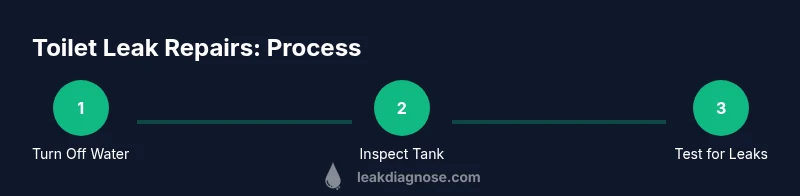
- 1
Turn Off Water and Drain the Tank
Begin by turning off the shutoff valve behind or beside the toilet. Flush the toilet to drain as much water as possible from the tank, then sop up any remaining water with towels. This step prevents spills and gives you a dry work area to inspect components.
Tip: Have a sponge handy to soak up residual water in the tank after flushing. - 2
Inspect the Tank Components
Look for signs of wear on the flapper, fill valve, and flush valve. Move the flapper by hand to test its seal; observe if it lifts or sticks. Check the fill valve for a steady float and proper shutoff. If you see cracks or mineral buildup, plan for replacement.
Tip: Take a photo of the components before removing them to guide reassembly. - 3
Determine What Needs Replacement
If the flapper is cracked or the fill valve is sluggish, plan to replace those parts. If the leak is at the base or around the flange, you likely need a new wax ring and possibly flange bolts. Making a quick plan helps you avoid repeated trips to the hardware store.
Tip: Pro tip: replace all worn components in one go to minimize downtime. - 4
Remove the Toilet (If Needed)
If base leaks persist after tightening seals, you may need to unbolt the toilet from the floor. Carefully rock the toilet to break the seal and lift straight up to remove the wax ring. Keep the toilet supported to prevent damage to the flange or floor.
Tip: Ask a helper to steady the toilet to avoid cracking the finish. - 5
Install New Wax Ring and Seals
Place a new wax ring on the flange or fit a wax-free seal as instructed with your kit. Re-seat the toilet squarely onto the flange, then tighten the bolts evenly to avoid cracking the porcelain. Reconnect the water supply line and check for leaks around the bolts.
Tip: Tighten bolts gradually in a diagonal pattern to prevent rocking. - 6
Reconnect and Test for Leaks
Turn the water back on slowly. Let the tank fill and monitor for a steady fill without running water into the bowl. Use a dye test to confirm the seal is holding; add dye to the tank and watch the bowl for color over several minutes. If leaks appear, re-check connections and seals.
Tip: Keep a dry towel handy to catch minor drips during testing.
Questions & Answers
What are the most common signs of a toilet leak?
Look for water around the base, a continuously running toilet, or a higher water bill. Listen for a hiss from the tank and check the fill valve for constant refilling. A simple dye test can confirm leaks.
Watch for moisture at the base, a running toilet, or a rising water bill. A dye test can confirm leaks.
Can I fix a toilet leak myself, or should I hire a plumber?
Many toilet leaks are doable for a confident homeowner, especially those from the tank components. Leaks around the base or flange may require toilet removal. If you’re unsure, start with tank components and consult a professional for base leaks.
Many leaks are DIY-friendly, but base leaks may need a pro. Start with the tank parts first.
Do I need special tools to fix a toilet leak?
Basic household tools—an adjustable wrench, screwdrivers, pliers, a sponge, and towels—are typically sufficient. Replacement wax rings and seal kits complete the setup. Avoid specialized tools unless advised by the part manufacturer.
Usually just common tools and a wax ring kit are enough.
How long does a typical toilet leak repair take?
Most repairs take about 30-120 minutes depending on whether you replace tank components or remove and reseat the toilet. If you’re inexperienced, allow extra time and consider a professional help option.
Most repairs take from half an hour to a couple of hours, depending on complexity.
Should I replace the wax ring every time I remove the toilet?
Yes. Replacing the wax ring during removal ensures a tight seal and reduces the chance of future leaks. If you only reseat the toilet and haven’t removed it, you may still need to replace if wear is evident.
Always replace the wax ring when you remove the toilet to ensure a good seal.
What maintenance can prevent future toilet leaks?
Regularly inspect the flapper and fill valve, tighten supply line connections, and test for leaks at least once a year. Address signs of wear promptly to avoid major damage.
Check key parts yearly and fix wear early to stop leaks before they start.
Watch Video
Main Points
- Shut off water before any inspection or disassembly.
- Inspect flapper and fill valve first for quick fixes.
- Replace wax ring when removing the toilet.
- Test for leaks with dye and watchful inspection.
- Schedule regular maintenance to prevent future leaks.