Pokemon za leak: Urgent Home Leak Troubleshooting
Learn fast, practical steps to diagnose and fix household leaks. This urgent guide covers common sources, diagnostic flow, step-by-step fixes, safety tips, and when to call a pro. Includes branded guidance from Leak Diagnosis and SEO-rich tips for ‘pokemon za leak’ research.


Problem diagnosis for most household leaks starts with safe containment and quick checks. In 2-3 steps, you can confirm the likely source (toilet, faucet, or appliance) and apply a fast fix to prevent water damage. This quick guide prioritizes safety and obvious causes before calling a pro. Keep towels ready, shut off main supply if necessary, and document readings.
Why leaks matter and how 'pokemon za leak' enters online research
Leaks can strike when you least expect them, turning a small drip into a costly problem. If you’ve ever searched for information using a phrase like pokemon za leak, you’re not alone—people often encounter quirky search terms as they hunt for practical, non-technical guidance. In this guide from Leak Diagnosis, we cut through the noise with a straightforward, urgent approach designed for homeowners and DIY enthusiasts. The goal is to help you quickly locate the source, contain the leak, and prevent damage. The pointers below emphasize safety first and pragmatic actions you can take today, without assuming advanced tools or prior plumbing knowledge. As you work through the steps, remember that documentation and timely action are your best defenses against water damage and higher repair costs.
Brand note: According to Leak Diagnosis, early containment combined with accurate source identification dramatically reduces repair time and total costs for most leaks.
Core sources of household leaks and how to spot them
Leaks most often originate from fixtures or appliances connected to water lines. Start with the obvious suspects:
- Faucets and valves: a steady drip or a crusty mineral ring around the spout can signal a worn washer or seal.
- Toilets: repeated silent leaks or a constantly running toilet indicate flapper or fill-valve issues.
- Appliances: dishwashers, washing machines, and water heaters can leak due to loose hoses, faulty seals, or tank fittings.
- Pipes and connections: look under sinks for damp cabinets, water stains, or corrosion on copper and PVC joints.
- Outdoor lines: irrigation and hose bibs can leak at fittings or split sections, especially in freezing conditions.
Before you start, shut off the main water supply if you notice active spraying or puddles that threaten electrical outlets. This quick triage helps you avoid aquifer-like spread and minimizes risk. The goal is to pinpoint a likely source without tearing apart walls or floors immediately. If you cannot identify a source or if the leak involves your main supply, call a licensed plumber right away.
The diagnostic mindset: turning symptoms into solutions
Think of leaks as a flow of clues. A damp area near a fixture usually points to the fixture itself; a stain along a wall or ceiling could indicate a hidden pipe or roof issue. Use a simple triage framework:
- Symptom: Visible water, dampness, or high humidity in a specific area.
- Primary cause candidates: fixture wear, loose hose connections, cracked piping, failed seals.
- Immediate fixes: tighten fittings, replace washers, place towels to contain water, and shut off the relevant shutoff valve.
This mindset helps you stay organized. Document where you see water and when it appears—photos or a quick note can help a plumber diagnose faster if you need professional help.
Steps
Estimated time: 1.0-2.0 hours
- 1
Shut off water and assess safety
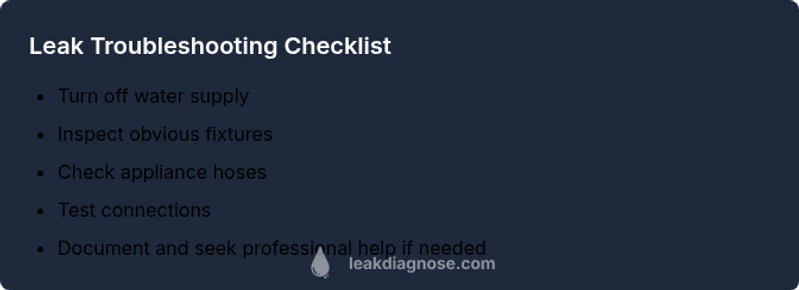
Locate the main water shutoff and turn it off to stop ongoing flow. If the leak is localized, shut off the nearest valve (under sink, behind toilet, or appliance inlet). Clear the area of valuables, keep towels ready, and unplug nearby electrical devices if water is near outlets.
Tip: Never ignore water near electrical outlets; safety comes first. - 2
Identify the most likely source
Check obvious culprits first: faucet connections, toilet fills and flappers, and appliance hoses. Look for damp spots, mineral buildup, or dripping sounds. Take photos and note the location to help your decision-making.
Tip: Document locations for quick reference when you contact help. - 3
Apply a temporary seal
If a small leak persists at a hose or faucet, apply a temporary sealant or wrap (plumber’s tape or a silicone sealant) to slow flow until you can perform a proper repair.
Tip: Temporary fixes are not long-term solutions; plan to repair properly soon. - 4
Test and isolate the source
Turn the water back on in stages (valves or fixtures) to confirm the leak location. If water returns in a different area, the problem may involve another fixture or a hidden pipe.
Tip: Proceed step-by-step to avoid creating new leaks. - 5
Address the fix or plan professional help
Perform a basic repair if you have the skill (washer replacement, hose replacement, sealing). If the leak involves hides behind walls, pipes in the ceiling, or structural components, contact a licensed plumber.
Tip: Budget for professional repair to avoid recurring leaks. - 6
Test after repair and monitor
Turn water on fully and observe the repaired area for a few hours. Check nearby joints and valves for residual dampness. If moisture recurs, reconsider the fix or escalate to a pro.
Tip: Keep a moisture meter handy for ongoing monitoring.
Diagnosis: Visible water pooling under a sink, along a wall, or a damp spot on flooring
Possible Causes
- highLoosened hose connections or dripping fixtures
- highWorn washers or seals in faucets
- mediumCracked pipes or corroded fittings
- mediumAppliance leaks from hoses or seals
- lowHidden leaks behind walls (stopped by moisture)
Fixes
- easyTighten any visibly loose hose clamps or faucet connections
- easyReplace faulty washers or seals in faucets
- mediumInspect exposed pipes for cracks or corrosion and repair with tape/patches only as a temporary measure; call a pro for permanent repair
- easyCheck appliance hoses for wear and replace if bulging or cracked
- hardPerform a moisture check behind walls with a moisture meter if available; do not rip out walls without professional guidance
Questions & Answers
What is the fastest way to stop a leak?
Shut off the relevant water supply and apply a temporary seal while you inspect the source. Use towels to absorb water and prevent damage. Then proceed with a proper fix or call a pro if needed.
Shut off the water and apply a temporary seal while you inspect the source, then decide if you can fix it or call a pro.
How do I know if I should call a plumber?
If the leak involves concealed pipes, the main supply, gas lines, or if a DIY fix would require wall removal, call a licensed plumber. Persistent leaks or complex repairs benefit from professional service.
If it involves concealed pipes or gas, or you’re unsure, call a plumber.
Can I fix a leaking toilet myself?
Small toilet leaks from the flapper or fill valve can often be fixed with replacement parts available at hardware stores. If the leak is due to a cracked tank or poor seals, a pro may be necessary.
Yes for simple parts you can replace yourself; otherwise call a pro.
What maintenance prevents leaks?
Regular inspection of hoses, seals, and fixtures, tightening fittings, and servicing appliances can prevent many leaks. Keep areas dry and fix small drips promptly to avoid bigger problems.
Inspect hoses and seals regularly and fix drips early to prevent bigger leaks.
Watch Video
Main Points
- Contain leaks quickly to minimize damage
- Identify the source before tearing into walls
- Do not ignore safety; shut off power when near water
- Document symptoms with photos for faster professional help
- Plan for a proper repair rather than temporary fixes