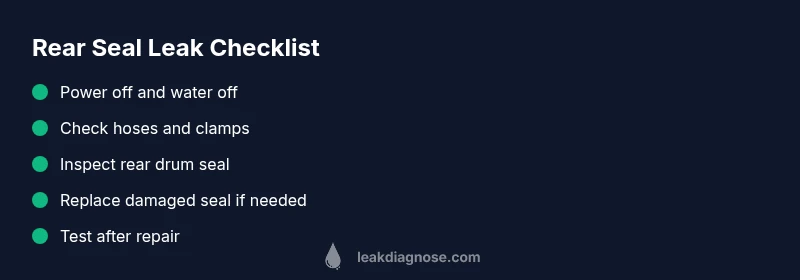
Main Rear Seal Leak: Quick Troubleshooting Guide for Washers
Learn fast how to diagnose and fix a main rear seal leak in washers. This step-by-step guide covers safety, common causes, diagnostic flow, and when to call a professional.


Most likely, a main rear seal leak comes from a worn drum seal or a shifted tub causing the seal to fail. Quick fix: unplug the washer, shut off the water, and drain the tub, then inspect the rear seal for cracks or tears; if damaged, replace the seal or call a professional; don't run the washer until it's repaired.
Why a main rear seal leak happens
Water leaks around the rear seal of a washing machine are usually caused by a worn drum seal, misalignment of the inner drum, or stress on the seal from overloading. According to Leak Diagnosis, the rear seal is a common wear point due to constant water pressure and detergent exposure. Over time the seal can become brittle or tear, allowing water to seep past into the cabinet or floor. In some models, a shifted tub or a misassembled seal can also create a gap that lets water escape as the drum spins. A leaking seal often leaves a damp path along the back panel or puddles beneath the unit after a cycle. Identifying the leak source early helps prevent water damage and mold growth. This section explains the symptoms and how to distinguish a rear seal leak from other common culprits like door seals, hoses, or the pump.”
Safety and immediate precautions
Water leaks can cause electrical hazards and flood risk. Before touching the washer, power it down completely and shut off the water supply. Place towels or a bucket to catch drips and work on a dry, well-lit surface. If you smell burning insulation or hear buzzing when you unplug, wait for a professional. Never attempt to disassemble the inner components without proper guidance, as the combination of electricity and water is dangerous. After you disconnect power and water, assess visible damage around the rear panel. If there’s char or scorch marks, or if the area is severely corroded, avoid DIY repairs and call a pro. Keeping children and pets away during inspection reduces risk and ensures you can work safely.
Common causes you should check first
Begin with the easiest checks that don’t require removing large components: 1) Verify the water inlet hoses and clamps at the back of the unit for looseness or cracks. 2) Check the drain hose and hose connections for proper seating and secure clamps. 3) Inspect the outer tub and back panel for cracks or staining that indicate a seal issue. 4) Ensure the machine is level; an uneven stance can place abnormal stress on the seal during cycles. 5) Look for residue or oily film around the rear seal, which can signal seal wear. By ruling out hoses, clamps, and level issues first, you can focus on the seal itself if leaks persist. If the drum or tub seems misaligned or if you see visible tears in the seal, plan for seal replacement or professional service.
How to visually inspect the rear seal area
To diagnose a rear seal leak, you’ll need access to the rear of the washer. Remove the back panel according to your model’s service manual. With the drum stopped, inspect the seal where the inner drum meets the outer tub. Look for cracks, tears, hardening, or gaps between the seal and the drum. Run a cycle on a short test load with the back panel removed (careful with moving parts) and observe where the water escapes. Use a flashlight and clean rags to wipe away detergent residue to better see the seal’s condition. Document any damage with photos for parts ordering. If you see a tear or if moisture persists after hose checks, the seal likely needs replacement.
When to call a professional and what they’ll do
If basic checks show intact seals but leaks continue, professional diagnosis is warranted. A technician will usually verify seal integrity, check tub alignment, and inspect bearings that can stress the seal. They may replace the rear drum seal, reseal the area, and re-calibrate the tub to ensure proper clearance. This work often requires special tools and parts for your washer model. A pro can also verify whether water intrusion caused secondary damage to the cabinet or electronics and perform additional maintenance to prevent future leaks. If you must call, have your model number and service history ready to speed up the process.
Maintenance tips to prevent future leaks
Preventive care saves time and money. Schedule regular inspections of seals and hoses, replace worn clamps promptly, and avoid overloading the washer which places extra pressure on seals. Clean the seal area after every few uses to remove detergent buildup that can degrade rubber over time. Use the recommended detergent and avoid concentrated agents that can degrade seals. Finally, ensure the machine is level and on a stable surface; improper leveling increases seal stress during cycles. Keeping a calendar reminder for routine maintenance helps detect wear early and reduces the risk of unexpected leaks.
Steps
Estimated time: 60-90 minutes
- 1
Safety prep: disconnect power and water
Unplug the washer, shut off the cold water supply, and have towels or a bucket ready. Move the unit slightly to access the rear panel. Confirm no power is flowing before touching any components.
Tip: Always verify power is off at the outlet and if dual-power units are present, unplug from both sources. - 2
Drain remaining water and access the rear
If your model has a drain, run a short cycle with a drain hose into a bucket or floor drain to remove standing water. Remove the back panel per your model’s manual to reveal the rear seal area.
Tip: Keep track of screws and placement; take photos to guide reassembly. - 3
Inspect the rear seal area
Look for visible tears, hardening, or gaps at the seal. Check drum-to-seal contact and inspect surrounding components for wear. Collect moisture with a rag to determine leakage pattern and confirm source.
Tip: Use a flashlight and magnifier if needed to detect fine cracks. - 4
Decide on DIY vs professional repair
If the seal shows tears or you cannot identify the leak source, plan for seal replacement or professional service. For tightYa spots or unfamiliar models, a pro is safer and often cost-effective in the long run.
Tip: If you’re uncomfortable with disassembly, call a professional early. - 5
Seal replacement or reassembly
If you’re replacing the seal, follow the manufacturer’s procedure step-by-step. Reinstall the rear panel, reseat hoses, and ensure no torque on the seal. Run a short test cycle with towels underneath and watch for leaks.
Tip: Double-check all connections before the test run. - 6
Test and monitor for leaks
After reassembly, run a small load cycle and inspect the entire rear area for moisture. If leaks appear, shut down and call a pro; otherwise, perform routine maintenance and keep monitoring for any future signs.
Tip: Log the test result and note any changes.
Diagnosis: Washer leaks water around the rear of the unit during or after cycles
Possible Causes
- highWorn or torn rear drum seal
- mediumLoose or damaged rear hoses/clamps
- lowTub misalignment or loose drive components stressing the seal
Fixes
- easyTighten or replace rear hoses/clamps and reseat connections
- hardReplace torn or worn rear drum seal with a seal kit
- mediumIf leaks persist after DIY fixes, schedule professional service for tub/seal replacement and system check
Questions & Answers
What is the rear seal on a washing machine?
The rear seal sits between the inner drum and outer tub, preventing water from escaping the back of the washer. A worn seal can lead to leaks near the rear cabinet. Detecting and replacing a damaged seal is essential to keep the unit water-tight.
The rear seal sits between the drum and tub; a worn seal causes leaks at the back of the washer. Replacing it resolves most leak issues.
How can I tell if the rear seal is the source of the leak?
Look for water streaming from the back of the washer, moisture along the rear panel, or dampness where the drum meets the seal. If hoses, clamps, and the pump appear dry, the rear seal is a likely culprit.
Check for rear-panel moisture and water near the seal area when the machine finishes a cycle.
Can I fix a rear seal leak myself?
Yes, you can attempt a seal replacement if you have the right tools and follow the model’s service manual. Some models require professional installation due to tight tolerances and the risk of damage to surrounding parts.
DIY is possible for some models, but seal replacement can be tricky and risky if you’re not experienced.
How long does seal replacement typically take?
Seal replacement can take 1–3 hours for a straightforward job on a familiar model, longer on newer units or if extra components must be removed.
It usually takes about an hour or two, depending on your model and experience.
What safety steps should I take before inspecting a leaking washer?
Disconnect power, shut off water, and unplug the unit. Wear eye protection and work on a dry surface. Keep kids and pets away during inspection to prevent accidents.
Power off and water shut off, plus keep kids away while you check the unit.
How can I prevent rear seal leaks in the future?
Avoid overloading, ensure the machine is level, use the recommended detergent, and perform regular seal and hose inspections. Address minor leaks promptly to prevent seal wear.
Prevent leaks by proper loading, level setup, and routine maintenance.
Watch Video
Main Points
- Identify seal wear early to prevent water damage.
- Shut off power and water before any inspection.
- DIY seal replacement is possible but challenging; call a pro if unsure.
- Regular maintenance reduces future rear seal leaks.