Water Leak Washing Machine Troubleshooting Guide
Urgent, practical troubleshooting for a water leak washing machine. Find common causes, safe checks, and step-by-step fixes to stop leaks fast and prevent future issues.


Immediate fix: For a washer leaking water, first stop the cycle, unplug the unit, and shut off the hot and cold water supply. Inspect visible hoses for looseness, cracks, or damaged clamps and tighten or replace as needed. If the leak persists near the door boot, check the door seal and tub gasket for wear.
Why water leak washing machine failures matter
A leak from a washing machine is not just a mess to clean up—it's a potential safety risk and a sign something in the appliance is failing. Water near electrical components can create shock hazards, and ongoing leaks can lead to mold, mildew, and structural damage in your laundry area. When you encounter a water leak washing machine issue, it’s important to act quickly to minimize damage and prevent recurring problems. Early diagnosis often prevents costly repairs down the line. In this guide, we’ll cover the most common causes, exact checks you can perform safely, and a practical repair workflow you can follow as a homeowner. By understanding the source of the leak, you’ll save time, reduce inconvenience, and protect your home from water damage long term.
Leak-related problems also affect energy efficiency and detergent usage—leaks can indicate a path of water around seals or into the drum that wastes water and reduces cleaning performance. The goal is to identify whether the leak is external (drain hose, inlet hose) or internal (seal, door boot) and then decide whether a simple fix will do or if a professional should be called. Throughout this article, you’ll see references to the keyword water leak washing machine and related topics like leak detection, hose maintenance, and seal wear. These insights come from the Leak Diagnosis team to help homeowners troubleshoot quickly and safely.
Common sources of leaks on modern washers
Most leaks fall into a few predictable categories. Loose or cracked inlet hoses or clamps are the top culprits, especially after moving the washer or during aggressive cycles. The drain hose connection can also loosen, crack, or kink, allowing water to escape at the back of the unit. Front-loading machines frequently leak at the door boot or tub seal when the door gasket is worn or stretched. Internal components like the water inlet valve, tub seal, or pump housing can wear out over time, leading to slow drips or sudden sprays. Diagnosing the exact source requires a careful, methodical approach that starts with the easiest, most accessible parts and progresses toward internal components if the leak continues.
For homeowners, the most reassuring signs are water pooling near the back of the machine after a cycle (drain hose area), or dampness around the door opening (boot/seal). The key is to observe when the leak happens: during fill, during agitation, during spin, or only after a cycle ends. Each scenario points to different likely culprits and guides your next steps. By understanding these patterns, you can target your inspections without unnecessary teardown.
First steps you should take today
If you notice a water leak washing machine, begin with safety and quick containment. Always unplug the appliance and turn off the water supply before inspecting any components. Gather a few basic tools: a flashlight, a replacement hose if needed, a screwdriver, and a towel or bucket to catch drips. Start with the simplest checks:
- Inspect all visible hoses and clamps for looseness, cracks, or bulges.
- Check the drain hose for kinks or improper routing that could cause backflow.
- Look at the door boot for cracks or tears; inspect the surrounding seal for dampness that indicates a seal issue.
- Wipe down the floor and dry the base of the machine to spot new drips more easily.
- If you can safely remove the access panel, peek at the inlet valve area for signs of moisture around fittings.
If you don’t locate a clear source after these checks, the issue might involve internal seals or a more complex failing component that requires professional service. The key is to document what you observe (where the moisture is, when it occurs) to share with a technician if needed.
How to safely inspect hoses and fittings
Hoses and fittings are the most frequent leak sources, and they’re also the simplest to fix. Start by turning off the water supply and unplugging the washer. Then:
- Examine inlet hoses for bulges, cracks, or white mineral buildup inside the hose. Replace any damaged hose with a new one rated for your machine’s water pressure.
- Tighten clamps with a screwdriver, ensuring a snug fit without over-tightening, which can damage fittings.
- If a hose shows signs of wear at the fittings, replace the hose and clamp assembly rather than just retightening.
- Inspect the drain hose connection at the back of the washer; ensure it’s fully seated and secured with the hose clamp.
- Clean any debris or mineral buildup around the valve connections; mineral deposits can indicate a slow leak that worsens over time.
This step focuses on external components and often stops leaks without dismantling the machine. If the leak persists after hoses and clamps are replaced and tightened, it’s time to check internal components.
Internal seals and tub components: signs of wear
When leaks originate from inside the machine, worn gaskets, door boots, or tub seals are common culprits. These components flex with each cycle and can fail due to age, heavy loads, or repeated thermal cycling. Signs of internal wear include:
- Visible water dampness around the door boot mounting area even when hoses are dry.
- A persistent drip near the drum housing after cycles complete.
- A sudden gush of water during the wash or spin phase rather than a slow seep.
- A musty odor or mold growth in the detergent drawer or door seal area, suggesting chronic moisture.
Fixing internal seals typically requires part replacement and, in many cases, professional service. Some door boot or tub seal replacements can be performed by confidentDIYers with basic tools, but be prepared for a more involved job that may require disconnecting the drum and re-seating bearings. Always consult your appliance model’s service manual for exact part numbers and torque specs.
When to stop and call a professional
If you identify an active leak around internal seals, experience electrical panels getting wet, smell burnt plastic nearby, or see erratic water flow into the tub, stop using the machine and call a licensed technician. Water contact with electrical components is a serious safety risk, and attempting high-level repairs without proper knowledge can cause further damage or injury. For many homeowners, leaks from the tub seal or inlet valve are replaceable, but issues like a cracked pump housing or a failed main PCB often require specialized tools and training. In these cases, a professional can diagnose quickly, provide a precise part replacement, and often complete the repair with a warranty.
Prevention tips to avoid future leaks
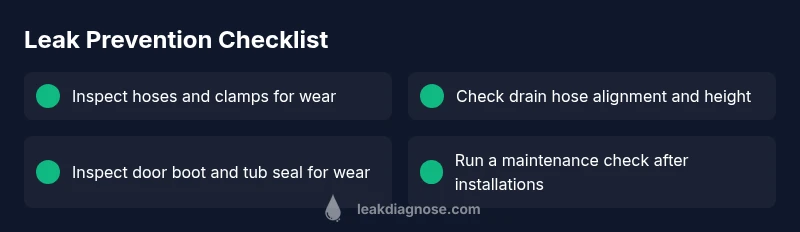
Prevention starts with regular inspection and maintenance. Schedule a seasonal check of hoses and seals, especially if you notice reduced water pressure, unusual noises, or damp floors around the washer. Keep the area around the machine dry and avoid overloading the drum, which can strain seals. Use the correct type of detergent and avoid clogs by cleaning the lint filter and drain pump screen periodically. If you live in an area with hard water, consider a scale reducer to prevent mineral buildup at fittings and valves. Finally, ensure your machine is level; an uneven machine can stress hoses and seals, accelerating wear.
Steps
Estimated time: 60-90 minutes
- 1
Power down and safety check
Unplug the washer and shut off both hot and cold water valves. Pull the plug and test for moisture around the back and base after removal of any standing water. Safety first: water and electricity can be dangerous, so take precautions and wear rubber-soled shoes.
Tip: Never work on live electrical components; disconnect power first. - 2
Inspect inlet hoses
Follow the hoses from the back to the valve connections. Look for cracks, bulges, or mineral buildup. Replace any damaged hose and reinstall with new clamps. Run a quick check with a small amount of water to verify there are no drips.
Tip: Use quality stainless steel or reinforced hoses for durability. - 3
Check drain hose and standpipe
Ensure the drain hose is fully inserted into the standpipe or sink and secured with a clamp. Look for kinks or crushed sections that could cause backflow. If backflow is suspected, replace the drain hose and confirm proper height and routing.
Tip: Keep the drain hose elevated to reduce siphoning risk. - 4
Inspect door boot and tub seal
Examine the door boot for cracks or tears and examine the seal around the drum. A worn boot is a common source of front-area leaks in many front-loaders. If you find wear, plan for boot or seal replacement.
Tip: Apply a coat of silicone lubricant if the boot is dry but intact to extend its life. - 5
Test for leaks after fixes
With the machine reconnected, run a short test cycle with a small load. Carefully observe all connections, especially around hoses and the door. If moisture appears, power down again and re-evaluate the suspected component.
Tip: Keep a towel nearby and monitor for several minutes after the cycle finishes. - 6
Assess internal components
If external parts are dry, the leak may come from internal seals or the pump. This step may require partially disassembling the washer. Refer to your model's service manual for exact parts and torque specs, or contact a professional.
Tip: Document serial numbers and part numbers before ordering replacements. - 7
Decide on repair vs replacement
If multiple seals or the tub itself shows wear, weigh the cost of repair against a full unit replacement. A professional estimate can help you decide and protect against future leaks.
Tip: Sometimes a newer model with better seals is more cost-effective over time. - 8
Document and maintain
Keep a written log of inspections, replacements, and maintenance. Schedule regular inspections every 6–12 months depending on usage. Prevention can save you money and stress in the long run.
Tip: Label hoses with install dates to track wear.
Diagnosis: Washer leaks water during operation or after cycles
Possible Causes
- highLoose or damaged inlet hoses or clamps
- mediumCracked drain hose connection or hose itself
- mediumWorn door boot or tub seal allowing water to escape at the front
- lowFaulty water inlet valve or fittings at the back
Fixes
- easyTighten clamps or replace damaged hoses
- easySecure drain hose and replace damaged drain hose if needed
- mediumReplace door boot or tub seal; reseal connections
- mediumReplace inlet valve or fittings at the back
- hardIf the leak persists or you smell electrical risk, stop and call a pro
Questions & Answers
What is the most common cause of a washing machine leak?
The most common causes are loose or damaged inlet hoses and worn door seals. These parts are accessed easily and can often be fixed quickly. If the leak continues after checking these areas, a deeper inspection may be required.
The most common causes are loose hoses or worn door seals, which you can check quickly. If the leak persists, you may need a deeper inspection.
How do I check hoses for leaks on a washing machine?
First unplug the washer and turn off the water supply. Inspect all inlet and drain hoses for cracks, bulges, or mineral buildup. Tighten clamps and replace any damaged hoses. Re-test with a short cycle to confirm no leaks.
Unplug, shut off water, inspect hoses for cracks, tighten or replace fittings, and test with a short cycle.
Is a leaking door seal serious?
A worn door seal can cause leaks around the front of the machine, especially in front-loaders. Replacing the boot or seal is often straightforward, but ensure you match the model to the correct part.
A worn door seal can cause leaks; replacing the boot is common and often straightforward.
Do I need a professional to fix a washing machine leak?
If you notice electrical components getting wet, or if the leak originates from internal seals or the pump, it’s best to call a licensed technician. They can diagnose safely and ensure proper part installation.
Call a professional if moisture reaches electrical parts or if the leak seems to come from internal seals.
Can overloading cause leaks?
Overloading can stress hoses and seals, increasing the chance of leaks from the door boot or tub seal. Distribute laundry evenly and avoid exceeding the manufacturer’s load recommendations.
Overloading stresses seals, increasing leak risk. Load clothes evenly.
How can I prevent leaks after a repair?
Keep hoses in good condition, check clamps regularly, and schedule routine inspections. Use the right detergent and avoid mineral buildup by flushing the drain pump and inspecting filters.
Maintain hoses, check clamps, and schedule regular inspections to prevent future leaks.
Watch Video
Main Points
- Identify the source early to avoid extensive damage
- Hoses and door seals are the most common leak sources
- Shut off water and power before inspecting
- If unsure, prioritize safety and call a pro
- Prevent leaks with routine maintenance and correct load sizes