Washing Machine Leak from Bottom: Complete Troubleshooting Guide
Learn how to diagnose and stop a washing machine leaking from the bottom. This guide covers common causes, safety steps, a diagnostic flow, and DIY fixes with professional escalation tips.


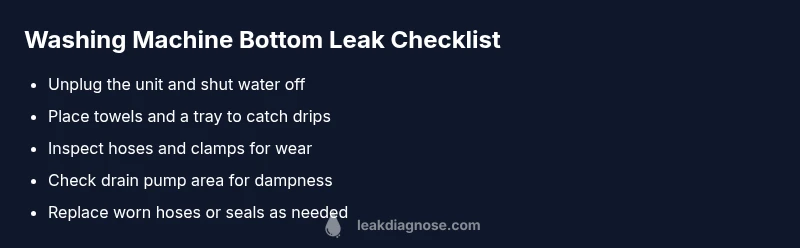
Step 1: Unplug the washer, shut off the water, and move it to a dry area. Step 2: Inspect the bottom for dampness around the drain pump and hose connections. Step 3: Tighten clamps or replace worn hoses or the pump seal if you spot cracks. Step 4: If leaks persist, call a professional. Step 5: Run a short cycle to confirm the fix.
Recognizing the bottom-leak symptom
A washing machine leaking from the bottom is one of the most alarming repairs for homeowners. The telltale sign is water pooling at the base of the unit or visible drips around the pump area after or during a cycle. In many cases, the source isn’t the door seal or the detergent drawer; rather, the leak travels down from the tub to the pump area and exits at the base. According to Leak Diagnosis, bottom leaks are often linked to the drain path rather than the outer cabinet. This means the focus should start at the pump housing, hoses, and seals where dampness first appears. By identifying the pattern—whether the water drips continuously or only during pumping—you can narrow the culprit quickly. A fast, calm inspection reduces water damage risk and buys you time to decide on DIY fixes or professional help.
From a safety standpoint, never ignore pooling water near electrical components. If you see outlets or cords nearby, power off at the circuit and avoid touching water. If you’re in a rented space, inform the landlord or building maintenance before investigating further. The goal of this block is to help you recognize symptoms, understand why they matter, and set up the right next steps. Remember, the faster you act, the lower the chance of long-term damage to floors, cabinets, and foundations.
Common causes of bottom leaks
Water seeping from the bottom of a washing machine usually points to components in the drain path rather than the load-bearing drum itself. The most frequent culprits are worn or cracked drain pump seals, loose or cracked drain hoses, and loose hose clamps that let water escape as it leaves the tub. A damaged tub-to-pump boot or a punctured tub can also allow water to escape toward the base. Less common but possible, a faulty inlet valve or a mis-seated drain hose can cause overflow or siphon effects that appear as bottom leaks.
- Drain pump seal wear: Over time, the seal where the pump meets the tub can degrade, allowing water to escape.
- Loose or damaged hoses: Cracked hoses or loose clamps create small leaks that travel to the bottom.
- Cracked pump housing: A crack in the pump body will leak when the pump runs, often visible only at the base.
- Tub-to-pump boot issues: A torn boot can channel water to the bottom rather than into the drain hose.
- Overfilling or high water level: Overflows can backwash into the base if the level sensor or control valve fails.
Based on Leak Diagnosis research, addressing the drain path issues early prevents cascading damage and minimizes repair costs. If you notice persistent dampness after checking these areas, plan for a more detailed inspection or professional help to avoid further damage to the floor or cabinet.
Safety first: immediate steps to take
Before you touch any components, ensure your safety and protect your home. Start by unplugging the machine from the outlet and shutting off both the hot and cold water supplies. Move the washer away from the wall to access the bottom panel and pump area. Place a thick towel or a shallow tray to catch drips while you inspect. If you see electrical components or a pool of water near outlets, do not attempt repairs; escalate to a licensed technician and avoid operating the machine until it’s inspected.
Next, identify a temporary water catchment plan for the area. If the leak is slow, add a few layers of towels around the base and place a shallow pan to keep water off flooring. If water is actively spraying or you notice a strong odor of burnt plastic, stop and call for professional service immediately. The safety-first approach protects you, your family, and your home while you determine whether a simple DIY fix will suffice or a professional repair is required.
DIY checks you can perform with basic tools
With safety steps completed, you can perform a sequence of checks that often pinpoint common bottom leaks without specialized tools. Start with visible hoses and clamps:
- Inspect the drain hose for cracks or holes; ensure the hose is fully inserted into the drain and the clamps are tight.
- Check all hose clamps around the drain and inlet hoses; reseat and tighten as needed using pliers.
- Look for dampness along the pump area, especially around the seals and the pump connection to the tub.
If you find a visible crack in a hose or a loose connection, replace or reseat it. For a suspected pump seal, you can sometimes replace the seal or gaskets without removing the entire pump—yet some models require a service call. Keep in mind that if water is still leaking after these checks, you should escalate to a professional to avoid the risk of electric shock or further water damage. This block provides practical, step-by-step checks that many DIYers can complete successfully in under an hour with basic tools.
Identifying the leak source: a practical, visual approach
If the basics aren’t conclusive, use a methodical, patient approach to identify the leak source. Start by running a short cycle with the front or back access panel open if your model allows: observe the area around hose connections and the drain pump for fresh dampness or spray.
- Check the water inlet hose connection to the back of the machine; a loose connection can flood the base quickly when the water fills.
- Inspect the bottom of the tub where the tub-to-pump boot attaches; a crack here can channel water toward the base rather than into the drain.
- If you see water leaking from the seam between the tub and the cabinet, the tub seal or main bearing may be involved; these components typically require professional replacement.
Document what you observe with photos and note the cycle stage when the leak occurs. This data helps a technician diagnose whether the problem is mechanical wear, improper installation, or a component failure.
When to call a professional: recognizing limits and ensuring safety
Some leaks are straightforward to fix, but others require specialized tools, replacement parts, or machine-specific procedures. If the pool of water is near electrical components, if you smell burning plastic, or if the leak continues after replacing hoses or seals, contact a licensed appliance repair technician. If your machine is under warranty, consult the manufacturer’s service line before attempting any disassembly that could void coverage.
A professional will perform a pressure test, inspect the pump seals, verify the tub-to-pump boot integrity, and assess the tub for cracks or bearing wear. They can also confirm that the leak isn’t stemming from a misdrain that would trap water in the base. While DIY fixes are feasible for simple hose or clamp problems, professional intervention is the safest route for persistent leaks or suspected structural damage.
Prevention: keeping leaks at bay through maintenance
Preventive maintenance reduces the likelihood of bottom leaks and extends the life of your washer. Implement these practices:
- Inspect hoses every 6-12 months for cracks, bulges, or signs of wear; replace damaged hoses promptly.
- Check clamps for tightness during every deep clean cycle or when you notice a shift in the water flow path.
- Level the machine to prevent uneven stress on hoses and seals; use adjustable feet to balance the unit on a clean, dry floor.
- Avoid overloading the washer; excess weight can strain the pump and seals, increasing leak risk.
- Use the manufacturer’s recommended detergents and avoid additives that can cause residue build-up around seals.
These steps, when applied consistently, reduce the frequency of leaks and protect your floors. Leak Diagnosis emphasizes that proactive maintenance is more cost-effective than repeated emergency repairs, especially for households with frequent wash loads.
Key takeaways for quick reference
- Start with the simplest checks: hoses, clamps, and pump area.
- Always unplug and shut off water before inspecting.
- Replace worn seals and hoses promptly to stop bottom leaks.
- For tub cracks or drum-seal issues, professional repair is usually required.
Summary: quick reference guide for leaks at the bottom
Bottom leaks are most commonly caused by worn drain pump seals and loose hoses. A careful inspection of the pump area, hose connections, and tub-to-pump boot often reveals the culprit. If you’re unsure, or if components near electrical parts are involved, don’t hesitate to call a professional.
This final block consolidates practical steps, safety considerations, and prevention strategies to help you respond quickly and effectively when a washing machine leaks from the bottom.
Steps
Estimated time: 45-60 minutes
- 1
Power down and prep area
Unplug the washer, shut off water, and move the unit to a dry, open space. Gather towels, a bucket, and a flashlight. This keeps you safe and empowers a clear inspection.
Tip: Make a quick sketch of connected hoses to help reassembly. - 2
Drain residual water and protect the floor
Place towels and a shallow pan under the pump housing. If there’s standing water, use a sponge to remove it while you look for the exact leak source.
Tip: Keep a bucket handy for any unexpected spills. - 3
Check drain hose and clamps
Inspect the drain hose for cracks and check clamps for tightness. Re-seat the hose fully into the drain and tighten clamps with pliers, ensuring a snug seal.
Tip: Do not overtighten; cracked hoses can burst. - 4
Inspect pump seals and boot
Look at the pump area for dampness around seals. Replace worn pump seals or boot if you see obvious wear or leaks around joints.
Tip: Take a photo before disassembly to guide reassembly. - 5
Test with a short cycle
Reconnect power and water, run a brief wash to observe any fresh leaks. Use a towel to monitor the base for several minutes.
Tip: Stop the cycle if you see active dripping. - 6
Decide on next steps
If leaks persist after these steps, consult a professional. Do not attempt major tub or bearing repairs yourself.
Tip: Document observations to help the technician.
Diagnosis: Washing machine leaks from bottom during or after a cycle
Possible Causes
- highWorn or damaged drain pump seal
- highLoose or damaged hoses or clamps
- mediumCracked tub-to-pump boot or pump housing
- lowOverfill or water level sensor fault
Fixes
- easyTighten hose clamps and replace damaged hoses; reseal connections at the drain pump
- mediumReplace the drain pump seal or pump gasket if worn or cracked
- mediumInspect and replace the tub-to-pump boot if cracked; inspect pump housing for cracks
- hardIf the tub is cracked or bearing/seal failure is suspected, call a professional
Questions & Answers
What is the most common cause of a washing machine leak from the bottom?
The most common causes are a worn drain pump seal or loose hose connections. Inspecting the pump area and hoses often reveals the problem. Replacing the seal or tightening hoses resolves many bottom leaks.
The most common cause is a worn drain pump seal or loose hoses. Check the pump area and hoses to fix it.
Can a bottom leak be repaired without a professional?
Yes for simple hose issues and clamp fixes. Replacing a tub seal or cracked tub usually requires a professional due to the risk of damaging the machine.
DIY fixes work for hoses, but tub or bearing issues usually need a pro.
How can I tell if the tub seal is leaking?
Look for dampness around the front or back of the drum and water pooling under the machine. A musty smell can also indicate a seal leak.
Dampness around the drum and water under the unit often means the tub seal is leaking.
What safety steps should I take if there is water near outlets?
Turn off power at the outlet or unplug the machine, then dry the area. Keep children and pets away and avoid touching water until inspected.
Power off and keep water away from outlets before inspecting.
When should I replace the washing machine instead of repairing?
If repair costs approach or exceed half the price of a new machine, or if the tub/bearing is damaged, replacement may be more economical.
If repairs cost half or more of a new unit, consider replacement.
How often should I inspect hoses to prevent leaks?
Check hoses every 6-12 months and replace any signs of wear or bulging. Regular inspection prevents sudden leaks.
Inspect hoses at least once a year and replace worn parts early.
Watch Video
Main Points
- Start with hose and pump checks
- Unplug and shut water before inspecting
- Replace worn seals to stop bottom leaks
- Professional help for tub or structural damage