What Leaks Water: DIY Diagnosis and Fix Guide
Learn how to diagnose and stop water leaks at home with a practical, step-by-step guide. Identify common sources, perform safe checks, and know when to call a pro. Quick actions save your home from costly damage.


Most often, leaks come from loose connections, worn washers, or damaged hoses. Quick fix: shut off the main supply, dry the area, tighten accessible fittings, and replace gaskets or washers. If dripping persists, continue with the diagnostic flow to locate hidden leaks and call a professional for concealed pipes. Act quickly to prevent damage.
Common sources of water leaks in homes
Water leaks can show up in many places, but the most frequent culprits are fixtures and supply lines that feed sinks, toilets, and appliances. A dripping faucet, a loose hose connection to a dishwasher, or a worn-out washer on a toilet fill valve are classic sources you can identify with a quick visual check. The question many homeowners ask is what leaks water in the first place; in practice, the answer often boils down to simple wear and imperfect seals. According to Leak Diagnosis, the majority of residential leaks originate at accessible points where fittings meet pipes or hoses. By focusing your inspection on these areas, you can stop the flow faster and limit moisture damage.
From there, expand your check to the appliances that routinely use water, such as dishwashers, washing machines, and water heaters. A small, persistent drip from any of these can quickly escalate from a nuisance to a structural concern if ignored. The goal of this section is to help you identify the most common sources quickly and prepare you for safe, controlled repairs.
Quick checks you can do safely
Before you grab tools, run through a set of simple checks that don’t require specialized equipment. Look for obvious drips around faucet bases, supply-line connections, and hose ends on appliances. Listen for a steady drip—an audible clue that something is not sealed correctly. Check under sinks for pooled water or damp cabinet bottoms; moisture is a sure sign a connection is leaking or that a pipe is sweating. Inspect toilet connections at the base and around the shut-off valve; a wasted gasket can produce a slow, steady flow that’s easy to miss. If you find a visible leak, shut off the water at the nearest valve and dry the area to observe whether the drip continues.
For hidden leaks, a quick meter check can help. Note your home’s water meter reading after a few hours of no water use. If the number changes, you likely have a leak somewhere. Throughout these checks, prioritize safety: avoid touching electrical outlets or devices with wet hands, and never attempt high-pressure repairs beyond basic tightening. This stage sets up you for more precise diagnosis and fixes.
How leaks progress and why they get worse
Leaks are not static problems. A small drip can evolve into a larger flow as pressure and gravity pull water through a compromised joint or hose. Pipe corrosion, mineral buildup, and temperature changes can accelerate failure, widening seals and creating new drip points. When a leak persists, moisture migrates into cabinets, walls, and floors, which can lead to wood rot, mold, or structural damage if left unresolved. Understanding the dynamics helps you plan the fixes more effectively: first stop the water, then locate the source, then seal or replace the component, and finally test to confirm the fix held. This knowledge also informs prevention: routine checks can catch wear before a full leak develops.
In addition, a common source of hidden leaks is the area where pipes run through walls or floors. These spaces can conceal corrosion, loose fittings, or even small cracks that are not immediately visible. If you suspect hidden leaks, you’ll likely need to perform a more thorough inspection with moisture meters or infrared cameras, or hire a professional for a precise diagnosis. The focus here is to recognize symptoms early, so you can act before the damage compounds.
Hidden leaks and signs to look for
Hidden leaks can lurk behind walls, under floors, or inside ceilings. Look for telltale signs such as persistent damp patches, peeling paint, or wallpaper that never dries out. A musty odor, black mold growth, or warped baseboards indicates ongoing moisture intrusion. If you notice unusually high water bills without increased usage, that’s another red flag that a leak could be siphoning water away unseen. A noisy pipe knocking or a faint hissing sound when water is off can also hint at concealed leaks that aren’t visible yet require professional detection tools to pinpoint.
To confirm a hidden leak, you can perform a simple pressure test: turn off all fixtures, note the water meter reading, wait an hour, and recheck. Any basket of anomalies—meter moving while no water is in use—signals a hidden problem. Remember, hidden leaks often involve wall cavities or slabs, where attempts at DIY repair may be unsafe or ineffective. When in doubt, contact a licensed plumber for a thorough evaluation.
Appliances and fixtures most prone to leaks
Certain appliances and fixtures are statistically more likely to develop leaks due to design and wear. Toilets can leak through the fill valve or wax seal without obvious dripping. Dishwashers and washing machines involve multiple hoses and clamps that can loosen over time, leading to drips at connections or along hoses. Water heaters depend on tank seals and T&P relief valves—both common sources of slow leaks. Faucets vary in susceptibility: cracked cartridge seals and worn washers in sinks and showers are frequent culprits. Ice-makers and refrigerators with water lines can also leak if hoses or supply lines corrode. By keeping an eye on these hot spots and performing periodic checks, you reduce the chance of a sudden flood.
Regular maintenance makes a big difference: inspect hoses for bulging or cracking, tighten fittings once a year, and replace rubber washers or gaskets that show signs of wear. If you notice reduced water pressure or a continuous drip from any fixture, address it promptly to prevent escalating damage.
Immediate safety actions and stopping the flow
When you detect a leak, safety must come first. If water is near electrical outlets or appliances, switch off the circuit breaker for those areas before touching anything that could conduct electricity. Immediately shut off the main water supply if you can locate it and if the leak is significant. Use towels, a mop, or a bucket to control minor drips and reduce water damage while you prepare a fix. Do not use tape or sealants as a long-term solution; these are temporary measures and may not hold under pressure. After you’ve stopped the flow, dry the area thoroughly and document the location of the leak with photos for reference when you consult a professional. Finally, recheck the area after you have completed repairs to ensure the leak is resolved and there is no residual moisture that could promote mold growth.
Tools, parts, and budget-friendly fixes
A well-equipped DIYer can handle many common leaks with basic tools and affordable parts. Start with a set of adjustable wrenches, pliers, a screwdriver, plumber’s tape (Teflon tape), replacement washers, and spare hose clamps. For toilets, inspect and replace the fill valve gasket; for faucets, consider cartridge seals or aerator replacements; for hoses, replace worn or bulging supply lines. Keep a bucket and towels handy to manage drips during disassembly. If you’re dealing with PVC pipes, a basic solvent cement kit and primer are useful for simple pipe repairs. Budget-minded fixes include tightening connections, resealing gaskets, and replacing an aging hose. When you encounter metal pipes that show corrosion or joints that require cutting, it’s often more cost-effective to call a pro. Prevention starts with aging infrastructure assessment and proactive maintenance.
In addition to hands-on fixes, consider temporary measures for mid- to long-term protection: install a water shut-off plan in your home, keep a moisture meter in damp spaces, and schedule periodic inspections of plumbing lines and appliances. These steps will save you time and money by catching leaks early and preventing water damage.
Maintenance plan to prevent future leaks
A proactive maintenance plan reduces the likelihood of leaks and extends the life of plumbing components. Schedule quarterly quick checks of visible connections, hoses, and valve seals. Twice-yearly, perform a more thorough inspection that includes the pressure relief valve on water heaters, the wax seal on toilets, and the ceiling or wall areas where pipes run. Use a moisture meter to monitor hidden spots for rising damp and mold growth. Replace worn washers and hoses before they fail and keep an eye on appliance hoses for bulges, kinks, or cracks. If you notice any sudden changes in water usage or frequent trips to the shut-off valve, reassess the system and consider professional preventive maintenance.
Finally, educate household members about turning off the main supply during a leak and documenting leaks when they occur. A quick response minimizes damage and keeps repair costs down. Leak Diagnosis recommends keeping a simple leak journal: note location, observed symptoms, and the date of any fixes. This record helps you track recurring problems and ensures you’re prepared for future maintenance.
When to call a professional
While many leaks are manageable with basic tools, some situations demand a licensed plumber. If you can’t locate the source after a thorough inspection, if the leak involves concealed pipes, slabs, or gas lines, or if you notice significant dampness, mold, or structural damage, call a professional immediately. Complex leaks—especially with high water pressure, gas lines, or electrical hazards—require specialized equipment and training. A pro can perform a pressure test, use leak-detection equipment, and provide permanent repair solutions tailored to your home’s layout. For minor, accessible leaks, a guided DIY approach can save time and money, but never risk your safety or property by attempting risky repairs.
Final notes
Dealing with water leaks is a mix of quick action, careful inspection, and informed decision-making. By following a structured approach, you can quickly identify the most likely sources, perform safe preliminary fixes, and know when to escalate to professional help. Keeping your home dry and clean also requires preventive habits and ongoing maintenance. With the right mindset and steps, you minimize damage, protect your belongings, and preserve the value of your home.
Steps
Estimated time: 60-90 minutes
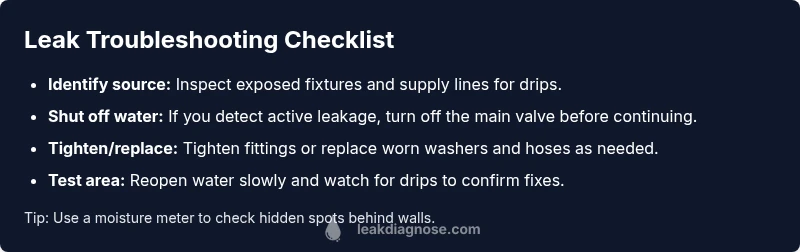
- 1
Identify the leak area
Scan the home for damp spots, listen for drips, and note any stains or musty odors. Pinpoint the most obvious source first, then expand to adjacent areas. This step reduces unnecessary disassembly and speeds up the fix.
Tip: Take photos from multiple angles to document the problem before starting repairs. - 2
Shut off water supply
Turn off the main water valve if the leak is continuous or located near critical fixtures. If the leak is isolated to one fixture, shut off that valve only. This stops further water damage while you work.
Tip: Keep a labeled shut-off wrench and a small bucket nearby for easy access during emergencies. - 3
Inspect accessible fittings
Check faucet connections, supply hoses, and appliance hookups for cracks, cracks, or loose clamps. Tighten fittings with the correct tool and replace worn washers or damaged hoses as needed.
Tip: Use plumber’s tape on threaded connections to ensure a tight seal (but don’t overdo it). - 4
Test and verify
Turn the water back on slowly and observe the suspected area. If drips persist, re-check connections or move to the next likely source. Document the results for future reference.
Tip: Wipe surfaces dry to verify whether moisture returns and to prevent mold growth. - 5
Consider replacement parts
If a washer or gasket shows wear, replace it with a compatible part. For hoses, use reinforced, high-quality replacements designed for the fixture.
Tip: Avoid cheap, generic parts that may fail sooner; investing in quality saves time and money later. - 6
Plan for permanent repairs
For persistent leaks or damaged piping, schedule a professional repair. Temporary fixes can control the flow, but a proper fix ensures reliability and safety.
Tip: Label and store spare parts for future quick repairs and maintain a simple leak toolkit for emergencies.
Diagnosis: Visible water leaks anywhere in the home or sudden changes in water usage
Possible Causes
- highLoosened connections or worn washers in taps and appliances
- highLeaking pipes due to corrosion, movement, or aging joints
- mediumFaulty appliance seals or hoses (dishwasher, washing machine, water heater)
- lowHidden leaks behind walls or slabs
Fixes
- easyShut off water at the main supply and inspect accessible fittings; tighten fittings and replace washers or gaskets
- mediumReplace damaged hoses and corroded fittings; reseal joints with appropriate fittings or pipe sealant
- hardPerform a controlled pressure test and trace hidden leaks with moisture meters or professional equipment
- hardFor concealed or structurally embedded leaks, contact a licensed plumber for safe repair
Questions & Answers
What are the most common signs of a water leak in a home?
Common signs include damp spots, warm or moist walls, unusual water meter usage, and higher-than-usual water bills. A persistent drip from fixtures or hoses is a clear indicator that a leak exists. Use basic checks to trace the source and plan repairs.
Look for damp spots, mold, or a rising water bill. A persistent drip is a clear sign to investigate the fixture or pipe connections.
Can a dripping faucet waste a lot of water over time?
Yes. A slow drip can waste a surprising amount of water over days or weeks. Fixing dripping faucets promptly reduces waste and lowers water costs. Replace worn washers or cartridge seals to stop the drip.
Even a slow drip can waste water over time. Fix the washer or valve and stop the drip to save water and money.
Is epoxy or sealant a safe long-term fix for leaks?
Epoxy and sealants are temporary measures. They may slow a minor drip but do not replace proper fitting or pipe repair, especially on structural or high-pressure systems. Always pursue permanent repairs for reliability.
Epoxy is only a temporary fix. For lasting results, replace fittings or pipes and consult a professional for serious leaks.
How can I tell if a leak is hidden behind a wall?
Hidden leaks often show as damp patches, peeling paint, or a musty smell behind walls. A rising water meter when no water is used is another clue. You may need specialized equipment or a professional to locate and repair concealed leaks.
Damp patches or a musty smell can mean a hidden leak. A rising water meter when no water is used is another clue.
When should I call a plumber?
Call a plumber if you cannot locate the leak after a thorough inspection, if the leak involves concealed pipes, or if there are signs of structural damage, gas, or electrical hazards. A professional can diagnose and fix safely and effectively.
If you can’t find the source or there are hidden pipes, call a plumber for a safe, accurate repair.
What maintenance steps prevent future leaks?
Regularly inspect hoses, connections, and valve seals; replace worn washers and hoses before failure; keep a shut-off plan and a basic leak toolkit. Scheduling routine checks reduces surprise leaks and extends plumbing life.
Regularly check hoses and seals, replace worn parts, and keep a shut-off plan to prevent future leaks.
Watch Video
Main Points
- Identify the most likely leak sources before disassembly
- Shut off water and dry area to control damage quickly
- Tighten or replace worn parts; test thoroughly
- Call a professional for concealed, high-risk, or irreversible failures