Why a Washing Machine Leaks From Underneath
Learn why a washing machine leaks from underneath and how to diagnose, safely fix, and prevent future leaks with practical steps from Leak Diagnosis.


Most washing-machine leaks from underneath originate at the pump seal, drain hose connections, or the tub’s bottom seal. Start by turning off power and water, inspecting the front kick panel for dampness, then check hoses and the pump area for drips. If the puddle persists, move to the diagnostic flow and step-by-step fixes.
Why would a washing machine leak from underneath
If you’re asking why would a washing machine leak from underneath, the answer is usually a worn pump seal, loose hoses, or a failing tub seal. Leaks from the bottom are tricky because water can travel and mask the real origin. According to Leak Diagnosis, start with the pump area, drain hose connections, and the front kick panel. Look for dampness, mineral buildup, or staining that signals where water escapes. Noting the pattern—puddles at the front, a visible drip, or a steady seep after cycles—lets you narrow down the likely cause and prevent water damage. This guide focuses on safe, practical steps homeowners can take before calling for service, so you can regain control quickly.
Common underlying causes
Leaks from underneath a washing machine are usually traced to a few repeat culprits. The most common are a worn or damaged drain pump seal, loose or cracked drain hoses, or a failing tub seal that allows water to escape as the inner drum spins. Less frequent but important causes include a cracked tub or drum, or improper level of detergent leading to overfoaming that causes overflow near the base. Inspecting these areas first saves time and money, and helps you decide whether a DIY repair is possible or a professional is needed.
Safety and preparation
Before you touch anything, safety must come first. Unplug the machine from the wall outlet and shut off the water supply to prevent further pooling. If you have a gas-powered dryer stacked above, consider leaving the unit in place but keep a dry work area. Wear protective gloves to handle damp components and avoid slipping on wet floors. Gather towels, a bucket, and a flashlight so you can inspect seals and hose connections without making a bigger mess. If you feel uncertain at any point, it’s safer to pause and seek professional help.
Locate the source and gather clues
Water can travel a surprising distance, so tracing the precise origin requires careful observation. Check under the front panel for damp concrete or mineral residue, and look for water trails along hoses, clamps, and the bottom of the tub. Pay attention to where you see wetness after a cycle ends or during draining. If the leak appears only when the pump is running, focus on the pump seal and hose connections. If it leaks continuously, the tub seal or a cracked drum may be involved. Document your observations to guide repairs or when you contact support.
Quick checks you can perform today
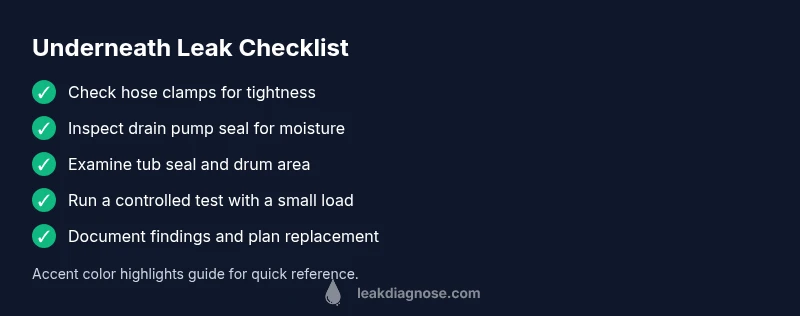
Perform these checks with the machine unplugged and the water supply off. Inspect all drain hoses and clamps for cracks or looseness; tighten or replace as needed. Inspect the pump and its seal—look for white crusted deposits or obvious wear. Check the front kick panel for the drain pump area; sign of moisture there is a strong hint toward the pump seal. Finally, ensure the tub seal area at the bottom of the drum is intact; a visible gap or hiss when the drum spins suggests a seal failure. Keep a written log of findings and potential parts to order.
Diagnostic flow overview
Use a structured approach to narrow down the exact leak source. Start with simple, visible checks (hoses, clamps, pump area). If nothing obvious is found, perform controlled tests such as running a small load with the access panel removed to observe where moisture appears. Remember to power down and unplug after each test. If you identify a failed seal or cracked drum, you’ll know whether a DIY part replacement is feasible or you should call a professional.
Maintenance and prevention
Once you’ve stopped the current leak, prevent recurrence with regular maintenance. Periodically inspect hoses and clamps for wear, test the pump seal annually or according to your model’s manual, and avoid overloading the washer which increases force on seals. Use the correct detergent quantity to minimize foaming and buildup. Keep the area around the washer dry, wipe spills immediately, and consider a floor mat that channels any residual water away from the electronics.
When to call a professional
If you discover a cracked drum, persistent leaks after servicing seals or hoses, or you’re unsure about the diagnosis, it’s time to involve a professional. A licensed appliance technician can safely replace structural parts, test for hidden damage, and verify that the water inlet and drain systems function correctly after repair. If your washer is under warranty, contact the manufacturer to avoid voiding coverage.
Steps
Estimated time: 60-120 minutes
- 1
Power down and secure the area
Unplug the washer and shut off the water supply before touching any components. Move towels or a tray to catch any remaining drips. This keeps you safe while you inspect seals and hoses.
Tip: Use a non-slip mat to prevent slips on wet floors. - 2
Access the pump area
Remove the front kick panel or access panel to reach the drain pump and hoses. Look for moisture, mineral buildup, or obvious leaks around clamps. A clean, dry surface helps you see new leaks clearly.
Tip: Take a photo of hose connections to aid reassembly. - 3
Inspect hoses and clamps
Check all hose connections for cracks, bulges, or corrosion. Tighten clamps if loose and replace any damaged hoses. Ensure the drain hose is properly routed to avoid siphoning water back into the drum.
Tip: Do not overtighten; hoses can crack if squeezed too hard. - 4
Check the drain pump seal
Look for signs of leakage around the pump seal or white crust indicating dried water mineral deposits. If the seal is worn, replace it according to your model’s service manual.
Tip: Some washers require unbolting the pump for seal replacement. - 5
Test the tub seal and drum area
If the pump area is dry, the leak may be coming from the tub seal. Inspect for cracks or gaps around the drum shaft. Only replace if you’re confident; tub seals often require professional service.
Tip: Wear safety glasses when handling drum components. - 6
Run a controlled test
Reassemble panels and run a small, balanced load through a short cycle with the access panel removed to watch for leaks. Stop immediately if you see moisture reappearing.
Tip: Stop the test if you smell burning plastic or see sparks. - 7
Evaluate next steps
If leaks persist, prepare for part replacement (pump seal or tub seal) or scheduling a professional visit. Keep receipts and note model details for ordering the correct parts.
Tip: Document the exact symptom and location for faster service.
Diagnosis: Water leaking from bottom of washing machine during or after cycles
Possible Causes
- highWorn or damaged drain pump seal
- highLoose or cracked drain hose connections
- mediumDamaged tub seal or main seal
- lowCracked tub or drum
Fixes
- easyTighten hose clamps and replace damaged hoses
- mediumReplace pump seal
- hardReplace tub seal or call a professional
- easyInspect for overfilling, blockages, and foreign objects
Questions & Answers
Why is water pooling under my washing machine after a cycle?
Pooling water usually points to a loose hose, a worn pump seal, or a failing tub seal. Start by inspecting the drain hoses and pump area for dampness, then check the tub area. If the source isn’t obvious, a professional inspection may be required.
Pooling water after a cycle often means a hose, pump seal, or tub seal issue. Begin with hose checks and pump area inspection, and call a pro if unsure.
What are the most common underneath-leak causes?
The top causes are a worn pump seal, loose drain hoses, and a failing tub seal. Less frequent but possible are a cracked drum or improper detergent use causing excessive suds.
Most underneath leaks come from pump seals, hoses, or tub seals; cracks and overfilling can also cause issues.
Can I fix a washing machine leak myself?
Some leaks are DIY-friendly, especially hose clamps and pump seals. Others, like tub seals or drum cracks, usually require a professional. Always unplug and shut off water before attempting any repair.
Yes for simple hose fixes, but bigger seal or drum issues are better handled by a pro.
When should I replace the washing machine rather than repair?
If the cost of multiple major seal replacements nears the price of a new machine or the drum is cracked, replacement may be more economical. Consider age and warranty status as well.
If repairs add up or the drum is damaged, replacement might be the smarter choice.
Is it safe to operate the washer if there’s a bottom leak?
No. Running a washer with a bottom leak risks electric shock, water damage, and mold growth. Stop using it until the leak is diagnosed and repaired.
Not safe to run. Stop and diagnose the leak before using again.
How can I prevent future leaks?
Regularly inspect hoses, replace worn clamps, avoid overloading, and use the correct detergent. Keep the area dry and schedule annual checks of seals and connections.
Inspect hoses, avoid overloading, and maintain seals to prevent leaks.
Watch Video
Main Points
- Identify the source before replacing parts
- Start with hoses and pump seals first
- Power off and water off before any inspection
- Use a professional for tub or drum seals
- Prevent leaks with regular maintenance