How to Fix a Sink Leak: A Clear DIY Guide for Homeowners
Learn to diagnose and repair a sink leak with a practical, step-by-step approach. This guide covers faucet, supply line, and P-trap leaks, safe tool use, and maintenance tips for homeowners.


By the end, you’ll know how to fix a sink leak: identify the source, gather a small toolbox, and complete a safe repair. This guide covers common causes (faucet seals, supply-line fittings, P-trap), explains when to replace washers or cartridges, and shows step-by-step actions you can perform without special skills. According to Leak Diagnosis, many leaks come from simple fittings.
Understanding the anatomy of a sink leak
A sink leak isn’t always dramatic; many times it stems from small failures in parts you depend on every day. The typical kitchen or bathroom sink comprises a faucet, supply lines, a drain with a P-trap, tailpieces, and mounting hardware. Leaks can appear at different locations: around faucet seals, where supply lines connect to shut-off valves or the faucet, along threaded drain joints, or at the P-trap’s seam. Knowing these components helps you pinpoint the source quickly. The Leak Diagnosis team often finds that homeowners underestimate the subtle signs: a damp cabinet, discolored wood, or a persistent ring under the sink can indicate slow leaks that aren’t obvious in a single drip. With a calm approach and the right tools, most common leaks are well within reach of a capable DIYer.
Understanding common leak sources and how to identify them
Leaks are most often tied to three areas: the faucet assembly, the water-supply connections, and the drain system. Faucet leaks usually come from worn cartridge seals or O-rings; you might notice a constant dribble or mist when running water. Supply-line leaks appear as damp fittings or a slow drip from the valve nuts. Drain and P-trap leaks show up as water pooling around the trap or a gurgling sound when water flows. The diagnosis process involves wiping dry areas, running water, and inspecting each joint for moisture or staining. For accuracy, check multiple angles under the sink and, if possible, feel for dampness around fittings after a short test run. According to Leak Diagnosis analysis, many leaks are caused by loose connections or worn washers that are easy to replace, rather than a full fixture replacement.
Safety and preparation: turn off water and protect the area
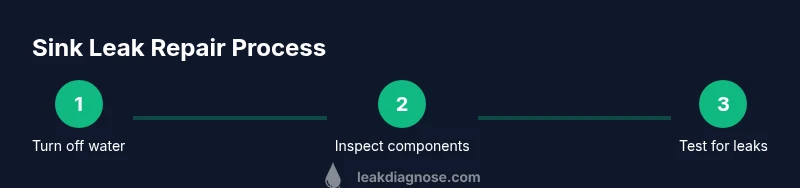
Before you touch any plumbing, shut off the water supply to the sink. Look for two shut-off valves under the basin and turn them clockwise until they stop. Open the faucet to release remaining pressure and drain any standing water. Place towels or a bucket beneath the work area to catch spills, and wear gloves to protect your hands from sharp edges or dirty water. If the leak is above a cabinet with electrical outlets, ensure cords are clear and dry the area. Protect floors with a mat to prevent water damage. Having a clean, dry workspace reduces mistakes and helps you identify moisture quickly as you work through the steps.
Step-by-step diagnosis: locate the source and assess repair needs
Start by visually inspecting joints, seals, and fittings from both above and below the sink. Wipe dry, then test each connection one at a time by running water briefly and observing for moisture. If you find water seeping from the faucet handle, the cartridge or washer is the likely culprit. If moisture appears at the valve nuts or supply lines, reseating or tightening may be enough. For drain leaks, remove the P-trap and examine its washers and seals; a pinhole in the metal or a degraded gasket often indicates replacement is needed. Throughout this process, take photos or label parts to ease reassembly and avoid confusion during later steps.
DIY fixes: practical repairs by leak source
Faucet leaks: replace worn O-rings or cartridge seals. If the faucet is old, replacing the cartridge with a compatible unit is often the most durable fix. Supply lines: tighten fittings and replace any cracked or corroded hoses; apply PTFE tape on threaded joints to improve sealing. Drain/P-trap leaks: reseal joints with fresh plumber’s tape and replace worn gaskets; if the trap is damaged, install a new P-trap kit. For stubborn leaks, consider applying a sealant only as a temporary measure, and plan a full replacement if the fixture shows extensive wear. Always hand-tighten connectors before using a wrench to avoid over-tightening and damaging threads. The goal is a secure, leak-free seal without restricting water flow.
Maintenance and prevention: keep leaks at bay between fixes
Regular checks can prevent surprises. Periodically inspect under-sink connections for moisture and discoloration, and replace worn washers at the first sign of wear. Use a basin wrench in tight spaces to avoid slippage and damaged fittings. Keep drain traps clean to prevent buildup that can cause pressure changes and leaks. Consider installing a small tray under the sink to catch drips and a moisture sensor near the cabinet base for early warning. These habits help you catch issues early, before they become bigger problems.
Troubleshooting by sink type: kitchen vs. bathroom sinks
Kitchen sinks often have heavier use and larger supply lines, which means higher stress on connections. Bathroom sinks may use compact fixtures with different cartridge designs. For both, prioritize the same diagnostic steps: turn off water, clean, test each connection, and replace worn parts. When working with a two-handle faucet, verify both handles seal properly; leaks can occur from either side. If you notice frequent dripping after a repair, re-check the cartridge seating and ensure the gasket sits flush. In some cases, mineral buildup from hard water can degrade seals; consider soaking components in vinegar and replacing damaged parts.
When to call a professional: signs DIY isn’t enough
If you detect persistent moisture after all repairs, or if the leak involves hidden corrosion, a cracked pipe, or structural water damage, it’s wise to consult a licensed plumber. Avoid attempting major pipe work if you lack the proper tools or if you are uncomfortable working in tight spaces beneath a sink. Complex leaks at wall connections or in concealed drain lines often require professional diagnosis and specialized equipment. The Leak Diagnosis team recommends erring on the side of safety when dealing with gas lines or electrical components near plumbing, and seeking professional help for large-scale repairs or when valves fail to shut completely.
Quick checks and next steps
After repair, run the water and monitor for at least 10-15 minutes for any signs of moisture. Recheck every joint and seam, wipe dry again, and observe for discoloration over the next 24 hours. If a leak reappears, repeat the relevant steps with attention to tightness and part compatibility. Document what you replace so future maintenance is easier, and keep spare washers and cartridges on hand for quick future fixes. By staying methodical and patient, you’ll extend the life of your sink and reduce the chance of recurring leaks.
Tools & Materials
- Adjustable wrench (6-8 inch)(Used to loosen nuts on supply lines and P-trap)
- Basin wrench(Helpful in tight under-sink spaces)
- Flat-head screwdriver(For faucet handle screws)
- Phillips-head screwdriver(For cartridge screws)
- Bucket(Catch water and keep area dry)
- Old towels or rags(Clean spills and dry surfaces)
- PTFE plumber's tape(Seal threaded joints)
- Replacement washers/O-rings(For faucet and drain seals)
- Faucet cartridge (if needed)(Only if cartridge leak identified)
- New P-trap washers/seals(Replace worn seals as needed)
- Safety gloves(Protect hands)
- Flashlight or headlamp(Better visibility under sink)
Steps
Estimated time: 45-60 minutes
- 1
Turn off the water supply
Locate the shut-off valves under the sink and turn them clockwise until they stop. Open the faucet to relieve pressure and drain remaining water. Place towels to catch drips and protect your cabinet.
Tip: Take a photo of valve orientations before you disconnect anything to avoid confusion later. - 2
Inspect the faucet for leaks
Remove the faucet handles with the appropriate screwdriver and check for worn O-rings or a worn cartridge. If you see scoring or mineral buildup, plan for replacement rather than cleaning alone. Keep a bucket handy to catch any water.
Tip: Keep track of which screws come from which handle to simplify reassembly. - 3
Check supply-line connections
Tighten the nuts connecting the supply lines to the shut-off valves and faucet. If the fittings are cracked or corroded, replace the lines. Wipe dry and recheck after a test run to verify a secure seal.
Tip: Only snug; overtightening can strip threads or crack fittings. - 4
Inspect the P-trap and drain connections
Unclip or unscrew the P-trap and inspect seals and washers for wear. Replace worn washers or the entire trap if needed. Reinstall carefully, ensuring all joints are aligned and hand-tightened before final tightening.
Tip: Use warm soapy water to ease reassembly and prevent thread damage. - 5
Replace worn components
Install new O-rings, gaskets, or a cartridge if needed. If you’re replacing a cartridge, ensure you purchase the correct model and follow the manufacturer’s orientation. Avoid cross-threading by starting fittings by hand first.
Tip: Take a quick photo of the old setup to compare with the new one. - 6
Reassemble and seal
Put all components back in place and hand-tighten everything before using a wrench. Apply PTFE tape to threaded connections as needed and do a light final tighten. Recheck the alignment of the trap and hoses.
Tip: Remember, the goal is a snug seal without excess compression on the pipework. - 7
Test for leaks
Turn the water back on at the valves and run water for several minutes. Inspect all joints for moisture and verify that the leak has stopped. If you still see moisture, re-tighten connections in small increments and re-test.
Tip: Consider adding a few drops of dye to the sink to reveal slow leaks more easily. - 8
Final clean-up and monitoring
Dab dry surfaces, wipe cabinets, and keep an eye on the area for the next 24 hours. Save receipts for parts and note any recurring issues. If the leak returns after a repair, reassess the area or escalate to a professional.
Tip: Document what you replaced and when for next maintenance.
Questions & Answers
Can I fix a sink leak myself, or should I hire a plumber?
Many sink leaks are doable for DIYers with basic tools. Start with the simplest fixes like tightening connections or replacing worn washers. If the leak persists after basic repairs or involves hidden pipes, consult a licensed plumber.
Most homeowners can fix simple sink leaks, but persistent or complex leaks may require a professional.
How long does the average sink-leak repair take?
A straightforward faucet or supply-line leak repair typically takes about 30 to 60 minutes. More involved fixes, such as cartridge replacement or P-trap overhauls, may extend this time. Plan for a calm session rather than rushing.
Most fixes take between 30 and 60 minutes, depending on the leak type.
What’s the best way to test for leaks after a repair?
Run water for several minutes and inspect all joints closely. If you see moisture, re-tighten gradually. For slow leaks, add a few dye drops in the sink to highlight issues more clearly.
Run water and inspect joints for a few minutes; use dye to spot slow leaks.
When should I replace a faucet cartridge vs. just tightening washers?
If the faucet continues to drip after tightening, or if the cartridge is chipped or corroded, replacement is usually the best fix. Washers alone can stop most simple drips, but worn cartridges require replacement for a durable seal.
If tightening doesn’t stop the drip, consider replacing the cartridge.
When is it time to call a professional plumber?
Call a professional if you encounter hidden pipes, gas lines near the plumbing, significant corrosion, or leaks that return after multiple repairs. A pro can safely diagnose and repair without risking further damage.
If leaks persist or involve concealed pipes, hire a plumber.
Watch Video
Main Points
- Identify the leak source before disassembly.
- Have essential tools and parts ready beforehand.
- Shut off water and protect the area to prevent water damage.
- Tighten, reseal, or replace worn components as needed.
- Test thoroughly and monitor for 24 hours.