When Gas Leak: Safe, Quick Actions for Homeowners Today
Learn how to respond safely to a gas leak with step-by-step actions, signs to watch for, and when to call emergency services and professionals.


What qualifies as a gas leak and its dangers
Gas leaks involve natural gas or propane escaping from a faulty connection, damaged line, or equipment. Signs include a strong rotten-egg odor (mercaptan), a distinct hissing or whistling sound near gas lines or appliances, dying vegetation around outdoor lines, or unexpectedly high gas bills from unknown usage. The dangers are real: a small spark can ignite accumulated gas, leading to a fire or explosion. Short-term exposure can cause headaches, dizziness, or nausea, while prolonged exposure reduces oxygen levels in enclosed spaces. This is especially dangerous for children, older adults, and people with respiratory conditions. According to Leak Diagnosis, rapid recognition and action can significantly reduce risk by limiting exposure and preventing ignition. In most homes, leaks originate from worn connections, loose fittings, corroded pipes, or improper installation. Do not wait to confirm a leak with tools; treat any suspected leak as an emergency. If you detect the odor or suspect a leak, prioritize safety and evacuate immediately, avoiding switches, lighters, or phone use inside the structure. This is crucial when gas leak is suspected.
Immediate safety steps you should take
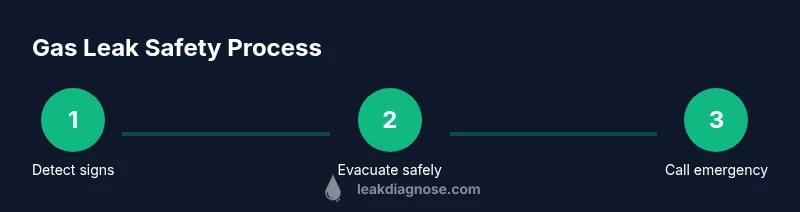
If you smell gas or hear a gas escaping, leave the building immediately using your closest exit, avoiding elevators and electrical switches. Do not operate appliances or attempt to locate the source while inside the danger zone. Once outside, call emergency services from a safe location and inform your gas utility about the suspected leak. If you can reach the main gas shut-off valve safely, turn it to the off position to stop the flow. Do not re-enter the building until responders clear the area. After evacuation, keep others away from the structure and provide essential details like your address and any symptoms among occupants. This sequence minimizes risk and buys time for responders to assess the situation. The priority is immediate safety and clear communication to authorities and the gas company.
How to identify the source of a gas leak
Gas leaks may originate at appliance connections, valve fittings, or segments of piping. Look for signs such as hissing sounds near connections, blistering or staining around joints, and an unusually damp or cold area around outdoor meters. Be aware that gas leaks can occur even if you don’t smell strong mercaptan or hear a hiss if venting is slow or intermittent. A portable gas detector or professional inspection can help pinpoint the exact source, but only after you have evacuated and are safe. Remember that incorrect handling can worsen the hazard; never attempt to repair a pipe or fitting unless you are qualified and it is already safe to do so. In practice, most leaks are detected by sight, smell, or by utility technicians during a routine inspection.
What not to do during a suspected gas leak
Do not light matches, use lighters, or operate electrical switches, outlets, or appliances in or near the suspected area. Do not use a phone inside the building if you detect a strong gas odor, because stray electrical arcing could ignite gas. Avoid turning on or off fans or ventilation while inside the building; wait until you are outside and away from the structure to implement ventilation measures. Do not attempt to locate the leak by yourself and do not attempt temporary fixes or DIY repairs. Always prioritize evacuation and professional assistance over personal tinkering. These precautions minimize ignition risks and protect occupants.
Communicating with emergency responders and utility company
When contacting responders or the gas company, clearly state that you suspect a gas leak, share the exact location of the building, and describe what signs you observed (odor, hissing, or visible damage). Provide the number of occupants and any symptoms such as dizziness or headaches. If you are outside, stay in a safe location and avoid re-entry until officials say it is safe. Have your address, nearby intersections, and a contact phone number ready. Ask responders for guidance on whether to evacuate neighboring units and whether any nearby appliances should be shut off remotely by authorities. Clear, concise information helps responders prioritize resources and accelerates containment.
Prevention and routine checks to reduce risk
Establish a home gas safety routine that includes annual inspections of connections, hoses, and regulators; replace damaged parts promptly; and never reuse damaged shut-off valves. Install and maintain carbon monoxide detectors and proper ventilation in gas-burning areas. Keep a gas leak emergency plan visible at home and review it with all household members. Regularly test for odor thresholds with family members, noting any changes in scent strength. By combining professional inspections with DIY upkeep, you reduce the likelihood of a leak and improve response times if one occurs.
Tools and equipment for safe inspection
Keep a basic toolkit ready: a gas shut-off wrench, adjustable wrench, flashlight (preferably hands-free), protective gloves, safety goggles, and a charged mobile phone outside the home. If you own a portable combustible gas detector, have it ready for use after you have moved to a safe location. Do not rely solely on DIY methods; use tools to verify conditions only after evacuation and once it is safe to do so. Store these tools in an accessible location near the main exit so every household member knows where to find them in an emergency.
When to call a professional vs DIY fixes
If you are unsure about the leak source, cannot reach the shut-off valve safely, or detect a strong odor near the meter, call professionals immediately. Gas lines require specialized training and equipment to repair correctly; DIY fixes can create additional hazards. Do not attempt to tighten, cut, or bypass any gas fittings. A licensed gas technician will perform leak testing, verify appliance connections, and ensure ventilation and code compliance before restoring service. In renting situations, coordinate with your landlord or property manager and follow local regulations.
How to test after a leak is repaired
After technicians declare the area safe, re-enter slowly and test all gas appliances for normal operation. Monitor for any lingering odor, unusual sounds, or unexplained gas usage. Ensure all detectors are functioning and test them according to the manufacturer’s instructions. If symptoms of exposure reappear (dizziness, headaches, nausea), seek medical attention immediately and contact your gas provider for a follow-up test. Keep a written log of dates, findings, and service visits for future reference.