What to Do If a Propane Tank Leaks: Urgent Troubleshooting
Urgent, practical guidance for reacting to a leaking propane tank. Safety first, identify leak sources, and know when to call professionals to prevent injuries.


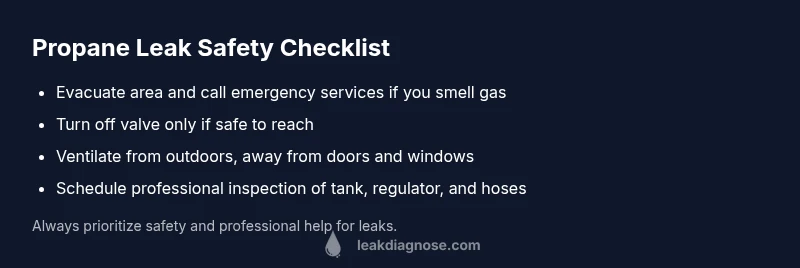
Propane leaks demand immediate action. The most likely cause is a loose connection or damaged valve. If you smell gas or hear a hiss, evacuate quickly and call emergency services from a safe distance. According to Leak Diagnosis, evacuate people and pets, avoid flames, and ventilate only after the area is confirmed safe. Do not attempt repairs yourself unless you are trained and authorized.
Immediate Safety Steps
When you suspect a propane leak, safety is non-negotiable. If you smell rotten-egg odor, hear a hissing sound, or notice a visible mist around fittings or hoses, evacuate the area immediately. Move everyone and pets to fresh air, at least several meters away from the source, and avoid ignition sources such as flames, sparks, or electrical switches. Once you are at a safe distance, call emergency services or your gas provider’s emergency line. Do not re-enter the space or try to locate the leak by reaching for the tank or valve if it is not safe. According to Leak Diagnosis, rapid evacuation and professional assessment are the best protections against injuries. After responders are en route, document basic details (location, odor, visible damage) to share with technicians when you reach safety.
Propane System Anatomy and Common Leak Points
A basic propane system consists of a tank, regulator, hose, and various fittings. Leaks most often occur at connections between the tank and regulator, the regulator and hose, or along the hose itself. Corrosion, wear, or damage to the valve stem can also create a leak path. Understanding this layout helps you pinpoint where a leak might be coming from without attempting risky repairs. Regular inspection of hoses for cracks, bulges, or hardening is a simple preventive measure that pays off. Remember: never tamper with a tank interior or replace components unless you are qualified and authorized.
Symptoms, Detection, and Early Warning Signs
Apart from the sulfur-like odor, leaks may manifest as a damp spot around fittings, frost on metal components due to gas expansion, or a sudden drop in oxygen levels in the area. If you notice any of these signs, treat it as a leak and escalate quickly. Do not rely on odor alone, as some people may not notice scents, especially in outdoor environments. Visual cues like a loose connection, damaged hose, or a rusted valve should be treated as potential leaks, and you should take action to secure the area.
Safe Testing and Verification Methods
If you can access the leak area safely outdoors, you can perform a basic leak check using a soap-and-water solution on connections. Look for steady bubbles indicating a leak. Do not test indoors or near any ignition source, and avoid creating sparks while testing. If you detect a leak, proceed to shut off the gas at the cylinder valve if safe, then contact a licensed technician for a thorough inspection. If you cannot access the area safely, do not attempt to perform tests—leave it to professionals.
When and How to Call for Help
Call emergency services if you smell gas strongly, hear a hiss near the tank, or are unable to move to a safe area. Contact your gas provider’s emergency line or a licensed propane technician for a professional leak test and repair. Provide precise information about your location, the exact source of the leak if known, and any symptoms you observed. If you are uncertain about the danger level, err on the side of caution and evacuate while you arrange professional help. Safety agencies emphasize that propane leaks can escalate quickly, especially in enclosed spaces.
What Homeowners Can Safely Inspect Outdoors
From a safe outdoor position, inspect visible connections, hoses, and the regulator. Ensure the tank is upright and secure, check for signs of wear or damage, and verify that fittings are clean and free from oil or dirt that may mask a leak. If a connection is loose, you may be able to tighten by hand—avoid over-tightening. Do not attempt to disassemble the regulator or valve core. If anything appears damaged, or if the leak persists after tightening, retreat to safety and call a professional immediately.
Prevention: Maintenance and Storage Best Practices
Regular maintenance reduces leak risk. Store tanks upright, outdoors, away from heat sources, and in a well-ventilated area. Use compatible hoses and regulators a trained technician approves, replace hoses every few years or as recommended by the manufacturer, and check connections periodically for tightness. Treat corrosion and rust promptly, and never transport a damaged tank. A proactive maintenance mindset and prompt response to any sign of a leak can keep homes safe and propane systems reliable.
Common Mistakes to Avoid in a Propane Leak Situation
Common mistakes include trying to re-enter doors immediately after a leak is detected, attempting to tighten valves with tools or excessive force, and assuming a short test proves safety. Never ignore the presence of a leak or assume it will dissipate on its own. Always evacuate with everyone present and contact professionals to confirm the area is secure before re-entering.
Steps
Estimated time: 60-90 minutes
- 1
Ensure immediate safety
Evacuate everyone and pets to fresh air. Do not operate switches, ignite flames, or create sparks. Call emergency services or your gas provider from a safe location.
Tip: Establish a safe perimeter before approaching the leak area. - 2
Turn off the gas if safe
If you can reach the cylinder valve without entering the affected zone, close the valve fully. Do not attempt if you must pass through a hazardous area to reach it.
Tip: Turn slowly and avoid wrenching the valve; hand-tighten only if possible. - 3
Move to a safe outdoor area
Stay outside, in a well-ventilated space, away from doors, windows, and air intakes. Keep children and pets with you at a safe distance.
Tip: If wind shifts the gas toward you, relocate even farther from the source. - 4
Check connections from a distance
From outside the building or in an open area, inspect visible connections for signs of damage or looseness. Do not touch the equipment if it looks compromised.
Tip: Do not attempt to disassemble or remove components yourself. - 5
Tighten or replace as needed
If a connection is obviously loose and you are trained to do so, gently tighten by hand. If you see damage, replace the hose or regulator and arrange a professional inspection.
Tip: Never over-tighten; overtightening can worsen leaks. - 6
Call a professional for leak testing
Arrange for a qualified propane technician to inspect and test for leaks. They should verify system integrity and perform a thorough safety check before re-entering or reusing the setup.
Tip: Ask for credentials and verify the technician is licensed to work with propane systems. - 7
Post-service verification and re-entry
Only re-enter the area after the technician confirms there is no active leak. Follow their guidance for safe restart and storage.
Tip: Keep the incident documented for future reference and maintenance scheduling.
Diagnosis: Propane leak from tank/lines or regulator
Possible Causes
- highLoose or damaged connection at regulator/valve
- mediumCracked hose or worn regulator
- lowDamaged cylinder valve or tank corrosion
Fixes
- easyShut off gas at cylinder valve if safe; evacuate if smell persists
- mediumTighten loose connections by hand; replace damaged hoses/regulator with professional help
- hardReplace entire tank or have valve assembly serviced by a licensed technician
Questions & Answers
What is the first thing I should do if I smell propane or hear a hiss?
Evacuate all people and pets to fresh air and call emergency services from a safe location. Do not operate switches or flames. If possible and safe, alert others nearby without re-entering the area until professionals arrive.
If you smell propane or hear a hiss, leave the area immediately and call emergency services. Do not try to fix it yourself.
Can I test for leaks myself?
Outdoor leak testing with a soap-and-water solution is only recommended if you can do so safely and without any ignition sources. Do not perform tests indoors or near electrical devices.
Testing leaks outdoors with soap is possible if safe, but avoid indoor testing or any flames.
Is it ever safe to tighten propane connections myself?
Only if you are trained and equipped to do so. Do not force fittings; overtightening can damage components. When in doubt, contact a licensed technician.
Only tighten if you’re trained; otherwise call a professional.
How should I store propane tanks to prevent leaks?
Store tanks upright, outdoors, away from heat sources, and in a ventilated area. Regularly inspect hoses and valves and replace them as recommended by the manufacturer.
Keep tanks upright outside and regularly inspect hoses and valves.
When should I replace a propane tank?
Replace tanks with signs of significant damage, rust, or recurring leaks. Have a professional assess the tank and regulator before reuse.
Replace a damaged tank and have a pro assess the regulator.
What should I do after a leak is addressed?
Follow the technician’s guidance for re-entry and safe operation. Keep a record of the incident and schedule regular maintenance checks.
Follow the pro’s steps for safe restart and keep notes for maintenance.
Watch Video
Main Points
- Evacuate safely at the first sign of a leak.
- Shut off gas only if safe and accessible.
- Call professionals for any repair or re-test.
- Inspect and replace damaged components promptly.