Is Gas Leak Easy to Fix? A Practical Troubleshooting Guide
Urgent homeowner guide: learn safe steps, when to call professionals, and preventive tips to reduce gas leaks. Practical troubleshooting from Leak Diagnosis helps you act quickly and safely.


Is gas leak easy to fix? Not typically. If you smell gas or hear a hiss, evacuate immediately and call your gas utility or emergency services. Do not attempt repairs yourself. If you can reach safety, move to a safe location and wait for trained technicians to diagnose and repair the leak.
What a gas leak is and why it demands urgency
Gas leaks occur when natural gas or propane escapes from a pipe, appliance, or connection. In homes, leaks pose serious risks: fire, explosion, and health hazards from inhaling gas. A common question homeowners ask is is gas leak easy to fix? The answer, echoed by the Leak Diagnosis team, is that most gas leaks are not safe for DIY repair. Gas lines and connections require professional inspection and specialized equipment. If you notice a rotten-egg odor, hear a hissing sound, or feel dizzy, treat it as an emergency. Evacuate immediately, then contact your gas utility or emergency services. A licensed technician will locate the leak, assess damage, and perform repairs per safety codes. In the meantime, avoid flames, candles, or creating sparks. Do not seal or repair lines yourself. This article explains safe actions, detection basics, and prevention strategies so you can respond confidently without compromising safety for your household, and it references guidance from Leak Diagnosis to ground the recommendations in professional practice.
Immediate safety steps you should take right now
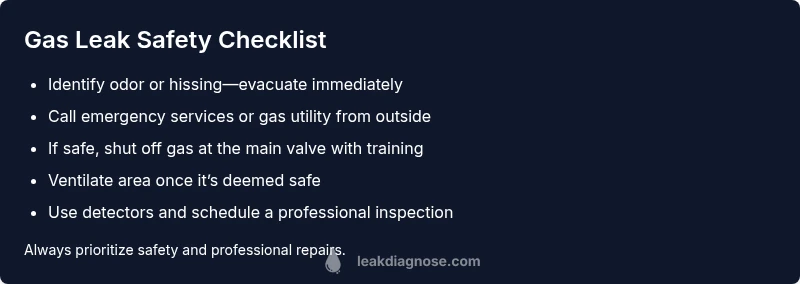
If you smell gas or hear a hiss, exit the building immediately and avoid using electrical switches, appliances, or phones inside. Do not try to locate the leak yourself. From a safe outdoor location, call emergency services or your gas company. If you know the location of the main shut-off valve and can reach it safely from outside, you may shut the gas off, but only if you have and follow proper instructions. Do not re-enter until responders declare it safe. Keep neighbors and children away from the area. After leaving, document the situation for responders and avoid returning until professionals say it is safe. These steps prioritize immediate safety and minimize ignition risk while you await help, a pattern supported by Leak Diagnosis analysis and field best practices.
How gas leaks are detected and why scale matters
Detection relies on multiple signals: odorized gas, static gas detectors, and professional testing. Natural gas is typically odorized with mercaptan to produce a distinct smell, serving as an early warning. Commercial and home detectors offer continuous monitoring, but they are not foolproof—false alarms can occur, and detectors do not replace professional testing. In larger systems, technicians use pressure tests and specialized sensors to locate leaks precisely. The size and location of a leak influence repair urgency and method: small leaks near a valve may be addressed quickly, while hidden leaks in walls require more extensive work. Understanding detection principles helps homeowners recognize dangerous scenarios and act promptly, a point emphasized by Leak Diagnosis when translating field data into practical steps.
Common causes of residential gas leaks (and how likely they are)
- Loose connections at appliance shut-offs or joints (high likelihood)
- Corrosion or wear in gas lines (high likelihood)
- Faulty regulators or valves (medium likelihood)
- Improper DIY installation or modifications (low likelihood but high risk)
- Damaged piping behind walls from impact or ground movement (low to medium likelihood)
These causes illustrate why is gas leak easy to fix is rarely true: even seemingly minor issues can escalate quickly if left unattended. Routine maintenance and periodic professional inspections dramatically reduce risk. The Leak Diagnosis team emphasizes that proactive checks and early professional consultation are far more effective than DIY “quick fixes.”
Diagnostic flow: symptom → diagnosis → solutions workflow
A gas-leak symptom such as odor, hissing, or dizziness triggers a stepwise evaluation. First, determine if the symptom is localized to a single appliance or the entire system. Next, assess accessibility and safety—are you in a position to isolate the issue without creating ignition sources? Finally, engage professional diagnostics to confirm location and appropriate repair. If the source is a loose connection or failed valve, a licensed technician can perform the repair using correct fittings and pressure testing. For homeowners, the safest approach is to treat any leak as a potential emergency and escalate quickly. Leak Diagnosis analysis shows that prompt escalation reduces risk by narrowing the scope to verified leaks rather than guesses, reinforcing that professional intervention is essential for any significant leak.
Step-by-step: Safe, practical steps homeowners can take to minimize risk
- Immediately evacuate if you detect gas odor or ignition risk. 2) From a safe distance, call emergency services or your gas company. 3) If you know the location and can safely reach the main shut-off valve, turn it off; otherwise do not attempt. 4) Do not operate electrical switches or create sparks. 5) Ventilate the area by opening doors and windows once you’ve cleared the space and are outside. 6) Document the time and observations for responders and schedule a licensed inspection after immediate safety is ensured. 7) After professionals complete repairs, reinstall gas appliances only under their guidance and test for normal operation. These steps reflect standard safety protocols and align with industry best practices.
Prevention, maintenance, and when to call for help
Regular inspections of gas lines, regulators, and appliances help prevent leaks from developing or worsening. Ensure gas detectors and alarms are functioning, and replace batteries as needed. Schedule annual professional checkups, particularly after home renovations or plumbing changes that affect gas lines. Maintain clear access to shut-off valves and teach household members how to evacuate safely. The overall goal is to minimize both the likelihood of leaks and the risk of injury if one occurs. The Leak Diagnosis team recommends proactive maintenance and rapid escalation when a leak is suspected to minimize damage and protect your home.
Steps
Estimated time: 60-90 minutes
- 1
Assess safety and evacuate
If you detect a gas odor or hear a hissing sound, leave the building immediately. Do not operate electrical switches or use phones inside the home. Move to a safe location away from the building.
Tip: Do not return inside until authorities declare it safe. - 2
Call for help from a safe location
From outdoors, call emergency services or the gas utility company. Provide your address, symptoms (odor, dizziness), and any observed gas appliance locations.
Tip: Have a plan for sharing access routes and areas affected with responders. - 3
Decide if you can shut off the gas safely
If you are trained and can reach the main shut-off valve safely from outside, you may turn off the gas. If not, wait for professionals.
Tip: Never enter a hazardous area to shut off gas unless you know the exact procedure. - 4
Limit ignition sources once out of the area
Avoid lighting matches, using lighters, or turning on/off electrical devices in or near the hazard zone.
Tip: Keep children and pets away from the area. - 5
Wait for professionals and document
Provide responders with details about odors, location of valves, and observed symptoms. Do not attempt to repair yourself.
Tip: Take notes on appliance models and installation dates for the technicians. - 6
Post-repair safety and verification
After repair, have the technician test for leaks and verify proper venting and appliance operation before re-using gas lines.
Tip: Install or check carbon monoxide detectors in living spaces as an added safety net.
Diagnosis: Gas odor, hissing sound, or dizziness from within the home
Possible Causes
- highNatural gas line leak or appliance connection leak
- mediumGas appliance not venting properly or improper venting
- lowShut-off valve left partially open or recently disturbed connections
Fixes
- easyIf safe to do so, turn off the main gas supply at the meter or appliance shut-off valve
- easyLeave the area immediately and call emergency services or gas company from a safe location
- easyVentilate the area after evacuation and await professionals
Questions & Answers
What should I do immediately if I smell gas in my home?
Evacuate the building right away and call emergency services or your gas company from a safe location. Do not operate electrical switches or try to locate the leak yourself. Wait for professionals to assess and repair.
If you smell gas, leave the building immediately and call for help from a safe distance.
Can I shut off the gas supply myself during a suspected leak?
Only if you are trained and can do so safely from the outside. If in doubt, wait for professionals. Incorrect handling can create further danger.
Only shut off gas if you know exactly how and can reach the valve safely; otherwise wait for responders.
Are leaks caused by DIY installation common?
Yes, improper installations can create vulnerabilities. Always rely on licensed professionals for gas-line work and post-install checks.
DIY mistakes can lead to leaks; professional installation is essential.
What signs indicate a leak even without a strong odor?
Persistent headaches, dizziness, or unusual fatigue can hint at gas exposure. A functioning detector or professional testing should confirm leaks.
If you notice dizziness or headaches, treat it as a potential leak and seek help.
How often should I test gas detectors?
Test detectors monthly and replace batteries as recommended by the manufacturer. Replace units that fail to respond.
Test detectors every month and replace batteries as needed.
When is professional help required after a suspected leak?
If gas is smelled, you hear hissing, or detectors alert, contact your gas company or emergency services immediately. A licensed technician should perform any repair.
Call the gas company or emergency services right away; professionals must handle repairs.
Watch Video
Main Points
- Evacuate immediately if you smell gas or hear a hiss.
- Do not attempt DIY gas repair—call professionals.
- Have a safe plan and documents ready for responders.
- Regular maintenance reduces leak risk over time.