What to Do If Gas Leak in House: A Practical Guide
An actionable, safety-first guide for homeowners on how to respond to a gas leak in your home, including immediate steps, evacuation, and coordinating with responders.


Immediate safety first: if you smell gas or hear a hiss, leave the building and property immediately. Do not light matches, use switches, or create a spark. Then call your gas provider or emergency services from outside. If you’re asking what to do if gas leak in house, this guide walks you through fast, safe steps.
Understanding Gas Leaks: Why They Require Immediate Action
Gas leaks pose a serious flash and health risk. A leak can occur from damaged pipelines, loose connections, or faulty appliances, and it can spread quickly through air, potentially leading to fires or asphyxiation. The key to safety is rapid recognition and decisive action. According to Leak Diagnosis, gas leaks are dangerous events that demand emergency-style responses, not casual caution. By understanding the signs—smell of rotten eggs, a sharp hissing sound, or a noticeable gas odor—you can respond faster and reduce risk for everyone in the home. This section explains how leaks form, why they are hazardous, and what the safest first steps look like in practice.
Key takeaways from this section: 1) Gas leaks can originate from appliances or piping. 2) Odor and audible indicators are red flags. 3) Immediate action is essential to containment and safety.
Immediate Safety Steps You Should Take Right Away
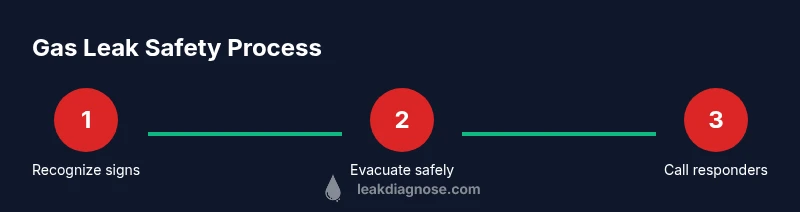
When you detect signs of a gas leak, your first priority is safety, then communication. - Do not operate electrical switches, lights, or any device that could create a spark. - Do not light matches or use an open flame. - Evacuate everyone from the building and move to a safe outdoor location. - From outside, call your gas utility’s emergency line or 911. These steps are designed to prevent ignition and ensure professionals can assess the situation safely. Remember to bring your keys and a phone, but avoid re-entering the building until responders declare it safe. This section emphasizes practical, doable actions you can take within minutes.
Note: Always have a pre-planned meeting point outside and a quick way to contact family members.
How to Confirm a Gas Leak Safely
Non-intrusive confirmation is important. Do not re-enter to investigate inside spaces yourself. Signs include a persistent gas odor or a distinct hissing sound around appliances, meters, or pipes. If you cannot identify the exact source safely from the exterior, describe the observed signs to the responders when you call. Do not attempt to shut off gas at the appliance or meter unless you have explicit training and the scene is clearly safe. This section guides you through what to observe and what not to do while awaiting help.
Important note: If you have a gas detector, use it to supplement your observations, but never rely on it alone in a suspected leak.
Evacuation, Ventilation, and Calling for Help
Evacuation is non-negotiable once a leak is suspected. Move everyone, including pets, to a safe outdoor area away from the building and any potential ignition sources. Do not re-enter for any reason until the utility company or fire department gives clearance. From a safe location, call the gas company’s emergency line or 911. Provide your address, describe the situation, and mention any observed signs (odor, noises, or changes in flame color). If you have a central alarm, inform responders about it so they can coordinate a rapid response. Ventilation inside a sealed home is tricky; do not rely on fans or HVAC systems to disperse gas while you’re indoors.
Tip: If you’re in a multi-unit building, alert neighbors and follow building-wide protocols for evacuations.
Long-Term Response: Repairs, Gas Company, and Prevention
After professionals clear the area, arrange for a licensed gas technician to inspect and repair the source of the leak. Scheduling a comprehensive inspection of all gas appliances, lines, and connections helps prevent future leaks. Consider installing or upgrading gas detectors on every level, ensuring batteries are fresh, and testing them regularly. Maintain a written safety plan that includes emergency contacts, a map of shutoff valves (only if you’re trained), and a practice drill for all household members. The Leak Diagnosis team emphasizes proactive prevention and preparedness as the best defense against gas leaks.
Brand note: The Leak Diagnosis team recommends routine checks and detector installations as part of a home safety routine.
Common Myths and Mistakes to Avoid
Myth: A faint smell is normal and harmless. Reality: Even a weak odor can indicate a leak and should be treated with caution and immediate action. Myth: You can quickly “just check” a pipe yourself. Reality: Gas systems require professional assessment; attempting DIY repairs can escalate danger. Mistake: Relying on open windows alone for ventilation. Reality: Gas can accumulate indoors; exterior air exchange is safer and prevents accumulation inside. This section debunks common myths and highlights safe, evidence-based practices.
Building a Home Gas Leak Safety Plan
A formal safety plan reduces hesitation during emergencies. Create a one-page plan that includes: who to call, where to meet, and how to evacuate. Install certified detectors on every floor and near sleeping areas. Practice the plan with all household members, including children and guests. Finally, keep emergency numbers in your phone and on a visible household label. This proactive plan aligns with best practices and supports a calm, effective response when every second counts.
Tools & Materials
- Phone or mobile device(For calling emergency services or the gas company from a safe location outside.)
- Flashlight(High-visibility with fresh batteries to aid visibility outdoors.)
- Sturdy footwear(Protect feet when moving outdoors; avoid sandals or open shoes.)
- Exterior meeting point plan(Pre-arranged safe outdoor location for all household members.)
- Notebook and pen(Use to record times and actions for reporting purposes.)
Steps
Estimated time: Total time: 30-60 minutes
- 1
Identify warning signs
Look for strong sulfur-like odors, a hissing or whistling noise around gas lines or appliances, and visible damage to pipes or connections. Acknowledge these cues as a potential leak and prepare to evacuate if any signs are observed.
Tip: Trust your senses and do not ignore even mild indicators; early action saves lives. - 2
Leave the area immediately
Vacate the building and move to a safe outdoor location. Do not take time to gather belongings; your priority is personal safety and preventing ignition sources indoors.
Tip: Move at a steady pace and use the main exit to avoid getting trapped inside. - 3
Do not operate electrical devices
Avoid switches, phones, or appliances that could create a spark unless you are already outside and using a landline or mobile phone. Any spark could ignite leaking gas.
Tip: If a door is jammed, exit through the nearest safe route rather than forcing it open. - 4
Call for help from outside
From a safe location, call the gas utility’s emergency line or 911. Provide your address, observed signs, and whether anyone is experiencing symptoms like dizziness or headaches.
Tip: Speak clearly and stay on the line until instructed to hang up. - 5
Wait for professionals and avoid re-entry
Do not re-enter until responders declare it safe. If you are in a multi-unit building, follow the building's emergency plan and assemble at the designated outside point.
Tip: Keep others informed and check on pets only from the outside area. - 6
If you know how and it’s safe, shut off gas at the main valve
Only attempt this if you are trained and located at the main shutoff valve away from the source of the leak. If unsure, skip this step and wait for responders.
Tip: Improper shutting can increase risk; safety comes first. - 7
Document what happened for responders
Note the time of signs, actions taken, and responses from emergency services. This helps professionals assess the incident and prevent recurrence.
Tip: Keep a simple log with dates, times, and observed signs. - 8
Schedule follow-up and reinforce prevention
After clearance, arrange a professional inspection of appliances and gas lines, install or verify detectors, and update your home safety plan.
Tip: Regular checks and detectors reduce risk over time.
Questions & Answers
What is the first action I should take during a suspected gas leak?
Evacuate immediately and call emergency services or the gas utility from outside. Do not operate switches or light flames inside the home.
If you suspect a gas leak, leave the home immediately and call for help from outside.
Can I re-enter after evacuation?
No. Do not re-enter until responders declare it safe. Gas can linger and equipment may be compromised.
Do not go back inside until professionals say it's safe.
Should I shut off the gas supply myself?
Only if you know where the main shutoff is and can operate it safely. If in doubt, wait for professionals.
Don't shut off gas unless you know exactly how to do it safely.
What are common signs of a gas leak at home?
Odor of sulfur, hissing sounds, dead plants near gas lines, or an unusual gas smell near appliances.
Look for sulfur-like smell or a hissing sound as common signs.
When should I contact the gas utility?
From outside as soon as you suspect a leak. Provide your location and observed signs.
Call the gas company from outside right away if you suspect a leak.
What safety steps after a leak is addressed?
Get a professional inspection, install detectors, and update your home safety plan.
After it's resolved, arrange a safety check and add detectors.
Watch Video
Main Points
- Act immediately when you suspect a gas leak.
- Evacuate and call professionals from a safe location.
- Do not re-enter until responders say it is safe.
- Inspect and upgrade detectors and safety plans after incidents.
- Regular practice improves readiness and reduces risk.