How to Remove Gas Leaks at Home Safely: A Practical Guide
Learn how to respond safely to a gas leak at home, when to call professionals, and how to prevent future leaks with practical, actionable steps from Leak Diagnosis.


This guide explains how to remove gas leak from home safely and why professional help is essential. You’ll learn immediate safety actions, when to evacuate, and how to contact your gas utility or emergency services. Note: do not attempt repairs yourself or operate electrical switches if you smell gas. If you’re safe, take steps to minimize risk and prepare for a licensed technician to fix the leak.
Understanding Gas Leaks: What It Is and Why It's Dangerous
Gas leaks involve escaping fuel gas from pipes, appliances, or fittings. Most household natural gas is methane and is odorized with mercaptan to help detection; however, odors can be absent in some circumstances. A leak can trigger fire or explosion risk if an ignition source is nearby and can cause asphyxiation in enclosed spaces. According to Leak Diagnosis, these leaks require prompt safety actions and professional remediation. In homes, leaks often originate at connections, valves, or appliance supply lines. Recognizing the warning signs (strong rotten egg smell, hissing sounds near gas lines, dead vegetation near outdoor lines) can help you respond quickly. Always treat the situation as dangerous and prioritize evacuation and notification. This understanding helps homeowners act decisively and coordinate with professionals when needed.
Immediate Safety Steps You Must Take Right Away
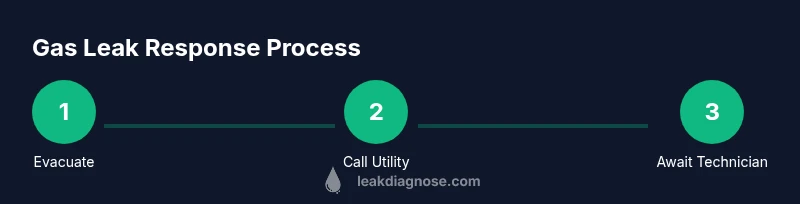
Gas leaks create an immediate risk that demands calm, decisive action. First, evacuate all people and pets from the affected area and move to a safe outdoor location well away from windows and ventilation. Do not create sparks by turning lights on/off, using phones indoors, or starting equipment that could ignite gas. From outside, call your gas utility’s emergency line or dial emergency services; clearly state that you smell gas or hear a hissing and request urgent guidance. If you are trained and know the correct procedure, you may shut off the main gas valve only from the exterior meter or main shut-off; otherwise, leave this to professionals. Do not re-enter the building until authorities declare it safe and the area has been inspected by qualified personnel.
Assessing the Scene: What You Can Observe Safely
If you can observe the area from a safe distance, note indicators that a leak is present. A noticeable sulfur-like odor, a persistent hissing sound at a fixture, damaged or corroded piping, or dead vegetation around outdoor gas lines all point to a leak. Do not approach suspected leak points or attempt to seal anything yourself. Use daylight or a flashlight to inspect exteriors only, and avoid smoking or using electrical devices near the source. If you’re outside, stay upwind to minimize exposure to any escaping gas and ensure others follow the same safety principle. Your observations help the technician diagnose the problem quickly and safely.
Who to Call and When: Your Right Contacts
Within minutes of noticing a gas leak, contact your gas utility's emergency line; if there is an immediate danger, call 911. If you are uncertain about the severity, report the situation and ask for guidance on whether an on-site response is necessary. Keep your address, building access details, and a list of appliances that may be involved ready. If the leak affects a rental property, notify the property manager or landlord immediately. A licensed professional will perform leak localization, combustion safety checks, and safe repair.
How Utilities and Licensed Technicians Trace a Leak: A High-Level Overview
Professional responders use a combination of methods to locate leaks without risking further danger. They may rely on portable gas detectors to map gas concentration, sniffers at suspected joints, and trace gas tests to determine the leak’s path. In some cases, technicians use a soap solution to reveal small, slow leaks at connections. Modern equipment can provide real-time readings and help prioritize which joints or appliances require service. The goal is to identify the exact source, depressurize the system safely, and arrange for permanent repair by a licensed technician. This overview is intended to give you context for what happens after the call, not to substitute for professional training.
What You Can Do Safely Before the Technician Arrives
Make the area safer by removing clutter from hallways and ensuring clear access to the main shut-off valve for technicians. If it is safe and you know the correct steps, ventilate the space by opening exterior doors and windows from outside the leak area. Do not attempt to move heavy appliances or disconnect gas lines. Turn off unnecessary lights and electrical devices far from the source; avoid creating sparks. Gather model numbers, appliance locations, and any recent changes to gas pressure or piping so the technician can diagnose the issue faster.
Documenting the Situation for the Technician
Before the repair, write down what you observed: the exact location of the odor or hiss, the time you first noticed the problem, and any appliances or gas lines involved. Take photos from a safe distance that show the exterior and nearby meters or shut-off valves. Share your notes with the technician or dispatcher to speed up assessment and ensure they bring the right tools and parts. Keeping a simple record also helps with post-incident insurance documentation.
Preventive Safety Practices for the Future
After a leak is resolved, implement safety measures to reduce the risk of recurrence. Schedule routine inspections of gas lines, appliances, and vents with a licensed professional. Install or maintain battery-powered gas detectors in appropriate locations, test them monthly, and replace batteries annually. Develop and practice a family emergency plan that includes meeting points and exit routes. Keep combustibles away from heat sources and ensure proper venting for appliances. These steps help protect your home over the long term and support ongoing peace of mind.
After the Repair: Reentry, Testing, and Insurance Considerations
Once the technician completes repairs, request a formal safety test or inspection to confirm there are no residual leaks and that appliances are functioning correctly. Do not re-enter until the inspector signs off. Save documentation of the repair work, test results, and any warranties for future reference or insurance claims. If you rent, coordinate with your landlord about follow-up maintenance and required safety checks. Regular maintenance and prompt reporting of any suspicious odor or unusual pressure changes help prevent future incidents.
Tools & Materials
- Phone to contact emergency services or gas utility(Call from a safe location; do not stay near the leak)
- Emergency exit plan(Post-printed or digital copy accessible to all household members)
- Safety flashlight(Useful if you need light while moving away from the area after evacuating)
Steps
Estimated time: 60-120 minutes for initial response; full repair and testing may require hours
- 1
Evacuate Immediately
If you smell gas or hear a hissing, leave the building immediately with others. Do not stop to gather belongings. Moving away reduces exposure to any escaping gas and minimizes ignition risk.
Tip: Move to a safe outdoor location well away from the building and upwind if possible. - 2
Avoid Creating Sparks
Do not operate electrical switches, lights, or devices that could create a spark. Sparks can ignite accumulated gas and escalate danger.
Tip: Use outside lighting only if necessary and avoid using phones or devices near the suspected leak. - 3
Call for Help from a Safe Location
From a safe distance, call your gas utility’s emergency line or 911. Explain that you suspect a gas leak and request urgent assessment.
Tip: Have your address and any appliance locations ready to speed up the response. - 4
Assess If Trained to Shut Off Gas
If you know the correct procedure and it is safe, you may shut off the main gas valve from the exterior meter; otherwise, wait for professionals.
Tip: Only perform this step if you are trained and confident in the procedure. - 5
Do Not Re-Enter
Await professionals’ clearance before re-entering. Leaks may persist even after initial actions, and testing is essential.
Tip: Do not re-enter until authorities confirm it is safe. - 6
Prepare for the Technician
Provide access and share observed details: odor location, timing, and involved appliances to accelerate diagnosis.
Tip: Have a written note ready for the technician. - 7
Maintain Clear Access
Ensure pathways to the gas meter and shut-off valve remain unobstructed for responders and technicians.
Tip: Keep pets secured away from the work area. - 8
Post-Repair Testing
Ask for a post-repair safety test to verify the leak is gone and that all systems operate correctly.
Tip: Request written results or a certificate of clearance. - 9
Prevent Future Leaks
Implement regular maintenance and safety checks to minimize recurrence.
Tip: Schedule annual inspections for gas lines and appliances.
Questions & Answers
What should I do first if I smell gas indoors?
Evacuate immediately and call emergency services or your gas utility from a safe location. Do not re-enter until given the all-clear.
Evacuate quickly and call for help from a safe place; do not re-enter until professionals say it’s safe.
Can I shut off the gas valve myself?
Only if you are trained and it is safe to do so. In most cases, it’s best to wait for professionals who know the correct procedure.
Only if you’re trained; otherwise wait for professionals.
Is it safe to use my phone near a gas leak?
Use the phone from a safe distance outside the affected area. Avoid bringing it close to suspected gas until you’re at a safe location.
Call from a safe distance away from the leak.
How long does a gas leak repair take?
Repair duration varies by leak location and complexity. A licensed technician will provide an estimated timeline after initial assessment.
It depends on the leak; you’ll get an estimate after the assessment.
What information should I provide to the technician?
Describe the leak location, odor intensity, appliances involved, and any changes you noticed before the leak started.
Share where you noticed it and what you observed.
Will a gas leak always result in a fire?
Gas leaks can ignite if an ignition source is present. Treat any suspected leak as an emergency and avoid sparks.
Yes, ignition is possible; act fast and stay safe.
Watch Video
Main Points
- Act quickly to protect occupants and property.
- Do not attempt DIY gas leak repairs; call professionals immediately.
- Evacuate, ventilate safely, and wait for clearance before re-entry.
- Document observations and keep receipts/tests for insurance.