How to Get Rid of a Gas Leak Safely
A practical, safety-first guide from Leak Diagnosis on responding to gas leaks, when to evacuate, how to contact emergency services, and how to prevent future leaks.


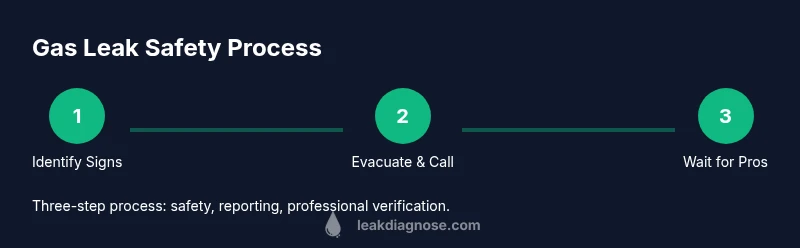
If you suspect a gas leak, your immediate goal is safety: evacuate the area, avoid creating sparks, and call emergency services and your gas company from a safe location. Do not attempt DIY repairs. If you can do so safely, turn off the gas at the main valve, then wait for professionals. For all steps, prioritize fresh air and clear communication.
What qualifies as a gas leak and why immediate action matters
A gas leak is the escape of natural gas or propane into your living space. This can happen at pipes, appliances, fittings, or the main line and may lead to fire, explosion, or asphyxiation. The odorant additive in natural gas often gives away leaks with a rotten-egg scent, but not everyone can detect it—detectors and careful listening for a hissing sound are important clues. Understanding what a gas leak looks like helps you take quick action. If you are trying to answer the question how to get rid of a gas leak, know that there is no safe DIY repair route—professional technicians must identify and fix the source. For homeowners, the priority is to remove people from danger and to notify authorities promptly. According to Leak Diagnosis, gas leaks are emergencies that require urgent, structured responses. When in doubt, treat any odor, hissing, or dead vegetation near lines as a potential leak and move to fresh air immediately.
Immediate safety actions you should take
If you smell gas, hear a hissing, or notice a flame, your first instinct should be to get to safety. Evacuate everyone from the area, including children and pets, and avoid using phones, lights, or switches inside the home. Do not light matches or create sparks. Open doors and windows only if you can do so from the outside or from a safe location, to help ventilate the space. Once you are in a safe area, call your gas company’s emergency line or dial 911 from outside the building. Describe what you smelled, where you were, and how long it’s been since you detected the issue. Do not re-enter the home until responders declare it safe. According to Leak Diagnosis, the quickest path to safety is outside air and rapid communication with professionals.
Evacuation and assembly point: a structured plan
Create a simple family plan for gas leak events. Identify a nearest exit path from every room, designate a meeting point outside at a safe distance, and practice the route at least once a year. Encourage everyone to leave quickly but orderly, avoiding elevators and staying low to the ground if you’re in an area with poor ventilation. After evacuating, keep doors and windows open if you can do so safely from outside, to help disperse gas until responders arrive. This planning reduces panic and ensures that nobody remains inside a compromised space. The goal is predictable, calm evacuation rather than improvisation under stress. The Leak Diagnosis team emphasizes rehearsing your plan so real events feel routine.
Can you safely shut off gas yourself? When to do it
Shutting off gas is a potential option only if you can reach the main shutoff valve safely from outside the hazard area. The valve is usually located near the gas meter on the exterior wall or in a basement utility area. To turn it off, rotate the valve clockwise until it stops, using a wrench if needed and if you can do so from a safe location. Do not attempt this if you must pass through an area with visible leaks, if you feel dizzy, or if you are uncertain about the valve’s location. After turning off the gas, evacuate to a safe distance and wait for professionals. You should only rely on this action if you can perform it confidently without creating risk. The purpose is to halt the gas supply to reduce ongoing danger while awaiting help.
What responders will do when they arrive
When responders reach the scene, they will assess the area for gas buildup, identify the leak source, and determine if it can be shut off safely. They may vent the space, deploy gas detectors, and communicate with the gas utility about the required repairs. Fire and emergency personnel will keep onlookers away from the danger zone and may establish a perimeter. Professionals will also inspect all gas-fired appliances and lines to ensure no residual leaks remain. Throughout this process, you should provide any relevant information, such as nearby vents, appliances that were in use, and any actions you took before the responders arrived. This information helps speed up diagnosis and safety clearance.
How professionals diagnose a gas leak
Leak diagnosis professionals use a combination of visual inspection, odor cues, and specialized equipment to locate leaks. Gas detectors, instrumentation to measure gas concentration, and pressure tests help confirm the leak source and determine its severity. They will also check appliance connections, shutoff valves, and the integrity of the piping. This diagnostic phase may involve turning off appliances, testing with a calibrated detector, and comparing readings over time. Rely on trained technicians to interpret results and to recommend repairs or replacements. For homeowners, understanding that diagnosis requires accuracy helps manage expectations and fosters safer outcomes.
Appliances and typical leak indicators
Gas leaks can originate from stoves, water heaters, furnaces, or outdoor lines. Common indicators include the characteristic odor near gas lines, a hissing sound near a pipe, dead vegetation around outdoor lines, or a flame that refuses to ignite in a gas appliance. In kitchens, leaks can occur at supply lines behind the range or at the regulator. In basements or utility rooms, malfunctions with furnaces or water heaters can also cause leaks. Regular maintenance, such as professional checks and prompt attention to odd smells, reduces the risk of appliances developing leaks. Remember, gas is heavier than air and tends to collect in low spots, so avoid basements or crawl spaces unless you are sure it’s safe.
Safer home improvements: detectors and alarms
Install interconnected gas detectors and carbon monoxide detectors on every level of your home, especially near sleeping areas and in utility rooms. Replace batteries regularly and test devices monthly. Detectors provide crucial early warning and can bridge the time between detection and professional response. Combine detectors with a clear evacuation plan and posted emergency numbers. While detectors increase safety, they are not a substitute for professional maintenance or immediate action when a leak is suspected. In a safety-focused home, every appliance becomes safer because you have better situational awareness.
Maintenance and preventive measures
To minimize future leaks, schedule annual inspections of gas lines and appliances with a licensed technician. Keep clearance around heaters and furnaces, and ensure vents and exhausts are free from obstructions. Do not store flammable materials near gas-powered equipment. Consider upgrading aged piping or regulators if your home is several decades old. This proactive approach reduces risk and can lower the chance of dramatic leaks. The goal is steady performance, not reactive fixes. Preventive maintenance is a key part of responsible home ownership.
Common myths and facts about gas leaks
Myth: A fainter odor means a small leak, so it’s safe to wait. Fact: Any detectable gas presence is a warning sign; do not wait, evacuate and call for help. Myth: You can fix leaks yourself with duct tape or sealant. Fact: Leaks require professional repair and proper replacement parts. Myth: Detectors guarantee safety. Fact: Detectors improve safety but must be maintained and used with a solid safety plan. Understanding truths vs myths helps homeowners act decisively and avoid dangerous delays.
If you can't evacuate: steps to take safely
If you have limited mobility or are unable to leave, call emergency services from inside if that is safer, or move to a room with as much ventilation as possible and await instructions from responders. Do not light flames or operate electrical devices that could spark. In many cases, professionals will recommend evacuating you if the risk remains high. Your safety plan should include neighbors or caregivers who can assist in an emergency. The priority is to minimize risk while ensuring help arrives quickly.
After-action: documenting the incident and improvements
After the incident, review what happened with your household and with your service provider. Document the time of detection, the actions taken, and the responses from emergency services. Use this record to refine your emergency plan, add new detectors, and schedule follow-up checks. By turning a dangerous event into a learning opportunity, you reduce the chance of recurrence. Regular drills and updated safety equipment are signs of a proactive safety culture.
Tools & Materials
- Phone to call emergency services(Keep emergency numbers accessible and pre-programmed.)
- Main gas shutoff wrench (where applicable)(Use only if you can reach the valve safely from outside the hazard zone.)
- Flashlight(Use during evacuation if power is off or visibility is limited.)
- Face mask or respirator (optional but helpful for confined spaces)(Only use if you are trained; do not rely on it to replace evacuating.)
- Notepad and pen(Record times, actions taken, and responders' details for after-action review.)
Steps
Estimated time: 30-60 minutes for initial response; full resolution may take hours or longer depending on the extent of repairs
- 1
Identify signs of a gas leak
Notice any unexpected gas odor, hissing sounds, or inconsistent flame ignition. Confirm that the situation is ongoing and not a false alarm before proceeding with safety steps.
Tip: Trust your senses and evacuate if there’s any doubt about safety. - 2
Evacuate everyone from the area
Get all occupants outside to fresh air as quickly as possible, avoiding elevators and staying low if smoke or gas are present. Do not attempt to locate the source during this step.
Tip: Move to a clear distance away from buildings and vehicles that might block emergency access. - 3
Avoid creating ignition sources
Do not use electrical switches, lights, phones, or open flames inside the building. Any spark could ignite leaked gas.
Tip: If you must call for help, step outside and use a phone from there. - 4
Ventilate if it is safe to do so
If you are in a position to do so safely, open doors and windows to improve airflow. Do not re-enter until professionals say it’s safe.
Tip: Ventilation helps dispersal but should never be attempted if gas is actively accumulating indoors. - 5
Shut off the gas only if you can do so safely
If you can reach the main shutoff valve from a safe location, rotate clockwise until off. Do not risk moving through a hazardous zone to reach it.
Tip: Always prioritize personal safety over stopping the gas flow. - 6
Call for help immediately
Contact the gas company emergency line and local fire department from outside. Provide the location, what you smelled or heard, and what you’ve done so far.
Tip: If you’re unsure of the number, call 911 and let the dispatcher route the appropriate responders. - 7
Wait for professionals outside
Remain at a safe distance until responders confirm the area is safe. Do not re-enter for any reason until cleared.
Tip: Keep doors and windows closed to minimize indoor air exchange while awaiting help. - 8
Post-incident follow-up
After the hazard is controlled, arrange a professional inspection of all gas lines and appliances before resuming normal use.
Tip: Document what happened and schedule preventive maintenance to reduce future risk.
Questions & Answers
What should I do first if I smell gas?
Leave the area immediately, avoid flames or sparks, and call emergency services and your gas company from a safe location. Do not re-enter until responders say it’s safe.
If you smell gas, evacuate right away and call for help from a safe location. Do not re-enter until professionals confirm it’s safe.
Can I shut off the gas supply myself?
Only if you can reach the main shutoff valve safely from outside the hazard area. If there is any doubt or danger, wait for professionals.
Only if you can reach the shutoff valve safely. If not, wait for trained responders.
Is it safe to use a detector to find a gas leak?
Gas detectors help identify leaks, but they are not a substitute for immediate evacuation and professional response.
Gas detectors are helpful, but they don’t replace urgent action and professional repairs.
How long does it take for responders to arrive?
Arrival times vary by location and severity. Follow the dispatcher’s directions and stay outside until clearance is given.
Response times depend on where you are; listen to the dispatcher and stay outside until told it’s safe.
What should I do after the incident is resolved?
Arrange a complete safety check of all gas lines and appliances, replace detectors as needed, and review your emergency plan with household members.
Get a full safety check of gas lines, replace detectors if needed, and review your plan.
Do I need a professional inspection even if the smell goes away?
Yes. Gas leaks can linger in unseen lines or hidden connections. A professional inspection confirms there’s no lingering danger.
Yes—odor fading isn’t a guarantee the leak is gone; get an inspection.
What’s the difference between a gas leak and a CO leak?
Gas leaks involve natural gas or propane; carbon monoxide leaks are from incomplete combustion. Both are dangerous, but detectors for gas and CO often go hand-in-hand.
Gas leaks are about fuel gas; CO leaks come from incomplete combustion. Both require urgent action and proper detectors.
Watch Video
Main Points
- Prioritize safety and evacuation first.
- Do not attempt DIY repairs on a gas leak.
- Call emergency services and the gas company immediately.
- If safe, shut off the gas at the main valve and wait for professionals.
- Install detectors and schedule routine maintenance.