Leak Gas Troubleshooting: Urgent Safety Guide
Learn how to safely detect, respond to, and fix a gas leak at home with step-by-step guidance, safety checks, and when to call a pro.


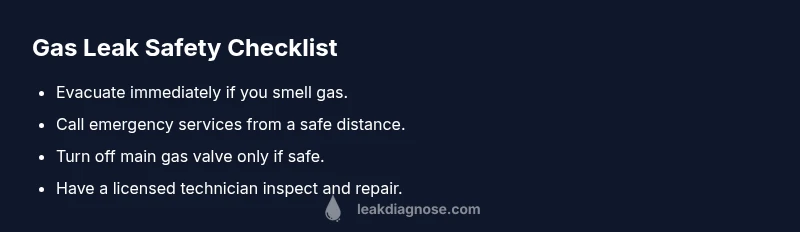
Immediate action: If you smell gas or suspect a leak, evacuate everyone from the building and call the emergency number from a safe location. Do not switch on/off lights or use electrical devices. If safe, shut off the main gas valve from outside, then wait for professionals to assess and repair.
Why Gas Leaks Require Urgent Attention
Gas leaks pose immediate risks to home safety, including potential fires, explosions, and dangerous inhalation. Even small leaks can escalate quickly if unchecked. According to Leak Diagnosis, gas leaks are a serious hazard that demands rapid response, professional assessment, and proactive prevention. The goal is to minimize exposure and structural damage while protecting your family. This guide uses practical, non-technical language to help homeowners grasp what a leak gas means in real life and how to respond decisively.
Common Signs of a Gas Leak
Watch for clear indicators that a gas leak may be present. The most common sign is a strong odor similar to rotten eggs—often described as mercaptan added to natural gas. You might also hear a distinct hissing or whistling sound near gas lines or appliances. Other signs include a pilot light that frequently goes out, white or misty vapors near pipe joints, dead plants in the area, or unusually warm spots around gas lines. If you notice any of these, treat it as an emergency and begin safety steps immediately.
Immediate Safety Actions You Should Take
Safety always comes first. If you smell gas, evacuate everyone from the premises and call your gas provider or emergency services from a safe distance. Do not operate electrical switches, lights, or appliances—these can spark. If you can do so safely from outside, shut off the main gas valve. Do not re-enter the building until a qualified technician has inspected and certified the area as safe. Ventilate by opening doors and windows only after you’ve evacuated.
Diagnostic Flow: From Symptom to Solution
A logical diagnostic approach helps you distinguish a small issue from a serious leak. Start with simple checks: ensure appliances are off, verify not a blocked vent or appliance pilot problem, and confirm detectors are functioning. If these checks don’t explain the symptom, suspect a leak in the gas line or connector. In most cases, a licensed professional should perform a thorough inspection and repairs, never attempting to seal or modify gas lines yourself.
Step-by-Step: Quick Fixes You Can Try Safely
- If you detect a leak and it’s safe, turn off the main gas valve from outside and ventilate the area. 2) Inspect for obvious gas appliance malfunctions—like a loose connection or a damaged hose—and tighten or replace with proper tools only if you have training. 3) Check your gas detector batteries and replace as needed. 4) Schedule a professional inspection promptly, especially if the smell lingers or detectors alert consistently. 5) After any fix, test the area with professionals to ensure the system is secure.
Prevention Tips to Reduce Future Gas Leaks
Regular maintenance is key. Schedule annual inspections of gas appliances, pipes, and connections by a licensed technician. Install and maintain functional gas and carbon monoxide detectors near sleeping areas and on every level of your home. Don’t ignore corrosion, rust, or hissing sounds. Keep a clear space around meters and valves, and educate all household members on how to respond quickly if a leak is suspected.
When to Call a Professional and What to Expect
If you suspect a leak or the situation worsens, contact a licensed gas technician immediately. A pro will perform leak testing, confirm the source, and propose a safe repair plan. Expect a site assessment, shutoff procedures, and verification testing after repairs. Regular maintenance and professional checks reduce the risk of recurrence and give you clear, documented assurance.
Debunking Myths About Gas Leaks
Myth: A small odor means it’s safe to stay and investigate. Reality: Even faint smells can indicate a dangerous leak; evacuate first and call for help. Myth: Gas leaks are obvious; often they’re subtle or hidden. Reality: Some leaks are silent until detected by detectors, so reliable sensors and routine checks are essential. Myth: CO detectors replace gas detectors. Reality: CO detectors protect against carbon monoxide, but dedicated gas leak detectors and proper ventilation are still critical.
Steps
Estimated time: 1-2 hours
- 1
Assess safety and evacuate
If you sense a gas leak, leave the area immediately with others and keep a safe distance from any flames or electrical devices. Call emergency services once you are in a safe location.
Tip: Do a quick headcount before leaving to ensure everyone is accounted for. - 2
Stop potential sources if safe
From outside the building, if you can safely reach the main gas shutoff valve, turn it off to stop the supply. Do not attempt this if you feel unsure or unsafe.
Tip: Never re-enter to attempt a fix; wait for professionals. - 3
Ventilate after evacuation
Open exterior doors and windows to clear residual gas once you are at a safe distance. Do not operate electrical switches during evacuation.
Tip: Ventilation helps reduce gas concentration but only after you evacuate. - 4
Call a licensed technician
Contact your gas provider or a licensed gas technician for an on-site inspection, leak testing, and repairs. Do not attempt to repair gas lines yourself.
Tip: Provide precise location details and any detector readings to the technician. - 5
Document and test after repair
After repairs, have the system tested by a qualified professional and ensure detectors are functioning. Keep records of the service for future reference.
Tip: Schedule a follow-up check within 12 months. - 6
Return to the space safely
Only return when the technician confirms it’s safe. Continue to monitor detectors and maintain ventilation as a precaution.
Tip: Set a reminder for regular detector battery checks.
Diagnosis: Gas odor or detector alarm
Possible Causes
- highExternal fuel source leak (gas line or appliance connection)
- mediumFaulty or misoriented gas detector
- lowVent or appliance obstruction increasing gas buildup
- lowElectrical fault near gas line causing a spark
Fixes
- easyEvacuate and call emergency services; avoid creating sparks
- easyIf you can do so safely, shut off the main gas valve from outside
- hardHave a licensed gas technician perform leak testing and repair
Questions & Answers
What should I do immediately if I smell gas?
Evacuate the area immediately and call emergency services. Do not use electrical switches or flames. If it is safe, move to a location away from the building and wait for professionals.
Evacuate right away and call for help. Stay outside and avoid using any switches or flames.
Is a home gas detector reliable for early warnings?
Gas detectors are a crucial safety layer but should not replace timely evacuation and professional checks. Regular testing and battery replacement improve reliability.
Detectors are important, but never rely on them alone. Test them regularly and replace batteries.
Can I fix a gas line leak myself?
No. Gas line leaks require licensed professionals to safely locate and repair the leak, and to verify the system after the fix.
Do not DIY gas line repairs; call a licensed technician for safety.
What are common signs of a gas leak besides smell?
Hissing sounds near gas lines, dead vegetation near a valve, and a flame that won’t light or stays out can indicate a leak. If any symptom appears, treat it as an emergency.
Listen for hissing sounds and look for unusual smells or lights failing; treat as emergency.
How often should I test for gas leaks at home?
Test detectors monthly and schedule an annual professional gas system inspection. Regular checks catch issues before they become hazards.
Test detectors monthly and have yearly professional inspections.
What happens after a gas leak is repaired?
The technician should re-test the system and verify detector functionality. Keep records and schedule follow-up checks as recommended.
Get a post-repair test and keep the service records handy.
Watch Video
Main Points
- Act fast: evacuate and call for help at the first sign of a leak.
- Do not attempt risky repairs yourself; call a licensed professional.
- Detectors save lives—maintain functional gas and CO detectors.
- Document maintenance and schedule regular inspections.
- Prevention is essential to minimize future leaks and hazards.