Gas Leak Near Me: Urgent Safety Guide and Troubleshooting
Act quickly if you suspect a gas leak near me. This urgent guide covers immediate safety steps, essential checks, and practical troubleshooting to protect your family and home.


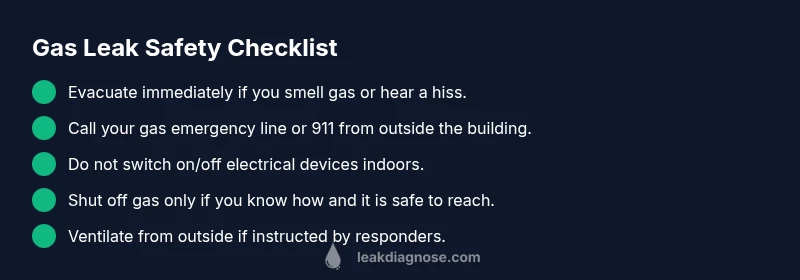
If you smell gas or suspect a leak near me, act immediately: leave the building, call your local gas emergency number or 911, and avoid creating sparks. While evacuating, do not use switches or phones inside. Once outside, wait for responders and then have a licensed professional inspect the area.
What to do immediately when you suspect a gas leak near me
Gas leaks demand immediate action. If you notice a strong gas odor, hear a hiss, or see unusual condensation around gas lines, move to safety right away. Evacuate all occupants and pets to a safe distance outdoors, and avoid using any electrical switches, lights, or phones inside the building. From a safe location, call your gas company’s emergency line or local emergency services. Do not re-enter until responders declare it safe. If you’re in a high-rise, alert building management as you evacuate. After authorities respond, they will shut off gas supply if advised and perform testing with professional equipment. Once the area is cleared, schedule a licensed professional to inspect and repair any issues before turning gas back on.
Why timing matters
Gas can accumulate quickly and travel through vents, reaching living spaces far from the original leak source. Acting within minutes reduces exposure risk and minimizes the chance of ignition. Keep a calm plan for family members who may need assistance and have a designated meeting point outside.
How gas leaks happen in typical homes
Most residential gas leaks originate from aging or poorly maintained components. Common culprits include loose connections at appliances (water heaters, stoves, boilers), failing regulators, corroded pipes, or damaged sealants around fittings. Improper installation and venting issues can also permit gas to escape into living spaces. In some instances, natural gas piping problems arise from rough handling during renovations or ground movement. Recognize that even a small, slow leak can build up to a dangerous concentration over time. Regular checks and professional maintenance help catch weaknesses before they become hazardous.
Quick context for homeowners
Gas lines run behind walls and under floors, making visual inspection difficult. If you smell gas, treat it as an emergency regardless of what you saw earlier. Routine service by a licensed technician and installing approved detectors on each level can greatly reduce risk.
How to recognize odors, symptoms, and warning signs
Natural gas is odorized with mercaptan, giving it a distinct rotten-egg smell. If you notice this odor, react immediately. Other signs include hissing sounds near gas lines, dead or discolored vegetation around outdoor meters, dust or soot near appliances after using gas, and sudden headaches or dizziness for occupants—these can indicate a concentration of gas. Install battery-powered or hard-wired gas detectors on every level, especially near sleeping areas. If detectors go off, evacuate and call emergency services. Remember: gas leaks can be present even without a strong smell if the odorant is overwhelmed or diluted.
Safety first, not speculation
Do not try to locate the leak by following faint odors alone. A trained professional uses calibrated equipment to confirm gas presence and pinpoint the source safely.
Diagnostic flow: quick at-a-glance path
When a potential gas leak is detected, follow this streamlined path: smell or hear indicator → evacuate → call emergency services → wait for responders → avoid re-entry → get a professional inspection. If additional signs are present (venting gas outdoors, persistent odor after ventilation, or a hissing sound), treat it as an urgent leak requiring immediate professional intervention. Detectors should be tested according to manufacturer instructions, and replaced when expired.
The difference between a leak and a nuisance odor
A leak releases pressurized gas into the indoor environment, while a nuisance odor could be from a nonhazardous source. However, never rely on odor alone; assume a leak until proven otherwise.
Safety gear and quick exits for non-emergency responders
If you’re trained and it’s safe, you can assist by closing exterior gas valves, ensuring you have a clear path to the outside, and turning off the main power to avoid sparks. Do not attempt complex repairs or use tools that could create a spark indoors. Only proceed if you can do so without re-entering the affected area. In all cases, prioritize safety and call professionals for any repair work.
Aftercare and documentation
Record the odor time, any symptoms observed, and actions taken. This information helps responders and the repair team identify the leak source quickly and plan a safe remediation. Schedule a follow-up inspection after repairs are completed to verify proper gas system operation.
difficultyAwareBlockCountFromPolicy":"100-300 words per block"},
diagnosticFlowBlockPlaceholder?
Steps
Estimated time: 10-15 minutes
- 1
Evacuate to a safe location
Leave the building with all occupants and pets, moving to a well-ventilated outdoor area away from the suspected leak. Do not switch on or off lights, appliances, or phones inside the building as this can create a spark. Call for help from a safe distance.
Tip: Designate a meeting point outside in advance so everyone knows where to go. - 2
Call for emergency assistance
From a safe location, contact your gas company’s emergency line or local emergency services immediately. If you cannot reach them from indoors, use a mobile phone outdoors. Do not assume someone else will handle it; your prompt call can save lives.
Tip: Keep a list of emergency numbers accessible near the main exit. - 3
If you can do so safely, shut off the gas at the main valve
Only attempt this if you know the exact location and can reach it without re-entering the building. Turning off gas at the outside valve minimizes further flow but should never be done if you’re unsure.
Tip: If in doubt, wait for responders rather than attempting a complex shut-off. - 4
Avoid any ignition sources
Do not use switches, lighters, matches, or electrical tools inside or near the affected area. Extinguish any open flames and avoid using the bathroom exhausts or kitchen range fans during the response.
Tip: If you’re in a kitchen, turn off the range via the exterior control only if safe. - 5
Meet responders and provide information
When professionals arrive, stay outside and clearly describe what you observed, including odors, sounds, and any appliances involved. They will assess, ventilate, and test for gas concentrations.
Tip: Have model numbers and installation dates handy for rapid assessment. - 6
Plan a follow-up inspection before re-energizing
Do not relight pilots or restore gas service until a licensed technician confirms safety. Schedule a thorough inspection of all gas lines, regulators, and detectors after repairs.
Tip: Replace old detectors and verify proper placement to prevent future incidents.
Diagnosis: Gas smell, hissing sound, or suspected leak inside home
Possible Causes
- highLoose or damaged gas line connections near appliances
- highFaulty regulator or appliance gas leak
- mediumVentilation blocked or insufficient air exchange
- lowOpen flame or electrical spark igniting gas
Fixes
- easyEvacuate immediately and call the gas emergency line or local emergency services
- easyIf you know the location and it is safe, shut off the exterior gas valve before leaving the area
- easyDo not re-enter the building until authorities say it is safe
- easyVentilate only from outside if safe and instructed by responders
Questions & Answers
What should I do first if I smell gas?
Act quickly: evacuate the area with everyone and pets, then call the gas emergency line or local emergency services. Do not re-enter until authorities say it’s safe. A professional will assess and fix the leak.
If you smell gas, leave the area immediately and call for help from outside."
Can I shut off the gas valve myself?
Only shut off the gas valve if you know exactly where it is and can reach it without re-entering the building. If you’re unsure, wait for responders. Improper shutting can cause more hazards.
Only attempt a shut-off if you’re certain where the valve is and it’s safe to reach.
Is natural gas dangerous to inhale?
Natural gas itself is not toxic, but it displaces oxygen and can cause asphyxiation in enclosed spaces. The odorant helps with detection, but always treat any odor as dangerous and evacuate.
Gas isn’t toxic in the immediate sense, but it can suffocate you if it fills a room—evacuate and get help.
How do gas detectors work?
Gas detectors sense concentrations of gas in the air and warn occupants with alarms. Test detectors regularly, replace batteries as needed, and follow the manufacturer’s placement guidelines.
Gas detectors sample air and trigger alarms when gas is detected; test them often.
How often should gas appliances be serviced?
Have appliances inspected by a licensed technician annually or per manufacturer guidelines. Regular maintenance helps catch leaks, faulty regulators, or aging components before they become hazards.
Most appliances should be serviced yearly by a professional.
What information should I provide to a technician?
Provide model numbers, installation dates, maintenance history, and a clear description of observed symptoms. Photos or notes can help technicians diagnose issues quickly.
Share the model number, installation date, and what you observed to help the tech diagnose the leak.
Watch Video
Main Points
- Evacuate first, then call emergency services.
- Do not attempt repairs during a suspected leak.
- Ventilation and detectors are your first line of defense.
- Schedule professional inspection after any suspected leak.
- Keep emergency numbers easily accessible.