Gas Leak House: Urgent Troubleshooting and Safety Guide
Urgent guide for homeowners to detect, evacuate, and safely respond to a gas leak in the home. Learn fast steps, safety tips, and when to call professionals to protect your family and property.


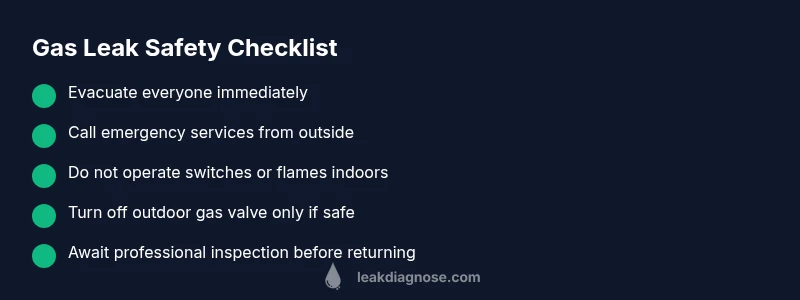
In a gas leak house emergency, act quickly: evacuate everyone, avoid flames or electrical devices, and call the gas emergency line from outside. If you can do so safely, shut off the outdoor gas valve and wait for responders. Then schedule a professional inspection before reentry.
Understanding the Gravity of a Gas Leak House Situation
A gas leak house scenario is a life safety emergency. The moment you suspect gas, you must prioritize immediate evacuation and contacting authorities. The risk isn’t just fire; gas accumulation can lead to asphyxiation, carbon monoxide buildup, and explosive conditions. According to Leak Diagnosis, fast, calm action reduces risk and buys you crucial time to coordinate with emergency responders. In homes, the most common triggers are appliance connections, corroded pipes, and improper installations. Recognizing the signs early and acting decisively helps protect your family and structure while you arrange a professional assessment.
Key signals include the distinct sulfurous odor of natural gas, a noticeable hissing sound near a pipe or appliance, and dead or dying vegetation around external gas lines. If you smell gas or hear a hiss, leave the area immediately and avoid creating sparks or flames. Do not operate switches, lighting, or electronics until you are at a safe distance. Once outside, call the gas emergency line and your utility’s service number for guidance and rapid response.
Immediate Actions to Take If You Suspect a Gas Leak in Your Home
When gas is detected, your first job is to evacuate everyone, including pets. Do not re-enter the home for any reason until professionals declare it safe. From a safe location, call the gas emergency line and report the odor or leak. If you can access the outdoor shutoff valve safely, turn it off to halt gas flow to the property; this should only be done if you can reach it without entering the building or putting yourself at risk. Do not light matches, use lighters, or flip switches. The goal is to reduce ignition sources while awaiting help.
After immediate action, ventilate by opening exterior doors if it is safe and you are outside the building. Do not operate electrical devices inside the home, including phones, as these can generate a spark. If someone experiences dizziness, breathing trouble, or faintness, move them to fresh air and seek medical attention.
If your family has gas detectors or CO alarms, follow their alerts, but never rely on them alone. Evacuation remains the most certain protective step. Once responders arrive, provide access to any relevant information about gas appliances, recent maintenance, and the last time a detector alarm sounded.
Safe Checks and Common Misconceptions: What You Can Do Without Raising Risk
Understanding safe checks means separating what you can do from what you should leave to professionals. Do not attempt repairs if you are not trained to handle gas systems. Gas lines, connectors, and regulators can fail suddenly and with little warning. You can, however, confirm your own safety by ensuring doors and vents are clear, moving people away from the most contaminated area, and documenting observations for responders. Common misconceptions include thinking a mild odor means a minor problem or that a spark from a light switch is harmless; both ideas are dangerous and should be avoided. Always treat any odor as a potential leak and act accordingly.
By preparing your home, you reduce time on the scene. This includes installing a UL-listed gas detector with a battery backup, ensuring clear access to the outdoor shutoff valve, and keeping a handy checklist visible near the main gas line entrance. Planning ahead makes your response faster and safer when seconds matter.
Step-by-Step Troubleshooting for the Most Common Causes (Safe, Non-Repair Tasks)
This section covers troubleshooting steps you can perform without entering the gas system. Start with a simple, practical flow: verify the odor source, confirm non-entry safety, and contact professionals. For most households, the biggest risk is ongoing gas flow due to an appliance issue or a valve left ajar. Use this guide to decide when to escalate to licensed technicians and how to document events for insurance or warranty purposes. Remember, if the situation worsens or you feel dizzy or ill, leave immediately and call emergency services.
Safety Protocols, Equipment, and When to Call Pros
Safety protocols are non-negotiable in a gas leak house scenario. Do not touch electrical switches or appliances, avoid using phones or lights in the affected area, and keep everyone away from the building until responders declare it safe. A professional should inspect all gas lines, regulators, and appliances for leaks and verify CO levels. Detectors can warn you, but they do not replace professional testing or service. If you cannot safely reach the outdoor shutoff, do not attempt it; wait for responders. After a leak is repaired, request a carbon monoxide test and a system integrity check from a licensed gas technician to ensure safe reentry.
Prevention, Maintenance, and Long-Term Safeguards
Even after a leak is repaired, prevention is essential. Schedule regular inspections of gas appliances, burners, and connections, typically yearly for gas-fired equipment. Install detectors with audible alarms and ensure they have battery backups. Create a simple home safety plan that includes evacuation routes, a designated meeting spot, and a phone list for emergency services. Train household members on recognizing signs, avoiding ignition sources, and what to do if a leak is suspected. Prevention reduces risk and helps you act faster when pressure is high and time is limited.
Steps
Estimated time: 60-90 minutes
- 1
Evacuate occupants and leave the building
Lead everyone to fresh air immediately, taking pets with you. Do not stop to gather belongings. Once outside, call the emergency line and the gas utility.
Tip: If anyone is showing symptoms, call emergency medical services right away. - 2
Prevent ignition sources
Do not switch on lights, use phones indoors, or operate any electrical devices inside the affected area. Stay outside until professionals clear the home.
Tip: Stand at a safe distance away from the gas line and any potential ignition points. - 3
Identify the safe way to shut off gas if accessible
If you can reach the outdoor shutoff valve safely, turn it off to stop gas flow. Do not attempt to reach or operate inside areas you cannot safely access.
Tip: Only perform this if you can do so without entering the building. - 4
Call for professional assistance
Contact your gas utility emergency line and a licensed gas technician. Provide your address, the odor source, and any detector alarms you observed.
Tip: Keep the number written by the phone and in your emergency plan. - 5
Do not re-enter until clearance is given
Wait for a qualified technician to declare the home safe. They will test for leaks and CO levels before you return.
Tip: Ask for a report on what was tested and repaired. - 6
Document and follow up
Record the events, times, and responses. Schedule a post-incident inspection of all gas appliances and connections.
Tip: Keep receipts and notes for insurance claim purposes.
Diagnosis: Strong gas odor or gas detector alert in the house
Possible Causes
- highGas supply valve not fully closed or turned on
- highGas line or appliance connection leak
- mediumFaulty regulator or failed gas appliance
- lowExternal gas line issue or utilities work nearby
Fixes
- easyEvacuate everyone and call the gas emergency line from a safe location
- easyIf you can safely reach the outdoor gas shutoff valve, turn it off, then call for help
- easyDo not use electrical switches or flames; wait for responders
- easyProvide responders with appliance locations and maintenance history
- mediumSchedule a professional gas technician inspection before reentry
Questions & Answers
What are the first signs of a gas leak in a house?
Common early signs are a strong rotten-egg smell, a noticeable hissing near gas lines or appliances, and sometimes dead vegetation near outdoor lines. If you notice these, evacuate immediately and call emergency services.
Look for the sulfur smell, a hissing sound, and surrounding vegetation changes. Evacuate and call for help right away.
Is it safe to turn off the gas supply valve during a suspected leak?
Turn off the outdoor gas valve only if you can do so safely from outside the building. Do not enter the building to reach valves, and never operate electrical devices during a suspected leak.
If you can safely access the outdoor shutoff from outside, do it and then call for help. Do not enter the home.
What should I do immediately if I smell gas inside?
Leave the building, avoid flames or sparks, and call the emergency gas line from a safe location. Do not re-enter until responders say it is safe.
Exit the home calmly, stay away from potential ignition sources, and call for emergency help from outside.
Can a carbon monoxide detector replace a gas leak inspection?
Carbon monoxide detectors are important safety devices but they do not identify leaks in gas lines or appliances. Treat any alarm as a sign to evacuate and call professionals for a full inspection.
CO detectors alert you to CO, but they don’t locate gas leaks. Evacuate and call a professional.
How much will a gas leak repair typically cost?
Costs vary based on the leak location, appliance type, and required replacement parts. Get a written assessment from a licensed technician before any work begins.
Prices vary; a licensed technician can give you a written estimate after inspecting the system.
Watch Video
Main Points
- Act fast, stay calm, and evacuate if gas is detected
- Call the gas emergency line and utility from outside the home
- Do not operate switches or lights inside the building
- Shut off outdoor valve only if safe to access
- Schedule professional inspection before reentry