What to Do If Oil Is Leaking From Your Car (Urgent Troubleshooting)
Oil leaks demand quick, safe action. Learn exact steps to identify the source, prevent engine damage, and what to do now—plus a practical at‑home diagnostic flow and tips from Leak Diagnosis.


Oil leaks typically come from worn gaskets or loose fittings, with valve cover and oil pan seals among the common culprits. Do not drive if there’s a puddle; check oil level, clean the area, and seek professional help to avoid engine damage. This quick check helps you plan the next steps safely.
What to do immediately if you notice an oil leak
If you notice oil beneath your car, act quickly. Parking on a level surface and turning off the engine helps prevent further damage. If you’re wondering what to do when you suspect an oil leak, the first priorities are safety, oil level, and avoiding driving while the leak is active. Do not ignore blue or gray smoke, burning smell, or a low oil pressure warning. Move away from hot components and avoid sparks. Use a flashlight to inspect the undercarriage for fresh oil trails and identify possible sources like the drain plug, oil filter, or valve cover area. Keep a spare drain plug washer and a basic toolset in your trunk for minor fixes. If you aren’t comfortable, arrange roadside assistance or tow to a trusted shop. Reporting the issue promptly reduces the risk of engine damage and environmental contamination.
Common sources of oil leaks
Oil leaks are typically caused by a handful of predictable failure points. The most frequent culprits are worn gaskets, damaged seals, or loose fittings that can allow oil to escape under pressure. A valve cover gasket that has aged or become brittle is a classic source: oil pools around the top of the engine and runs toward the ground. The oil pan gasket can deteriorate with heat cycles and road vibration, creating a persistent drip from the bottom of the engine. A loose or damaged oil drain plug or washer is another common cause, especially after an oil change. The oil filter and its gasket can also leak if not properly installed or if the housing threads have worn. In some vehicles, the oil cooler lines or sensor hoses carry pressurized oil and can weep if clamps loosen. Less common, but possible, is a cracked oil pan or a failing engine gasket at the rear main seal. Look for fresh dark brown to black oil; older leaks may appear smudged or evaporated.
How to identify the exact source safely
Pinpointing the leak source requires patience and a systematic approach. Start by parking on clean concrete, letting the engine cool, and wiping a patch of the suspected area with a paper towel. Look for fresh oil trails that point back to a higher point on the engine—typically the gasket or the filter housing. If you can, remove the engine splash shield to inspect the oil pan and drain plug area. A UV dye kit can also help: add the dye to the oil, run the engine briefly, and inspect with a UV light to reveal leaks.
Quick at-home diagnostic checks you can do today
Begin with the simplest checks: crawl under the car when it’s cool and look for new drips at the drain plug, around the oil filter, and near the valve cover gasket. Check the oil level with the dipstick; if it’s markedly low, top up with the correct grade and recheck after a short drive. Clean any oily areas and run the engine at idle for a few minutes to see if fresh oil appears at any predictable joints. If you see oil along the ground but can’t pinpoint the source, consider a UV dye test or a professional consult to avoid guesswork.
Step-by-step repair considerations
If the leak source is confirmed as a simple component (like a loose drain plug), tighten it to the manufacturer’s torque spec and replace the washer. For gasket or filter-related leaks, replacement is usually necessary and should be done with fresh parts and proper torque. Replacing an oil pan gasket or repairing a cracked pan is a more involved job that may require lifting the engine and is typically best handled by a professional. After any repair, refill to the correct oil level and inspect for signs of a continued leak before releasing the vehicle.
Safety guidelines and precautions
Oil is flammable, hot, and can cause slippery surfaces. Never work under a hot engine or on a surface that’s near an ignition source. Wear gloves, work on a well-ventilated area, and use absorbent material to catch drips. If you suspect a major leak or the oil level sensor warns, stop driving and call roadside assistance. Do not attempt high-pressure sealing products on a live engine, and dispose of used oil properly at an authorized facility.
Prevention and maintenance to avoid future leaks
Regular oil changes with the correct viscosity and filter type reduce gasket stress. Inspect gaskets, seals, and hoses during routine service, especially in high-heat or older vehicles. Keep an eye on oil levels between services and fix any seepage as soon as detected. A professional inspection can catch early failures and extend engine life, saving costs in the long run.
What to do if you can't locate the leak
If there’s oil on the ground but you can’t find the exact source, avoid driving and schedule a professional diagnostic. A trained mechanic will clean the engine, pressurize the system, and use dye or a borescope to locate the leak without guesswork. In some cases, the source is a small hose or seal that’s easily replaced, while in others, more extensive engine access is required.
Tools and checklist for oil-leak troubleshooting
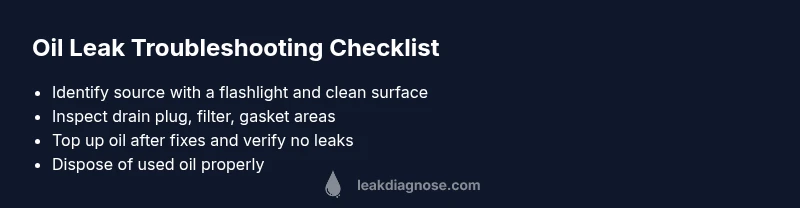
Prepare a basic toolkit: jack stands, wheel chocks, a torque wrench, plugs/washers, replacement gaskets, oil and filter, a funnel, rags, and a flashlight. Add a UV dye kit if you want a precise diagnosis. Always work on a cool engine, use a spill tray, and have a plan for safe disposal of used oil.
Steps
Estimated time: 2-4 hours
- 1
Prioritize safety and park securely
Find a flat, safe spot away from traffic. Turn off the engine, engage parking brake, and wait for the engine to cool. This minimizes burn risk and makes inspection safer.
Tip: Keep a spill tray under the engine before checking for leaks. - 2
Check oil level and note symptoms
Read the dipstick to gauge how much oil remains. Look for color and smell indicators to assess contamination. Note any burning oil smell or smoke during short engine operation.
Tip: If oil is low, top up with the correct grade and recheck after driving briefly. - 3
Locate probable leak points
Inspect the drain plug area, around the oil filter, valve cover edge, and oil pan seam. Look for fresh drips that trail from high points toward the ground.
Tip: Use a flashlight and mirror to see tight spaces more clearly. - 4
Narrow down with a surface clean
Wipe suspected areas clean and run the engine at idle for a few minutes. A clean surface makes new leaks easier to spot.
Tip: Avoid wiping the area if it’s too hot; wait for it to cool. - 5
Address simple fixes first
If the drain plug is loose, tighten to spec; replace a faulty washer; if a gasket is accessible, plan for replacement with correct parts.
Tip: Always torque fasteners to the manufacturer’s spec using a torque wrench. - 6
Refill oil and test after repairs
Top up to the proper level after any gasket or filter work. Start the engine, idle briefly, and re-check for leaks.
Tip: Dispose of contaminated rags safely and avoid environmental exposure. - 7
Know when to call a pro
If the leak persists after basic fixes or you’re not comfortable performing repairs, seek professional service. Engine damage risk rises with ongoing leaks.
Tip: A professional can perform pressure tests and dye inspections for precise locating.
Diagnosis: Oil puddle or spray under car after parking
Possible Causes
- highValve cover gasket failure or wear
- highLoose or damaged oil drain plug and washer
- mediumOil filter gasket or housing leak
- mediumOil pan gasket or small crack in pan
- lowCrankshaft seal leakage
- lowWorn PCV hose or related fittings
Fixes
- easyTighten drain plug and replace washer if needed
- hardReplace valve cover gasket
- easyReplace oil filter and gasket if leaking
- hardReplace oil pan gasket or repair cracked oil pan
- hardRepair or replace crankshaft seal
- mediumReplace PCV hose or valve assembly
Questions & Answers
What are the most common signs of an oil leak?
Look for fresh oil spots under the vehicle, a burning oil smell, low oil level, and the oil warning light. Early detection helps prevent engine damage.
Common signs include fresh spots under the car, a burnt smell, and a low oil level. Catching it early is crucial.
Can I drive my car if I see oil leaking?
No. Driving with an oil leak can rapidly cause engine damage due to low oil levels. If safe, move to a secure spot and arrange towing or roadside assistance.
No—don't drive it. Get it to a safe place and call for help if needed.
What should I do immediately if I find oil on the ground?
Limit driving, document the location, and arrange a tow if the source isn’t obvious. A professional can locate and fix the leak with proper tools.
Stop driving and get it inspected; a tow is often the best option.
How can I tell if the leak is from the valve cover gasket vs the oil pan?
A valve cover leak usually pools around the top of the engine; an oil pan leak shows at the bottom. Oil dye tests or a professional leak detection can confirm.
Usually the top gasket leaks rise toward the head, while bottom leaks drip from the pan.
Are oil stop-leak products safe or effective?
Stop-leak products aren’t a universal fix and can cause deposits or clog hoses. They aren’t a substitute for proper gasket or seal replacement.
They’re not a guaranteed fix and can cause other issues; diagnose the leak first.
When should I replace the oil filter?
Replace the oil filter whenever you change the oil. A failing filter can contribute to leaks if the seal or housing is damaged.
Replace the filter with every oil change to prevent leaks and ensure proper filtration.
Watch Video
Main Points
- Identify the leak source quickly to prevent engine damage.
- Never drive with a visible or active oil leak.
- Tighten or replace faulty gaskets and plugs as needed.
- Refill engine oil to the correct level after fixes.
- Call a professional if you’re unsure or the leak persists.