Leak Oil Troubleshooting: Quick, Safe Solutions for Homeowners
Urgent, practical guide to diagnosing and fixing oil leaks at home. Learn common causes, safe DIY steps, and prevention tips to protect engines and surfaces.


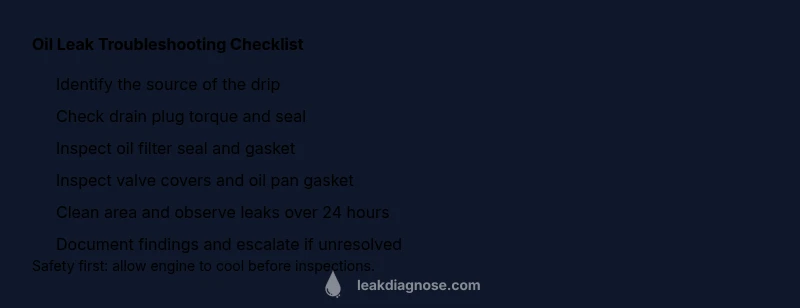
Most oil leaks originate from a loose drain plug, a worn oil filter seal, or a cracked oil pan gasket. For a quick check, tighten the drain plug to the manufacturer’s torque specification, replace the oil filter if it's old, and wipe the area clean to spot fresh drips. If oil continues to seep after these steps, stop driving and seek professional service.
Understanding the phrase 'leak oil' in home maintenance
When homeowners notice a dark, glossy spot under a vehicle or around an appliance, a leak oil issue is suspected. The phrase leak oil describes a situation where lubrication fluid escapes from a system designed to keep moving parts lubricated. In most homes, root causes include mechanical wear, improper maintenance, or a loose connection. According to Leak Diagnosis, oil leaks are not always dramatic; sometimes a small, slow drip is easy to overlook until it becomes a bigger problem. The presence of oil on concrete or soil signals that a seal or gasket is failing and needs attention. By understanding typical sources and applying a disciplined diagnostic approach, you can prevent larger damage, avoid wasted oil, and protect surfaces from staining.
Common sources of oil leaks in home equipment
The most frequent sources of leak oil in residential settings include a loose drain plug or oil filter seal, a worn oil pan gasket, or a degraded valve cover gasket. Additional culprits are a cracked oil pan, a failing oil cooler line, or a damaged oil pressure sensor seal. In appliances like a generator or a furnace with oil lubrication, leaks can originate from an improperly seated cap, a damaged gasket, or a ruptured line. Regular inspection helps you spot seepage early, and a quick fix today can prevent a bigger mess tomorrow.
Safety and preparation for a leak oil inspection
Before you begin, ensure the engine or appliance is cool to avoid burns. Gather PPE: gloves, safety glasses, and a scraper or shop towels. Have a drain pan or disposable container ready, plus rags and a flashlight. If you’re checking a vehicle, park on a level surface and engage the parking brake. Place cardboard or a disposable mat under the area you’re inspecting to catch drips. Document the leak with photos to compare over time. If you smell fuel or see smoke, stop immediately and call for professional help. According to Leak Diagnosis, safety and methodical notes are your most reliable tools when you’re dealing with leak oil scenarios.
Diagnostic flow: symptom to source
Start with the symptom: a visible oil puddle or a recurring dark spot. From there, consider the most common sources first: loose drain plug, bad filter seal, or gasket wear. If you tighten the plug and still see a leak, move to the filter and gasket inspection. If the area around the oil pan or valve covers shows seepage, you likely have a gasket issue. For any leak that is hard to locate or involves a major area, broaden your inspection to seals around the crankcase, oil cooler lines, and related components. This flow helps prevent chasing shadows and focuses attention on high-lailure points.
Step-by-step fix for the most common leak: drain plug or filter
- Cool the engine or appliance completely and place a catch pan.
- Clean the area around the drain plug and filter to observe new drips clearly.
- If the drain plug is loose, tighten to the manufacturer’s specified torque, using a torque wrench.
- Replace the drain washer if present and inspect the plug for wear. Reinstall and test for leaks by running briefly and watching the area.
- If the oil filter seal is leaking, replace the filter and ensure the gasket is seated correctly.
- Wipe clean and monitor for 24–48 hours. If drips persist, move to deeper gasket inspection or consult a pro.
When to call a professional: safety and limits
Some leaks are straightforward, but others point to deeper failures. If you’re unsure about torque specs, lack proper tools, or the leak continues after the drain and filter are addressed, stop driving and call a professional. Cracked oil pans, damaged valve covers, or crankshaft seals require specialized parts and procedures to ensure a safe, lasting fix. Regular maintenance by a qualified technician can prevent recurring leaks and safeguard engine life.
Prevention: maintenance to stop future leaks
Regular oil changes with the correct grade and quantity reduce seal wear. Tighten drain plugs to spec during every change and replace oil filters on schedule. Inspect valve covers, oil pans, and gaskets for signs of cracking or seepage during routine service. Use high-quality gaskets and torque tools to avoid overtightening. Maintain level surfaces and avoid exposing the area to road salt, solvents, or heat sources that can degrade seals. A proactive approach saves both money and time by preventing leaks before they start.
Quick checks you can do each month
- Visually inspect the engine bay or appliance housing for fresh drips or stains.
- Check oil level on the dipstick; a sudden drop may indicate a leak.
- Clean the area around the drain plug and filter to make later leaks more visible.
- Replace any damaged hoses or lines that carry lubrication, and ensure clamps are secure.
- Keep a log of signs and dates to detect patterns and plan service before a major failure.
Common mistakes to avoid and how to prevent them
Avoid overtightening drain plugs, which can strip threads or damage gaskets. Do not reuse old gaskets or seals; replace with new ones during every service. Never ignore a leak because it seems small; small leaks can grow quickly under heat and vibration. Finally, avoid DIY fixes if you lack the right torque tools, replacement parts, or drainage containment; improper fixes can lead to bigger, costlier leaks.
Steps
Estimated time: 60-120 minutes
- 1
Gather safety gear and tools
Turn off the engine and let it cool. Gather gloves, eye protection, a drain pan, rags, and a torque wrench. Having the right tools reduces the risk of further damage and makes the process smoother.
Tip: Always verify the engine is cool before starting. - 2
Identify the leak source
Clean the suspected area and observe after a short run or a test cycle. Look for fresh drips that indicate the active source, starting with the drain plug and filter area.
Tip: Take photos before touching parts to document the leak. - 3
Tighten the drain plug (if applicable)
Using a torque wrench, tighten the drain plug to the manufacturer's specification. Replace the washer if present and inspect for corrosion on the threads.
Tip: Over-tightening can strip threads; verify torque with a wrench. - 4
Inspect and replace the filter seal
Remove the oil filter, check the seal, and replace if worn. Ensure the filter seating surface is clean before reinstalling.
Tip: Lubricate the new filter gasket with a thin layer of oil. - 5
Check gaskets and seals around the pan and covers
Inspect the oil pan gasket and valve cover gaskets for cracks or hardening. Replace any compromised seals and recheck all fittings.
Tip: Use new gaskets; reuse of old ones can cause new leaks. - 6
Test run and monitor
Start the engine and let it run briefly. Check the previously observed areas for fresh leakage and confirm a clean return to normal oil level.
Tip: Dispose of used oil properly after the test.
Diagnosis: Visible oil under the vehicle or oil pooling around a component
Possible Causes
- highPowertrain drain plug is loose or missing
- highWorn oil filter seal
- mediumDamaged oil pan gasket
- lowCracked valve cover gasket or crankcase seal
Fixes
- easyTighten drain plug to spec and replace washer if worn
- easyReplace oil filter seal and ensure proper seating
- mediumInspect oil pan gasket; replace if seepage is evident
- hardInspect valve covers, crankcase seals; replace if damaged
Questions & Answers
What are the most common causes of an oil leak?
Oil leaks most often come from a loose drain plug, a worn oil filter seal, or a damaged gasket. Other frequent sources include cracked oil pans and failing valve covers. Diagnose by inspecting these areas and observing fresh drips.
Common causes include a loose drain plug, worn filter seals, or a damaged gasket.
Can I fix an oil leak myself?
Simple leaks from the drain plug or filter can be tackled by a confident DIYer with the right tools. More complex leaks from seals or the oil pan may require professional service.
Yes, some leaks are DIY friendly, but others need a pro.
Should I drive my car if I notice an oil leak?
No. Oil leaks can cause engine damage or fire risk. If you see fresh oil or pooling under the engine, stop driving and arrange a tow or roadside diagnosis.
Avoid driving; oil leaks can damage the engine.
How can I tell if the leak is from the oil pan vs valve cover?
Oil from the oil pan typically drips from the bottom and around the pan gasket. Valve cover leaks run along the top edge of the engine following the valve cover gasket path.
Pan leaks pool below; valve cover leaks drip from the top.
What safety steps should I take before inspecting?
Let the engine cool completely, wear gloves and eye protection, and have a catch pan ready. Work in a well-ventilated area and avoid hot components.
Always let it cool and wear protection.
How much does it typically cost to repair an oil leak?
Costs vary by source of the leak and local labor rates. Some fixes are inexpensive, others require gasket or component replacement. Always get an in-person diagnostic estimate before authorizing work.
Costs depend on the source; get an estimate first.
Watch Video
Main Points
- Identify the most likely causes first and test quickly.
- Avoid driving with a known leak; it risks engine damage.
- Use proper tools and safety gear during DIY fixes.
- Replace worn seals and gaskets rather than reusing old parts.
- Prevent future leaks with regular maintenance and timely part replacement.