Oil Leak Can I Drive? Urgent Troubleshooting Guide
Urgent guide for oil leaks in vehicles: safety steps, quick checks, and when to tow. Learn how to assess if you can drive and how to fix or seek help safely. Leak Diagnosis provides clear, practical guidance.


An oil leak is a serious warning sign that should not be ignored. If you see fresh oil under your car, do not drive long distances; you may move the vehicle only to a safe spot if you can do so without overheating or leaving a trail of oil. Otherwise, call roadside assistance or have the vehicle towed to a repair shop.
Immediate Safety Steps
Oil leaks demand immediate caution. If you notice an oil puddle under your vehicle or a burning oil smell, pull over to a safe, level spot as soon as you can, turn off the engine, and engage the parking brake. Do not smoke or use any open flame near the vehicle. If the leak is substantial, or the engine is hot, stay clear of the exhaust and hot components. According to Leak Diagnosis, even small spills can ignite if they contact hot exhaust parts or a hot manifold. Do not drive to a shop if you can avoid it; instead, call roadside assistance or arrange a tow. If you must move the car, do so slowly and with hazard lights on, and aim for a nearby safe location rather than continuing down busy roads. Keep children and pets away from the spill area, and use absorbent material to contain any oil you can reach.
How to Tell Engine Oil from Other Fluids
Engine oil, transmission fluid, coolant, and power steering fluid can all leak, but their colors and textures help distinguish them. Fresh engine oil is pale amber and becomes dark brown to black as it ages, with a distinct, oily scent. Transmission fluid is typically red or pink and has a thinner, slippery feel. Coolant is often bright green or orange and may have a sweet smell; it can be syrupy if contaminated. Oil leaks usually originate from the engine area (oil pan, valve covers, oil filter, or gaskets) and form dark spots or slicks under the engine bay. If you’re unsure which fluid is leaking, avoid taking long approaches and seek professional confirmation. Leakage that involves coolant or fuel requires immediate professional attention due to fire and health hazards. Leak Diagnosis emphasizes not assuming the leak is oil just because the vehicle uses crankcase oil.
What to Check Before Moving the Vehicle
Before you attempt to move the car, perform a quick assessment to minimize risk. Check the engine temperature gauge; if it’s high or the oil is overheating, do not drive. Look for fresh oil traces on the ground or engine components, and inspect the area around the oil pan, drain plug, and valve covers for signs of seepage. If you can locate a small, localized drip near a drain plug or filter, you may be able to tighten a loose component if you know the correct torque spec and the engine is cool. Do not attempt major repairs on the roadside; even small oil leaks can hide other issues such as improper oil level or a compromised seal. If the puddle is spreading quickly or the vehicle has other warning lights, stop and call for help.
Diagnostic Flow Overview
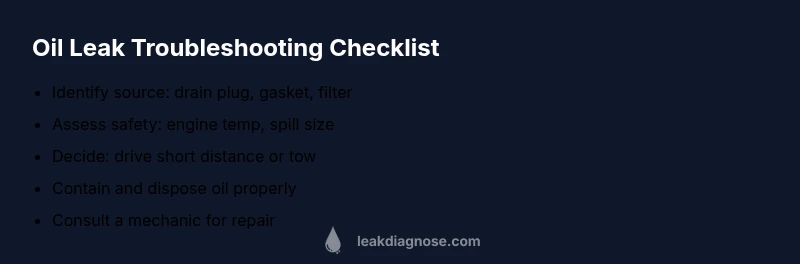
A structured approach helps you decide whether the car can be moved safely or needs towing. Start with visual cues: is there a large fresh puddle, or only a slow seep? Then assess potential sources: drain plug, oil pan gasket, valve cover gasket, or a damaged oil line. Next, evaluate whether you can safely reach a repair facility without exposing yourself or others to oil on the road. If in doubt, err on the side of safety and tow the vehicle. Always document the issue for the repair shop and avoid driving if the leak is significant or if the engine shows signs of distress.
Steps
Estimated time: 60-120 minutes
- 1
Pull Over Safely
Slowly pull off the road to a safe, level location. Engage hazards and set the parking brake. Turn off the engine if safe to do so, and wait for components to cool before inspecting. Do not touch hot exhaust parts or open the radiator cap. Tip: If you cannot safely stop due to traffic, stay in the vehicle with seatbelts on and call for assistance.
Tip: Safety first: a calm approach minimizes risk to you and others. - 2
Assess Immediate Damage
Check for visible oil pooling under the vehicle and around the engine bay. Look for obvious sources like a loose drain plug, damaged filter, or a torn gasket. If the engine shows signs of overheating, do not attempt further inspection and call for aid. Tip: Use a flashlight and wear gloves to avoid skin contact with hot oil.
Tip: Document the scene with photos for the repair shop. - 3
Identify Fluid Source
Trace the leak to potential sources: oil pan, valve covers, or filter. Compare oil color and texture to other fluids in the area. If you’re unsure, avoid driving and arrange tow. Tip: Do not rely on smell alone; color and location matter for correct identification.
Tip: Label the likely source to help the technician later. - 4
Decide If Driving Is Feasible
If the leak is minor and you’re within a short distance of a repair shop, you may plan a very slow, careful drive with hazards and a low oil-load on the engine. If the puddle is spreading or you’re uncertain, do not drive. Tip: Prioritize safety and avoid road hazards.
Tip: When in doubt, choose towing over driving. - 5
Contain and Clean Up
Use absorbent material to contain the spill and prevent it from reaching soil or water. Do not wipe fuel or oil into drainage systems. Collect contaminated material for proper disposal at a service center or recycling location. Tip: Avoid using rags that shed fibers near moving parts.
Tip: Safer disposal protects the environment. - 6
Call for Professional Help
If you’re not confident performing minor checks or if the source appears serious, arrange a tow to a certified mechanic. Provide your location and any observed symptoms to the dispatcher. Tip: Keep a roadside assistance number handy in your glove box.
Tip: Professional technicians can confirm the exact source and repair requirements. - 7
Prevent Future Leaks
After repair, replace worn seals as recommended, monitor oil levels regularly, and schedule timely oil changes. Check hoses and gaskets periodically for signs of wear. Tip: Consider a pre-winter or pre-summer inspection to catch leaks early.
Tip: Routine maintenance reduces the risk of future leaks.
Diagnosis: Vehicle shows fresh oil under the chassis after parking, or an oil warning light is on
Possible Causes
- highLoose or damaged drain plug or oil pan drain seal
- mediumWorn valve cover gasket or engine oil pan gasket
- lowDamaged or loose oil filter or oil lines
Fixes
- easyIf safe, tighten the drain plug to the manufacturer torque spec or replace the gasket
- mediumInspect and replace faulty gaskets, and tighten or replace the oil filter as needed
- hardIf the leak persists or you cannot access parts safely, tow to a qualified shop
Questions & Answers
Is it safe to drive if I notice an oil leak?
Only if the leak is small, you can reach a nearby repair shop slowly, and the engine temperature is normal. In most cases, driving a car with an oil leak is unsafe and should be avoided.
Usually not safe. If the leak is small and you can reach a shop slowly, you may drive carefully; otherwise, tow the car.
How can I tell if the leak is engine oil or transmission fluid?
Engine oil is typically brown to black and greasy, while transmission fluid is red or pink and thinner. Trace the source to determine which system is leaking, and have it inspected by a professional.
Engine oil is brown to black and greasy; transmission fluid is red. Check the source area to tell which system is leaking.
What should I do if I see oil on the ground after parking?
Document the location, avoid driving, and contact roadside assistance or a tow to a shop. Do not attempt roadside repairs if you’re unsure of the source.
If you see oil on the ground, stop, don't drive, and call for help to tow it safely.
Can a low oil level cause damage if I drive short distances?
Yes. Running with low oil can cause inadequate lubrication, overheating, and engine damage. Refilling may buy time only if the leak is fixed quickly.
Low oil is risky; it can hurt the engine even over short trips.
What about the engine overheating warning with an oil leak?
If the temperature gauge rises, stop immediately and avoid driving. Overheating compounds the risk of engine damage and oil system failure.
Overheating plus an oil leak means stop now and tow.
When should I tow the car instead of driving to a shop?
Tow if the leak is substantial, you’re unsure of the source, or the engine shows signs of distress. Tow to a trusted mechanic for a thorough diagnosis.
If in doubt, tow it to a mechanic for safety and proper repair.
Watch Video
Main Points
- Don't ignore fresh oil under a car.
- Identify the source before moving the vehicle.
- Tow if you’re unsure about the leak's severity.
- Document and prevent future leaks with maintenance.
- Seek professional help promptly for safety and engine health.