Reason for Oil Leak: Troubleshooting Guide
A practical, step-by-step guide to identify and fix the reason for oil leak in vehicles, with a safe diagnostic flow and DIY tips from Leak Diagnosis.


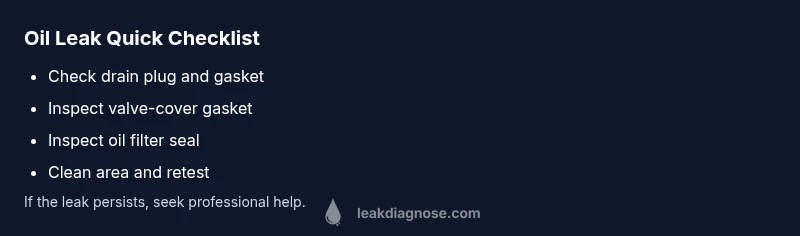
Most oil leaks originate from simple, serviceable issues: a loose drain plug, a damaged oil filter seal, or worn valve-cover gaskets. Start by inspecting the drain plug, oil filter, and visible engine seals for seepage or fresh drips. Tighten lightly or replace faulty parts, then wipe clean and recheck. If leakage continues, consult a mechanic for a precise diagnosis.
Why understanding the reason for oil leak matters
The reason for oil leak is the starting point for any repair. Oil leaks can originate from several components, and the real culprit is often a simple wear or improper seal. The main suspects include the drain plug threads and gasket, the valve-cover gasket, and the oil filter seal. Early detection is essential because a slow leak can lead to low oil levels, increasing wear on engine bearings and other moving parts. By mapping where oil appears and the pattern of dripping, you can narrow the suspect components and plan your fix with confidence. For homeowners, this is not just about cleanliness; it’s about preserving engine health and preventing expensive damage. Safety matters, too: never work under a car without proper support and follow torque specs from the manufacturer.
Recognizing the root cause early reduces downtime and avoids unnecessary parts replacements. Keep a log of observed drips and oil level changes to track progression over time. If you recently serviced the area, review those steps first, because a mis-seated gasket or loose fastener is a common source of fresh leaks.
How to read the leaks: drip patterns and signs
Leak patterns can reveal the likely source. A drip directly beneath the drain plug when the engine is off often points to the plug or its gasket. Oil running down from higher on the engine and toward the crankcase cover suggests valve-cover gasket issues. A clean oily streak along the underside of the engine or near the oil pan can indicate pan gasket problems or damaged seals. Timing matters: leaks are often more noticeable after a drive when the oil is warm and more fluid. Short, slow drips typically involve seals, while larger pools may indicate a more serious breach. Documenting the location and timing helps communicate the problem to a mechanic if needed. Clean the area first to spot new drips more easily.
If you’re unsure, perform a quick visual sweep after a short drive and take photos to compare before-and-after.
Safety first: what to do before you touch anything
Safety is paramount when diagnosing an oil leak. Start by parking on a flat, level surface and allowing the engine to cool completely before touching any components. If you must work near electrical parts, disconnect the negative battery terminal only after consulting your manual. Wear eye protection and gloves, and avoid crawling under a hot engine. If you intend to raise the car, use wheel chocks and solid jack stands; never rely on a jack alone. Keep a fire extinguisher nearby in case of fuel exposure, and make sure you dispose of any oily rags properly. Finally, ensure good ventilation if you’re inspecting indoors or in a garage with an exhaust outlet. Safety should guide every inspection decision.
Diagnostic flow: symptom → diagnosis → solutions workflow
The diagnostic flow begins with a clear symptom: oil under the vehicle or oil staining on engine components. From there, organize potential causes into high, medium, and low likelihood. High likelihood items include a loose drain plug or worn valve-cover gasket. Medium items include an oil-filter seal or pan gasket, and low likelihood items include more complex lines such as an oil cooler hose. After identifying the most probable source, apply the corresponding fix and recheck. If the leak persists after the quick fixes, escalate to professional service and consider further testing to rule out internal engine issues. This flow helps avoid unnecessary disassembly and saves time and money, especially for DIY enthusiasts.
Remember that some leaks can mimic one another; careful observation and methodical testing are essential for accurate diagnosis.
Step-by-step: fix the most common cause
Step 1: Park on a level surface and ensure the engine is cool. Step 2: Clean the area around the drain plug and inspect for fresh seepage. Step 3: If dampness is visible, tighten the drain plug to spec or replace the gasket and recheck after a test drive. Step 4: Inspect the valve-cover gasket for signs of seepage; replace if brittle or torn. Step 5: Check the oil filter seal and ensure it’s snug but not overtightened. Step 6: Refill oil to the correct level, run the engine briefly, and recheck for new leaks. If a leak persists, the source may be deeper and professional help is warranted. Pro tip: always use the correct gasket model and avoid over-tightening plastic housings.
This sequence minimizes guesswork and helps you verify fixes before moving on to more involved repairs.
Safety and prevention tips for future leaks
- Regularly inspect and replace worn gaskets and seals during routine service. - Use manufacturer-specified torque values and high-quality parts. - Keep the engine bay clean so leaks are easier to spot next time. - Monitor oil level and color; early changes can indicate a developing leak before it gets worse. - If you notice unusual engine noises, burning oil smell, or a sudden loss of oil, stop driving and seek help promptly. Safety and prevention go hand in hand; a proactive approach saves time and cost.
Key takeaways and prevention strategies
- The most frequent oil leaks stem from critical seals and fittings like drain plugs and valve covers. - A systematic inspection with basic tools can identify the source in most cases. - Always follow safety protocols and torque specs when tightening components. - Prevention starts with high-quality parts and regular maintenance, not waiting for a leak to worsen. Consistent checks and timely replacements keep engines healthier longer.
FAQ and troubleshooting quick-start
- First, identify the source region and clean the area for a clear inspection. - Then check the drain plug, filter, and valve covers for seepage. - If you’re unsure, perform the diagnostic flow and consult a professional. - For ongoing issues, don’t drive the car; oil leaks can cause severe engine damage.
Steps
Estimated time: Estimated total time: 45-60 minutes
- 1
Prepare and safety check
Park on level ground, let engine cool, and gather tools. Wear gloves and eye protection. Ensure the car won’t roll and use wheel chocks.
Tip: Always prioritize safety before touching engine components. - 2
Check oil level and top up if needed
Open the dipstick, wipe clean, reinsert, and pull again to read. If oil is low, add the correct grade until the level reaches the full mark.
Tip: Use the vehicle’s owner manual grade and viscosity. - 3
Clean and visually inspect the drain plug area
Wipe around the drain plug, inspect for signs of fresh seepage, and inspect gasket condition. Look for staining around the plug threads.
Tip: A clean surface makes leaks easier to detect later. - 4
Tighten or replace drain plug gasket
If seepage is present, tighten the drain plug to spec or replace the gasket and recheck after a test drive.
Tip: Do not over-tighten plastic housings. - 5
Inspect valve-cover gasket and oil-filter seal
Check for oil around the valve covers and at the filter. If brittle or torn, replace the gasket or seal.
Tip: Replace both if you find wear on both components. - 6
Test run and re-inspect
Start the engine, let it run briefly, and then inspect again for fresh leaks. If leaks persist, seek professional help.
Tip: Keep a clean towel under the engine to monitor for new drips.
Diagnosis: Oil under vehicle or staining on engine components
Possible Causes
- highLoose or damaged drain plug
- highWorn valve-cover gasket
- mediumDamaged oil filter seal
- lowCracked oil pan or pan gasket
- lowLeaking oil cooler line or related hose
Fixes
- easyTighten drain plug to spec or replace gasket
- mediumReplace valve-cover gasket
- easyReplace oil filter seal
- hardReplace oil pan or pan gasket
- mediumInspect/replace oil cooler line seals
Questions & Answers
What is the most common cause of oil leaks in cars?
The most common cause is a worn or loose gasket or seal around the drain plug, valve cover, or oil filter.
The most common cause is a worn or loose gasket or seal around the drain plug, valve cover, or oil filter.
Can I drive my car if I see an oil leak?
Driving with an oil leak is risky and can lead to engine damage. If safe, stop driving and arrange service as soon as possible.
No, it's risky to drive; pull over and call for help.
How can I locate the source of an oil leak?
Look for fresh oil drips near the drain plug, oil filter, and valve covers; clean the area and observe after a short drive.
Check the drain plug and filter seals for leaks.
Should I replace all gaskets at once?
You usually replace the leaking gasket or seal first; some leaks involve multiple parts and may require broader service.
Often you replace the actual leaking gasket, not every gasket.
What maintenance can prevent future oil leaks?
Regular oil changes with the correct filter, inspect seals during service, and avoid over-tightening parts.
Keep up with oil changes and inspect seals.
When should I seek professional help?
If the source remains unclear, the leak is large, or you notice changes in oil consumption, consult a mechanic.
If you can't locate the leak or it's worsening, get a pro.
Watch Video
Main Points
- Identify drain plug or valve-cover issues as common leak sources.
- Follow a step-by-step diagnostic flow to isolate the source.
- Prioritize safety and proper torque specs when tightening parts.
- Prevent leaks with regular maintenance and quality parts.