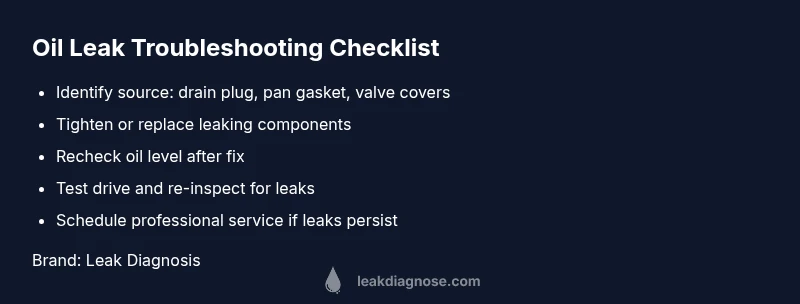
Why Is My Car Leaking Oil? An Urgent Troubleshooting Guide
Urgent car oil leak troubleshooting guide for homeowners and DIYers. Learn the common causes, quick checks, a diagnostic flow, and step-by-step fixes to stop leaks safely and prevent engine damage.


Oil leaks in a car are most often caused by worn gaskets and seals—commonly the oil pan gasket, valve cover gasket, or a faulty oil filter housing. Start by checking the oil level, inspecting for fresh drips under the engine, and tightening any loose drain plug or filter. If leaks persist or you notice smoke or overheating, stop driving and seek a professional inspection immediately.
Why Oil Leaks Happen
When a car leaks oil, it’s usually the result of aging seals and gaskets or loosened fittings. The oil pan gasket, valve cover gasket, and the oil filter housing are common failure points because they sit where heat, vibration, and pressure are highest. Over time, rubber and cork gaskets harden and crack, while o-rings can flatten. A leak may start as a small drip and grow with engine use, making it critical to diagnose early. Identifying the source is essential to avoid engine damage, because low oil or contaminated oil can lead to accelerated wear and overheating. For homeowners, understanding where leaks originate helps you plan a safe, cost-effective fix rather than guessing.
Tip: Fresh oil has a clean, amber hue. As it ages, it darkens. Track color changes to distinguish old leaks from new drips.
Immediate Safety Considerations
Oil on the driveway can ignite if it contacts hot exhaust components, and spilled oil makes a slippery surface. Before you do anything, pull the vehicle onto level ground and turn off the engine. Allow the engine to cool, then wear gloves and place a car-friendly drip pan underneath. If you must move the car at all, do so slowly and avoid running the engine, as leaking oil can lead to low oil pressure and engine damage. Never rely on a quick fix like adding more oil to mask a leak; this can fail at the worst moment. If you notice significant smoke, a burning oil smell, or the oil light comes on, call for roadside assistance and do not drive.
Pro tip: Keep a flashlight and a clean rag handy to inspect for fresh drips and to wipe the area for accurate observation.
Common Oil-Leak Scenarios You Might See
- Puddles under the engine after overnight parking often indicate a leak from the oil drain plug, pan gasket, or valve cover gasket. The color of the puddle can help: a light brown or amber drip is often engine oil, while a darker, thicker puddle points to degraded oil or combined fluids.
- A consistent drizzle around the bottom of the engine that appears after driving suggests a gasket or seal issue, especially around the timing cover or oil filter housing.
- Oil smells or white/blue exhaust plumes may indicate burning oil from a gasket leak that allows oil to reach hot exhaust components.
- A spongy or wet feel on splash shields or undercarriage panels can indicate seepage from the oil pan or valve cover area. Detecting the exact origin may require checking multiple locations.
Note: Leaks near the drain plug often are the easiest to fix; gasket leaks typically require removal of components for replacement.
How to Inspect Your Engine for Leaks
Begin with a visual sweep around the engine bay. Look for fresh oil on the engine block, timing cover, valve covers, and around the oil pan. Use a flashlight to identify the exact source, and wipe surfaces to reveal new drips. Check the oil dipstick for proper level, and inspect the oil cap and its seals. Inspect around the oil filter housing for tightness and signs of seepage. If you’re comfortable, remove the engine shield to access the pan and filter area. Always work with the engine cool and the car on a stable surface. Clean the area with a degreaser and re-check after a short drive to confirm the leak’s location.
Safety reminder: Do not try to diagnose or disassemble components beyond your skill level. Oil under pressure can cause injuries and misdiagnosis can lead to more serious engine damage.
Diagnostic Flow: Symptom to Diagnosis
Symptom: Oil puddle under the car within minutes of stopping. Start by checking for the most obvious sources: drain plug, pan gasket, valve covers, and oil filter housing.
- If the drain plug is loose or damaged, tighten or replace it with the correct torque.
- If fresh drips appear at the oil pan seam or valve covers, those gaskets are likely failing.
- If you find oil near the filter housing, the seal or the housing itself may be leaking.
- If leaks occur alongside smoking or overheating, there may be oil burning on hot exhaust components or a more serious internal issue.
Next step is to perform a controlled pressure test or a dye test if available. Dye tests reveal seepage through small gaps that aren’t visible otherwise. Based on the findings, plan the fix: tighten fasteners, replace gaskets, or service the oil system. Remember, a small leak may become serious if neglected, so schedule a repair soon rather than later.
Step-by-Step Troubleshooting for the Most Common Cause
- Safety prep and tool collection: level ground, wheel chocks, drain pan, wrenches, socket set, new gasket or seal kit, replacement oil if needed.
- Locate and confirm the leak source using the inspection methods described above.
- If the drain plug or filter is leaking, tighten (to the manufacturer’s torque) or replace with fresh hardware and a new gasket.
- For gasket leaks, remove the affected component (oil pan or valve cover), clean mating surfaces, and install a new gasket with proper sealant if recommended.
- Reassemble, refill oil to the correct level, and run the engine to observe leakage with the car on a level surface.
- After the engine cools, re-check for leaks; if still present, repeat or escalate to a professional.
Tip: Take photos during each step to document the source and keep track of torque specs for future maintenance.
Prevention and Long-Term Care
- Schedule regular oil changes with correct oil type and viscosity for your engine. Poor-quality oil or wrong viscosity can accelerate gasket wear.
- Use quality filters and correct torque for drain plugs to prevent leaks.
- Inspect the engine bay every 3–6 months for signs of seepage, especially around the oil pan and valve covers.
- Keep the undercarriage clean so drips are easier to spot. A clean engine area helps you detect leaks early and reduce the risk of extended damage.
- If you drive in dusty or off-road conditions, check seals and gaskets more frequently because debris can abrade seals.
Takeaway: Regular maintenance is the best defense against oil leaks and costly repairs.
When to Seek Professional Help
If you’re unsure about the source, lack the right tools, or the leak is near critical components (timing cover, oil cooler, or turbo lines), it’s wise to contact a qualified mechanic. Oil leaks can escalate quickly, leading to engine damage or a fire hazard in severe cases. A professional diagnosis may involve dye tests, compression checks, or pressure testing that require specialized equipment and expertise. If the leak is accompanied by overheating, misfiring, or significant loss of oil, avoid driving and arrange roadside assistance.
Proactive maintenance with a professional can save money by preventing extensive engine damage. When in doubt, err on the side of caution.
Real-World Scenarios and Quick Fixes
- Scenario A: A small puddle appears after a night of parking. Quick fix: tighten drain plug or replace the washer. Refill oil to proper level and monitor over the next few days.
- Scenario B: Oil smell inside the cabin after a drive. Quick fix: inspect valve cover gaskets, replace if necessary, and ensure no oil has contaminated wiring or hoses near the engine.
- Scenario C: Oil leaks around the oil filter housing. Quick fix: reseal or replace the housing and ensure proper torque on mounting bolts.
- Scenario D: After a long trip, the engine shows low oil pressure warnings. Quick fix: perform a quick inspection of the oil lines and seals and schedule a professional check promptly to avoid engine damage.
The goal is to stop the leak quickly, then perform a thorough repair plan to prevent recurrence.
Steps
Estimated time: 1-2 hours
- 1
Prepare and safety-check
Park on level ground, engage parking brake, place wheel chocks, and let the engine cool. Gather tools, a drain pan, rags, and replacement gaskets or seals. Wear gloves and safety glasses.
Tip: Never attempt to work under a hot engine or on a live electrical component. - 2
Identify the leak source
Wipe suspected areas clean, then start the engine briefly (if safe) and observe where oil drips. Look around the drain plug, oil pan, valve covers, and filter housing.
Tip: Use a flashlight and a mirror if needed to spot hard-to-see areas. - 3
Tighten or replace the drain components
If the drain plug is loose or damaged, replace the washer and tighten to spec. If the leak is from the oil filter, replace the filter and ensure the seal is snug.
Tip: Always use the correct torque for drain plugs and filters. - 4
Remove and replace gasket or seal
For a suspected pan or valve-cover gasket leak, carefully remove the affected component, clean the mating surfaces, and install a new gasket with appropriate sealant as recommended by the manufacturer.
Tip: Take photos during disassembly to aid reassembly. - 5
Reassemble and refill oil
Reinstall components, refill with the correct oil type and amount, and run the engine to check for leaks. Check the level again after the engine cools.
Tip: Never overfill; oil under pressure can cause leaks. - 6
Verify and plan next steps
If leaks persist, perform a dye test or pressure test, and consult a mechanic. Schedule a long-term fix to replace seals and inspect related components to prevent recurrence.
Tip: Document symptoms and photos for a professional quote.
Diagnosis: Oil leak under car after engine shutdown
Possible Causes
- highWorn/damaged oil pan gasket or pan sealing surface
- mediumLoose or damaged drain plug or drain plug washer
- lowCracked valve cover gasket or loose valve cover bolts
Fixes
- easyTighten drain plug to spec or replace washer if needed
- hardReplace oil pan gasket and reseal mating surfaces
- mediumReplace valve cover gasket and re-torque cover bolts
Questions & Answers
What are the most common signs of an oil leak in a car?
Look for dark puddles under the vehicle, burning oil smell, low oil level, and oil on engine components. Leaks may appear after driving or overnight. It’s important to identify the source early to prevent engine damage.
Common signs include dark oil puddles, a burning oil smell, and a dropping oil level. Check the engine area to locate the source and fix it promptly.
Can I drive my car if I suspect an oil leak?
If the oil level is low or you notice smoke or overheating, do not drive. Oil is essential for lubrication and cooling; driving with a leak risks severe engine damage. If it’s a small, slow leak and you can top up oil safely, limit driving until you repair it.
If you suspect a leak, don’t drive if the engine is overheating or the oil level is very low. Top up carefully if safe and seek a professional diagnosis.
What tools will I need for a DIY oil-leak repair?
Basic tools include a socket set, torque wrench, new gaskets or seals, sealant as recommended, a drain pan, and cleaning supplies. A dye kit can help locate hard-to-see leaks.
You’ll need basic hand tools, new gaskets, sealant, a drain pan, and possibly a dye kit for pinpointing the leak.
Is an oil leak always expensive to fix?
Repair costs vary widely depending on the leak’s source and whether components must be removed. Minor fixes like a loose drain plug are inexpensive, while replacing a gasket or oil pan may be more costly. A professional assessment helps you budget.
Costs depend on the leak source and parts; some fixes are simple, others require more extensive work. A professional quote can clarify the price.
What maintenance can prevent oil leaks?
Regular oil changes with the correct oil type, using high-quality filters, and periodic inspections of seals and gaskets help prevent leaks. Keep an eye on fluid levels and inspect for seepage after servicing.
Stick to regular oil changes with the right oil, and check seals and gaskets during routine maintenance to prevent leaks.
When should I call a tow truck?
If the oil level drops rapidly, if you see steam or smoke, or if the engine warning light stays on, stop driving and arrange roadside assistance. These could indicate serious engine damage.
Call for tow or roadside help if you notice rapid oil loss, smoke, or overheating. Do not continue driving.
Watch Video
Main Points
- Identify the source before fixing to avoid unnecessary parts replacement
- Tighten or replace the drain plug if leaking from the drain area
- Gasket leaks require careful removal, cleaning, and proper gasket seating
- Never ignore oil leaks; they can cause engine damage or fire hazards
- Consult a professional if the leak is near critical components or persists