Oil Leak from Car: Quick Troubleshooting & Fix Guide
Urgent guide to diagnose, fix, and prevent oil leaks from your car with practical steps, safety tips, and maintenance advice from Leak Diagnosis.


Oil leaks in cars are most often caused by a loose drain plug, a worn oil filter seal, or a damaged pan gasket. For a quick, safe check: park on a level surface, inspect for fresh drips, tighten a visibly loose drain plug by hand, and replace the filter seal if seepage is present. Then assess oil level.
Understanding the urgency of an oil leak from car
Oil leaks from a car are not just messy; they signal a risk to engine lubrication, leading to expensive damage if ignored. The first thing to know is that motor oil protects moving parts, seals, and bearings. When oil leaks, the engine can run low, causing overheating and accelerated wear. According to Leak Diagnosis, early detection reduces repair costs and minimizes safety hazards. For homeowners, the perspective is practical: identify the source, contain the spill, and restore the oil level safely. In many cases, a small, persistent leak indicates a loose drain plug, a worn pan gasket, or a degraded oil filter seal. Less common but serious causes include a cracked oil pan or a damaged valve cover gasket. The goal of this article is to equip you with a clear, actionable plan to diagnose, fix, and prevent future leaks, while avoiding unsafe shortcuts.
Common sources of oil leaks
The vast majority of car oil leaks originate from components that interact with engine lubrication. The most frequent culprits are a loose or damaged oil drain plug, a failing oil filter seal, and a deteriorated oil pan gasket. A cracked oil pan or a damaged valve cover gasket can also leak oil onto the driveway or garage floor. Less common but possible sources include the oil cooler lines, rear main seal, or seepage around the oil pressure switch. By understanding these sources, you can prioritize checks. Start with the access points that you can inspect without disassembling the engine, and proceed to more involved areas if the leak persists. Regular inspection helps prevent oil loss and engine damage over time.
How to tell it's oil and not another fluid
Motor oil looks amber to dark brown and has a distinct, slippery feel. Unlike coolant, oil smells engine-like and won’t typically be bright colored. If you see a consistently dark, viscous liquid under the engine that has a slick feel, it’s more likely oil. Oil leaks usually form puddles under the front-middle of the vehicle, especially after shutdown, while water or coolant leaks occur in different patterns. Clean a test area with a rag to isolate the fresh source and monitor. If you’re unsure, compare the liquid’s color, thickness, and odor with a small sample from a known oil site. Label the area and avoid touching the fluid, as oil can irritate skin and surfaces.
Safety first: immediate steps you should take
If you notice a fresh oil puddle, prioritize safety. Turn the engine off, allow it to cool on a level surface, and avoid smoking or open flames nearby due to oil’s flammability. Do not start or run the engine if you see heavy leaks. Place absorbent material or paper under the suspected area to track progress. If you’re driving when you notice a leak, pull over at the earliest safe opportunity and reposition your car away from traffic. Do a quick visual check for obvious causes like a loose drain plug or a spill around the oil filter. If the leak is significant or you can’t identify the source safely, arrange roadside assistance and avoid driving long distances until inspected.
Diagnostic flow: locate the source visually
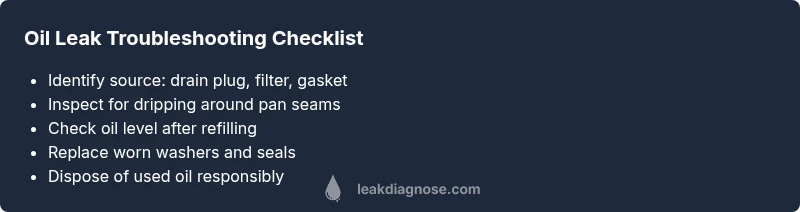
Begin with a clean engine area and check the most common sources first. Look for fresh oil around the drain plug, oil filter, and the pan gasket. If the plug is loose or missing its washer, tighten it by hand and recheck after a short drive. Inspect the oil filter for seepage around the seal and replace if needed. Examine the oil pan and its seams for cracks or corrosion. Use a flashlight to trace faint oil trails back to their origin. If you still can’t pinpoint the leak, inspect nearby components like the valve cover gasket and oil pressure switch. Document signs and take photographs to support a professional diagnosis.
Fixing the most common oil leak: drain plug and filter seal
The most frequent fix is addressing the drain plug and filter seal. Start by ensuring the car is safely elevated, with the engine off and cool. Remove the drain plug washer if worn and replace with an OEM-spec washer. Reinstall the drain plug to the manufacturer’s torque specification, using a torque wrench for accuracy. If the oil filter seal shows seepage, replace the filter or the seal and check for oil around the filter gasket after reassembly. After any fix, wipe clean the area and run the engine for a few minutes to check for fresh leaks. Dispose of any waste oil responsibly and verify the level with the dipstick. If leaks persist, escalation is required for a gasket or pan assessment.
Prevent future leaks with maintenance
Prevention hinges on routine maintenance. Regularly inspect the drain plug, filter, and pan gasket during oil changes. Replace worn seals promptly and always use the correct oil grade and filter type. Keep the engine bay clean—dirt and grime can mask leaks. Check for early signs like dark patches on the driveway, fresh oil on the oil pan rim, or dwindling oil levels. Consider a periodic leak-detection check after service intervals to catch seepage early. A cautious approach helps protect engine health and reduces expensive repairs over time.
When to call a professional
If you observe large leaks, intense oil smells, or the engine warning light illuminates, don’t delay. A professional inspection can confirm the source and check related components, such as the rear main seal or compromised oil lines. If you lack the tools or experience to safely lift the car, or if the leak is near critical components that could cause engine damage, seek roadside assistance or a trusted mechanic promptly. Quick professional input can prevent long-term damage and ensure safe driving.
Tools and safety gear you’ll need
Keep a basic leak toolkit handy: a flashlight, coded rags or paper towels, a set of wrenches, a torque wrench, new drain plug washers, and a replacement oil filter/seal as needed. Always wear gloves to avoid skin contact with used oil and goggles for eye protection. Use a drip pan during work and have disposal containers ready for used oil and filters. After finishing, clean the area, test for leaks, and store tools safely.
blockDataEnd
diagnosticFlow—notApplicable
Steps
Estimated time: 60-120 minutes
- 1
Prepare safety gear and workspace
Park on level ground, turn off the engine, and let it cool. Gather a drip pan, gloves, rags, wrenches, torque wrench, and replacement seals. Clear the area from vehicles and ensure good lighting.
Tip: Never work under a hot engine; hot oil can cause severe burns. - 2
Identify the leak source visually
Wipe a clean area with a rag and look for fresh oil around the drain plug, oil filter, and pan seams. Use a bright light to trace any wet trails back to the source.
Tip: Paint markers or tape can help you mark the suspected area for later checks. - 3
Check the drain plug and washer
Inspect the drain plug for tightness and washer condition. If the washer is worn or missing, replace it before re-tightening. Ensure it’s snug but not overtightened.
Tip: Over-tightening can strip threads or damage the pan. - 4
Inspect the oil filter and seal
Check for seepage around the oil filter gasket. If there’s evidence of leakage, replace the filter and seal, then resecure per manufacturer specs.
Tip: Use a new gasket or o-ring and avoid over-tightening the filter. - 5
Assess the oil pan and gasket
Examine the oil pan seams for cracks or corrosion. If damage is present, you may need gasket replacement or professional service.
Tip: Damaged pans can be replaced; do not weld or force seals onto compromised metal. - 6
Refill oil if level is low
If oil was lost, top up with the correct grade to the recommended level. Recheck the oil level after a short idle.
Tip: Keep a spare bottle for emergency top-ups and avoid overfilling. - 7
Clean up and test for leaks
Wipe the area clean again and run the engine for a few minutes while watching for fresh drips. If none appear, you’ve likely addressed the issue.
Tip: Take a test drive in a safe area to verify stability before returning to normal use. - 8
Dispose of waste properly
Collect used oil and filters in approved containers and take them to an authorized recycling facility. Do not pour oil down drains.
Tip: Proper disposal protects the environment and complies with local regulations. - 9
Document and monitor
Keep records of any replacement parts and oil types used. Monitor oil level weekly to catch any residual seepage early.
Tip: Note dates and readings so you can spot gradual changes. - 10
Know when to escalate
If leaks persist after these steps or you’re unsure about any part, contact a professional mechanic for a full diagnostic.
Tip: Professional diagnostics can prevent engine damage and ensure safe operation.
Diagnosis: Oil puddle or bright oil spots under car after parking or during operation
Possible Causes
- highLoose or missing oil drain plug/washers
- mediumWorn oil filter seal or damaged gasket on filter
- mediumDamaged oil pan or cracked gasket at pan seam
- lowFront main seal or valve cover gasket seepage
Fixes
- easyTighten or replace the oil drain plug and washer as needed
- easyReplace the oil filter seal or filter if seepage is observed
- mediumInspect oil pan for cracks; replace gasket or pan if damage is found
- hardInspect and replace vulnerable gaskets (valve cover, rear main) as needed
Questions & Answers
What should I do immediately if I notice an oil leak under my car?
Pull over safely, turn off the engine, and assess the area for fresh leaks. Avoid driving long distances until a professional inspection is done to prevent engine damage.
Pull over safely and turn off the engine to check the leak. If you’re unsure, call for roadside assistance.
Can I drive with an oil leak?
Driving with a leak is risky because it can cause engine damage due to low oil levels. Limit driving and seek professional help as soon as possible.
No, not safe to drive long distances. Get it checked soon.
How much does an oil leak repair typically cost?
Costs vary based on source and parts, from simple drain plug fixes to more involved gasket or pan replacements. Get a professional diagnosis and a written estimate before proceeding.
Costs vary—get a proper diagnosis and estimate.
What are common signs that indicate a leak source?
Fresh oil spots, a burning oil smell, or a rising oil level after topping up can indicate a leak. Pay attention to the location and color of the fluid.
Watch for fresh spots and smell; note where the leak appears.
How often should I check for oil leaks?
After an oil change or if you notice a puddle, check weekly for the first month. Then monitor monthly as part of routine maintenance.
Check after oil changes and then monthly.
Is it safe to replace the oil filter myself?
Yes, with basic tools and the right filter. Follow the vehicle’s service manual for correct torque and installation. If unsure, consult a mechanic.
Yes, if you follow the manual and use the right tools.
Watch Video
Main Points
- Identify the leak source first
- Address drain plug and filter leaks quickly
- Don't ignore persistent seepage—consult a pro
- Use correct torque and seals during fixes
- Prevent leaks with regular maintenance