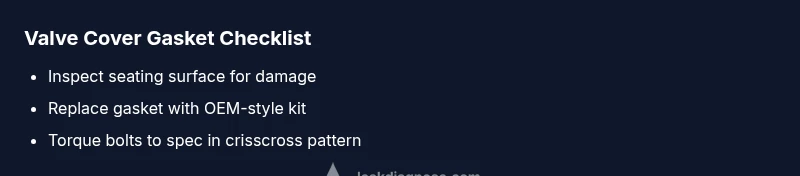
Oil Leak Valve Cover Gasket: Quick Diagnostics and Fixes
Urgent guide to identifying and fixing oil leaks from the valve cover gasket in your engine. Learn common causes, safety steps, diagnostic flow, and a step-by-step repair plan to prevent engine damage.


An oil leak valve cover gasket issue is usually caused by aging gaskets, loose valve cover bolts, or damaged seals. Start with a safe inspection: check the valve cover bolts for proper torque, look for oil seepage at the gasket, then replace the gasket if you see cracks or hardening. For safety, disconnect the battery before opening the hood.
What is an oil leak valve cover gasket and why it leaks
The valve cover gasket sits between the valve cover and the cylinder head, sealing an oil-filled space that keeps lubrication away from moving parts. Over time, heat cycles, oil exposure, and age cause the gasket material to harden, crack, or compress unevenly. When the gasket fails, oil can seep along the edge and drip down the engine block, creating visible puddles or a thin film on the engine. In many engines, a slow seep is easier to diagnose than a gusher, but any oil leak near the valve cover is a risk for engine cleanliness, efficiency, and potential fire hazard if it reaches hot exhaust components. The exact failure mode depends on the gasket material, the torque applied to the valve cover bolts, and the surface quality of the mating surfaces. The key takeaway is: a failed oil leak valve cover gasket is usually fixable with gasket replacement and careful torqueing of the fasteners.
Common symptoms of a valve cover gasket leak
Oil leaks at the valve cover gasket often present as visible oil along the edges of the valve cover, puddles on the engine bay, or a burnt oil smell when the engine is hot. You might notice a steadily dropping oil level on the dipstick, increased oil consumption, or oily residue scattered around nearby spark plug wells. A leak can also create a light mist of oil that fogs the engine bay, especially after long drives where heat disperses the oil. If you see oil on the exhaust manifold or catalytic converter, address the leak immediately to prevent a fire risk. Early symptoms include small drips after engine shutoff and minor oil staining on the valve cover itself. Regular checks help catch a leak before it causes significant damage.
Safety and prep before you work on the engine
Always park on a level surface, engage the parking brake, and allow the engine to cool completely before touching hot components. Disconnect the negative battery cable to prevent electrical shocks or accidental short circuits. Wear eye protection and gloves; oil can be slippery and hard on skin. Remove any decorative engine covers gently to expose the valve cover, and lay a clean pad or tarp under the engine to catch drips. Have a clean workspace, a torque wrench, and the appropriate gasket kit ready. Safety first ensures you can inspect without risking injury or causing additional damage.
Tools, parts, and a quick parts plan
You’ll generally need a valve cover gasket kit compatible with your engine, a torque wrench, socket set, scrapers, and quality engine oil for top-off after the repair. Inspect the gasket seating surface for nicks or corrosion; even small imperfections can prevent a proper seal. If the valve cover surface is damaged, you may need to resurface or replace the cover. Keep spare rags, a drain pan, and a means to clean oil from components. Using the right gasket material and tightening to the manufacturer’s torque specification is essential to restore a clean seal and prevent future leaks.
Diagnostic flow: is the gasket the culprit?
Diagnosing a valve cover gasket leak starts with a visual check for oil along the gasket edge and a note of any dripping patterns. If leaks appear only after a run, heat cycling may be the cause; if oil is present around spark plug wells, a gasket failure is likely. Run the engine briefly with the hood open and inspect for fresh seepage. If you observe oil around the valve cover bolts or at the surface where the cover seats, the gasket is implicated. Rule out other oil sources—drain plugs, fronts seals, or timing cover gaskets—before committing to gasket replacement. Always verify the leak source with a careful inspection, then proceed with the recommended repair plan.
Step-by-step overview of the repair process
Below is a practical overview of the repair flow, focusing on the most common failure mode: a worn gasket with tight or uneven seating. First, prepare and cool the engine, then remove the valve cover carefully to access the gasket. Clean both seating surfaces thoroughly, install the new gasket, and torque bolts in a crisscross pattern to the specified value. Refill engine oil as needed and perform a test run to confirm the leak is sealed. If oil continues to seep, recheck gasket seating or consider surface repair of the valve cover.
Prevention tips and long-term maintenance
To extend gasket life, avoid aggressive re-torquing or overtightening the valve cover bolts, which can crack the gasket. Use the correct gasket kit, follow the torque specifications precisely, and maintain clean mating surfaces. Regular oil changes and keeping the engine bay free of excessive oil buildup helps spotting leaks early. If you recently performed a repair and notice residual seepage, revisit the torque pattern and gasket seating surface. Finally, consider replacing the valve cover if warping is evident after inspection.
Final notes on oil leak valve cover gasket maintenance
A leaking valve cover gasket is a common but manageable issue for many engines. With the right tools, careful inspection, and adherence to torque specifications, most leaks can be resolved with gasket replacement. Document your maintenance in your vehicle log, monitor oil levels, and schedule periodic inspections, especially after long trips or heavy use. Consistent maintenance reduces the chance of future leaks and protects engine longevity.
Steps
Estimated time: 60-120 minutes
- 1
Prepare and cool engine
Park on level ground, disconnect battery, and allow the engine to cool. Gather tools and a drain pan. This minimizes burns and makes parts handling safer.
Tip: Use a silicone mat to keep screws organized. - 2
Remove valve cover components
Carefully detach any components blocking access to the valve cover. Keep track of hoses and electrical connectors, labeling if needed.
Tip: Take photos during removal to aid reassembly. - 3
Inspect the seating surface
Clean the seating area and inspect for nicks, corrosion, or warping. A damaged surface can prevent a proper seal.
Tip: Use a mirror and good lighting to spot imperfections. - 4
Install new gasket and reseal
Place the new gasket evenly around the edge, reassemble the cover, and torque bolts in a crisscross pattern to spec.
Tip: Wipe surfaces clean before final tightening. - 5
Refill oil and check levels
Top off oil if drained and verify the oil level is correct using the dipstick. This ensures no underfill or overfill after service.
Tip: Run the engine briefly to detect leaks while inspecting under the hood. - 6
Test for leaks
Start the engine and observe the valve cover area for fresh oil seepage. Recheck bolts after the first minutes of running.
Tip: If seepage appears, shut down and recheck gasket seating.
Diagnosis: Oil seepage around the valve cover area
Possible Causes
- highGasket hardening or cracking due to heat cycling
- highLoosened valve cover bolts or improper torque
- mediumDamaged valve cover seating surface or warped cover
- lowLeak from adjacent seals or plugs mistaken as gasket leak
Fixes
- easyTighten valve cover bolts to manufacturer torque specification
- mediumReplace the valve cover gasket with a compatible kit and reseal the cover
- hardAddress any warped/damaged valve cover and reseal surfaces
Questions & Answers
What are the telltale signs that my valve cover gasket is leaking?
Look for oil slicks on the engine, oily residues around the valve cover, and a burning oil smell when the engine runs. A consistent drop in oil level after a few days is a strong indicator, especially if the area around the valve cover shows fresh seepage.
Look for oil on the valve cover edge, a burned oil smell, and a falling oil level as clues the gasket is leaking.
Can I reuse the valve cover gasket after tightening bolts?
Reusing a gasket is generally not recommended. Gasket materials degrade with heat and time, and reusing can lead to a repeat leak. Replacing with a new gasket provides a reliable seal.
It's usually best to replace the gasket rather than reuse it.
Will stopping oil leaks fix engine damage?
Stopping the leak helps prevent oil loss and fire risk, but ongoing leaks can cause low oil pressure and engine wear. Address the root cause promptly to protect engine health.
Fix the leak quickly to protect the engine, but address root causes to avoid damage.
When should I call a professional?
If you notice warped surfaces, persistent leaks after replacement, or if the job involves unfamiliar torque specs, consult a qualified mechanic. Complex engine configurations may require professional tools.
Call a pro if the leak persists after replacement or you see a warped surface.
Are there quick temporary fixes for a valve cover gasket leak?
Temporary sealants are not a substitute for a proper gasket replacement and can cause more harm. Use temporary measures only to buy time while arranging a proper repair.
Temporary fixes aren’t a real fix—plan a proper gasket replacement.
Can an oil leak valve cover gasket indicate other engine issues?
Yes, sometimes oil leaks near the valve cover can mask other problems like a warped cover, failed seals elsewhere, or a misfiring plug well. A thorough diagnosis helps prevent missed issues.
It can signal other problems, so check other seals and covers nearby.
Watch Video
Main Points
- Inspect bolts and gasket first
- Replace gasket if cracks are found
- Torque to spec and reseal surfaces
- Clean area to spot leaks early
- Follow safety protocols and log maintenance