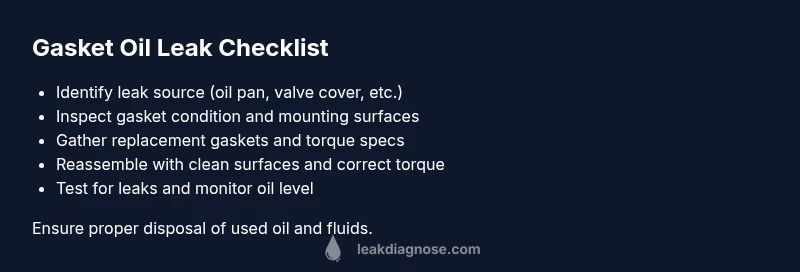
Gasket Oil Leak Troubleshooting: Quick Fixes & Tips
Urgent guide to diagnose and repair gasket oil leaks safely, with step-by-step methods and professional insights from Leak Diagnosis.


A degraded gasket is the most common source of a gasket oil leak, often around the oil pan, valve cover, or timing cover. Quick fix: tighten loose connections, replace the faulty gasket, and clean the area to inspect for fresh leaks. If the oil level drops quickly or smells burnt, stop driving and seek professional service to avoid engine damage.
Overview: What is a gasket oil leak and why it matters
A gasket oil leak happens when a gasket that seals two surfaces hardens, cracks, or is installed incorrectly, allowing oil to escape. In cars, common gasket sites are the oil pan gasket and the valve cover gasket; in home HVAC or refrigeration equipment, compressor gaskets can also leak lubricant oil. A gasket oil leak is important to address promptly because it reduces oil levels, can lead to overheating, engine or compressor damage, and increased repair costs. Early detection saves time and money and reduces environmental risk. In our experience at Leak Diagnosis, aging seals and heat cycling are frequent culprits, though improper installation or using incompatible sealants can also cause leaks. Start by noting where oil ends up on the ground and trace the trail back toward the suspected gasket area. A clean engine bay or compressor bay helps you spot fresh leaks faster.
Common causes and signs
Gasket oil leaks usually begin as a slow seeping that worsens with heat cycles and vibration. The most frequent causes include: aging or hardened gaskets that no longer seal effectively; improper tightening of bolts that hold the gasket, leading to uneven pressure; damaged surfaces from warping, nicks, or debris; overfilling or underfilling the system causing excess pressure; use of incompatible sealants that don’t cure properly. Signs to look for: fresh oil drips under the vehicle or appliance, oily residue around the gasket edges, a burning oil smell after engine or compressor runs, and occasionally a burning oil warning or low oil level indicator. In some cases, the leak is intermittent, appearing only after long drives or cycles. Distinguishing oil leaks from other fluids (like coolant or transmission fluid) is crucial; color, viscosity, and odor help identify the correct fluid. If you see metallic shavings or a wobble in the pulley, escalate to a professional.
Safety considerations before you start
Oil leaks involve hot surfaces, moving parts, and potentially sharp edges. Always park on a level surface, turn off the engine or power, and allow the area to cool before touching components. Wear safety gloves, eye protection, and clothing that covers skin. If you must lift the vehicle, use a proper jack stand rather than relying solely on a jack. Disconnect the battery if you will be working near electrical components. Work in a well-ventilated area; avoid smoking or using ignition sources near leaked oil. Keep a spill pad or absorbent material ready to catch drips and prevent staining your driveway or floor. If the leak involves sharp coolant or fuel lines, treat it as a hazardous spill and seek help immediately.
Where leaks originate: common gasket sites
In vehicles, the oil pan and valve cover gaskets are frequent leak points. Timing cover gaskets and rear main seals can also leak, especially in older engines. For appliances with lubrication seals (like compressors in refrigerators or air conditioning units), gasket failures near the compressor can leak oil. Each site has different accessibility: oil pan gaskets are often beneath the engine, while valve cover gaskets sit along the top of the engine. In appliances, the seals sit at the crankcase or compressor housing. Knowing the likely location guides your inspection and reduces unnecessary disassembly. If you’re unsure, proceed to non-destructive checks like surface cleaning and dye tests before panel removal.
Diagnostic approach: safety-first workflow
Use a simple, repeatable diagnostic flow to verify the gasket source without unnecessary disassembly. Start with observing the leak in a safe position, place a white paper under the suspected area to confirm flow direction, and clean the surface to reveal fresh oil marks after a test run. Compare the observed leak path with typical gasket sites to narrow down the candidate area. If you find oil around the oil pan edge but not on the surrounding components, your oil pan gasket is suspect; if the oil emerges from the valve cover edge, the valve cover gasket is more likely. For appliances, check the compressor area and oil lines. If you cannot identify the source with these checks, dyes or UV glow products can help highlight the leak path. Finally, assess whether a gasket reseal or replacement is viable given access, time, and skill.
Tools, parts, and planning
Before you dive in, assemble the basic toolkit: socket wrenches with torque adapter, breaker bar, screwdrivers, pliers, gasket scraper, gasket sealant (if recommended by the manufacturer), a torque specification chart, a drain pan, and absorbent pads. Have replacement gaskets on hand that match the exact model and engine or compressor type. Keep a clean work area and a dedicated container for used oil. If you are working on a vehicle, consult the service manual for the specific torque specs and sequence; for appliances, follow manufacturer guidelines. Create a step-by-step plan with a rough time estimate. If in doubt, arrange for a professional inspection to avoid misalignment or over-tightening that could worsen the leak.
Prevention to avoid future gasket oil leaks
After completing the repair, take steps to minimize the chance of recurrence. Use the correct gasket material, ensure mating surfaces are clean and free of oil residues, and follow torque specs to the letter. Replace gaskets when you see signs of aging, such as hardening or cracking. Check seals during routine maintenance, inspect for oil staining, and monitor oil levels regularly. In engines, use OEM gaskets and avoid aftermarket parts that lack compatibility. In appliances, ensure proper lubrication intervals and avoid heat exposure that degrade seals. A proactive maintenance plan can catch problems early before leaks become severe and expensive to fix.
What to do if the leak keeps coming back
If you still notice oil seepage after a gasket replacement, reassess the area for a warped surface, misaligned mating surfaces, or secondary seals that may have been damaged by the leak. It may indicate a more serious problem, such as a cracked housing or warped block, that requires professional evaluation. Consider a professional oil system pressure test or a dye test to locate hidden leaks. In some cases, the solution is a more substantial repair, like engine or compressor internals, rather than simply replacing gaskets. Do not ignore persistent leaks; they worsen fuel efficiency, risk fire, and can cause catastrophic damage over time.
Steps
Estimated time: 3-6 hours
- 1
Ensure safety and prep area
Power down and cool the engine or equipment. Put on safety gear and place absorbent pads under the area to catch drips. Gather the tools and parts you’ll need before starting.
Tip: Label fasteners as you remove them to simplify reassembly. - 2
Locate the leak source
Clean the suspected area with degreaser, dry thoroughly, and run the engine or compressor briefly. Watch for fresh oil to identify the actual gasket site.
Tip: Use a UV dye in the oil to help illuminate the leak path. - 3
Access the gasket site
If needed, remove adjacent parts to gain access to the gasket (oil pan, valve cover, or compressor housing). Keep track of removed parts and gaskets.
Tip: Take photos of the layout before disassembly for reference. - 4
Remove old gasket and clean surfaces
Carefully remove the old gasket without damaging mating surfaces. Scrape residue clean and ensure both surfaces are dry and free of oil before installing a new gasket.
Tip: Avoid gouging the metal surfaces; use a plastic scraper. - 5
Install new gasket and sealants if required
Place the new gasket in alignment with the mounting holes. Apply sealant only where the manufacturer recommends, and ensure even gasket seating.
Tip: Double-check orientation and gasket thickness for a perfect seal. - 6
Reassemble and torque to spec
Reinstall components in reverse order of disassembly. Use a torque wrench to tighten bolts to the manufacturer’s specification in the proper sequence.
Tip: Do not overtighten; over-compression can damage the gasket. - 7
Refill fluids and check
Replenish oil to the correct level. If you worked on an appliance, ensure lubrication seals are re-filled as required. Confirm no leaks appear at test start.
Tip: Check the dipstick for accurate oil level after startup. - 8
Test for leaks
Run the engine or cycle the appliance and inspect the gasket area for any new drips. If leak persists, stop and reassess the area.
Tip: A second pass with dye can help locate residual leaks. - 9
If in doubt, call a professional
If you’re unsure about torque specs, difficult access, or repeated leaks, seek professional help to avoid further damage.
Tip: A professional inspection can prevent costly mistakes.
Diagnosis: Oil leak from gasket area (oil pan, valve cover, etc.)
Possible Causes
- highWorn or warped gasket due to age/heat
- mediumLoose or uneven bolts causing improper seal
- lowDamaged mating surfaces or debris
Fixes
- easyTighten bolts to spec and reseal or replace gasket as needed
- hardReplace gasket with correct part and ensure clean mating surfaces, then retorque to spec
Questions & Answers
What is a gasket oil leak and why does it matter?
A gasket oil leak occurs when a gasket seals two surfaces fail to seal, allowing oil to escape. It matters because it can lead to low oil levels, overheating, and engine or compressor damage if left unchecked.
A gasket oil leak is a failing seal that lets oil escape, which can cause serious engine or compressor damage if ignored.
Can I fix a gasket oil leak myself?
Some minor leaks from easily accessible gaskets can be addressed by resealing or replacing the gasket with careful attention to torque specs. More complex leaks or inaccessible locations may require professional service.
You can try resealing a simple gasket, but for hard-to-reach spots or persistent leaks, it’s best to call a professional.
How do I tell where the leak is coming from?
Begin by cleaning the area, then run the engine or system and observe where fresh oil appears. Use a white paper under the suspected area and dye tests if needed to confirm the source.
Clean the area, run it, and watch where new oil shows up to locate the source.
Should I drive with an oil leak?
If the leak is significant or oil level is dropping quickly, stop driving and seek professional help. Driving can cause severe engine damage and unsafe conditions.
No, don’t drive if the oil leak is heavy or you can’t monitor the oil level safely.
What tools do I need to replace a gasket?
You’ll typically need a torque wrench, socket set, gasket scraper, sealant (if recommended), a drain pan, and replacement gaskets matched to your model. Always consult the manual for exact requirements.
A torque wrench, sockets, scraper, drain pan, and the right gasket set are usually enough.
When should I call a professional?
If you’re uncertain about torque specs, the leak is persistent after a gasket replacement, or access is highly complex, a professional can prevent further damage and ensure a proper seal.
Call a professional if you’re unsure about torque, or the leak keeps coming back after a replacement.
Watch Video
Main Points
- Identify the exact gasket site before disassembly
- Use clean surfaces and proper torque specs
- Replace aging gaskets to prevent recurring leaks
- Test thoroughly and call a pro if needed