How to Find a Roof Leak: A Homeowner's Guide
Learn proven steps to locate a roof leak quickly and safely, with attic inspection tips, a controlled water test, and guidance on when to call a professional.


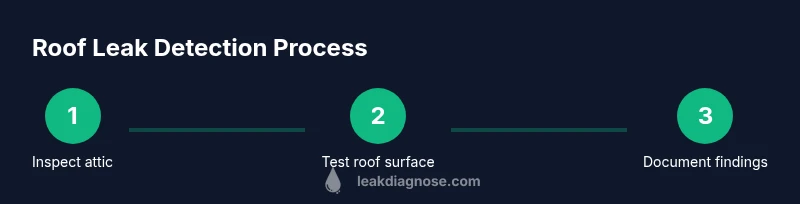
To find a roof leak, start with a careful attic inspection, looking for signs of moisture, mold, or stained wood. Then trace the water path back to the most probable origin on the roof, and verify with a controlled water test. This method helps pinpoint the leak before costly repairs.
Understanding Roof Leaks and How Water Travels
Roof leaks can be deceptive: water often enters your home well away from the actual breach. In an attic, moisture, dark stains, or musty odors signal intrusion, but the visible entry point may be far from the leak’s origin on the roof. Water travels along rafters, insulation, and drywall seams, which is why a careful, methodical search matters. Typical entry points include flashing around chimneys, vent pipes, skylights, and the edges of damaged shingles. By recognizing that the leak path is a trail, you can start your investigation from the most probable areas and work toward the suspected roof feature, such as flashing or a missing shingle, rather than guessing blindly. For homeowners asking how to find a roof leak, a disciplined attic-first approach often saves time and reduces unnecessary exterior work.
Safety First: Safe Access and Precautions
Safe access is the foundation of a successful leak search. Begin with a stable ladder and use fall protection if you must go onto a roof. Wear non-slip footwear, gloves, and eye protection; never work on a wet surface. If you encounter active electrical components in the attic, shut off power to the affected circuit and proceed with extra caution. Do not work alone—have a helper nearby who can observe the interior while you inspect the exterior. Weather conditions matter: avoid windy, rainy, or icy days that increase fall risk. Keeping safety at the forefront protects you and preserves the integrity of the investigation.
Planning Your Investigation: Map the Water Path
Water typically travels along framing and seams, sometimes dripping far from the original breach. Start in the attic: look for damp insulation, staining, or mold growth, and note where water appears to collect. Trace the moisture trail backward toward the roof surface, noting the closest roof feature above the path—vent pipes, flashing, valleys, or skylights. Use chalk to mark suspect areas on the underside of the roof deck, creating a visual map to guide exterior checks. Understanding the water path helps you avoid blind spot checks and makes exterior inspection more efficient.
Verifying with a Controlled Water Test
A structured water test helps confirm the leak source. Begin at the most likely area inside the attic, then spray small, targeted zones on the roof above that area while a partner watches from below. Move systematically in sections, pausing to observe any interior changes such as new stains or drips. Document findings with photos and notes, and avoid over-wetting sections that could mask the real source. This approach minimizes damage while providing compelling evidence for the correct repair path.
What to Do After Locating the Leak
Once you’ve identified the source, decide between a temporary fix and a permanent repair. If flashing is loose or shingles are damaged, plan a safe temporary seal only if you can do so without creating a bigger risk. For complex penetrations or widespread damage, hiring a licensed roofer is often the safest option. In the meantime, protect interior spaces with tarps and address water-damaged insulation promptly to reduce mold risk. Keeping notes and photos will help you communicate clearly with a professional later.
Authoritative Sources for Roof Leak Guidance
- Energy.gov: Weatherization, moisture control, and home efficiency tips
- Extension services (e.g., extension.illinois.edu): Practical home maintenance guidance for homeowners
- OSHA: Safety guidelines for working on roofs and ladders to minimize risk
Quick Recap: How to Find a Roof Leak Safely
A methodical, attic-first search paired with a controlled exterior test yields reliable results. Document every step, work with a partner, and know when to involve a professional. Safety and accuracy save time and prevent further damage.
Tools & Materials
- Stable extension ladder(Tall enough to reach eaves; use ladder stabilizers)
- Personal protective equipment (PPE)(Non-slip shoes, gloves, safety goggles)
- Flashlight or headlamp(Bright, adjustable light for attic inspection)
- Camera or smartphone(Document findings with clear photos)
- Garden hose with spray nozzle(For controlled water testing in sections)
- Chalk or marker(Mark suspect areas in attic and on roof deck)
- Drop cloths or towels(Contain spills during testing)
- Tar or roofing sealant (temporary)(Temporary fix if safe and appropriate)
- Binoculars(Inspect roof surface from ground if access is difficult)
Steps
Estimated time: 1.5-3 hours
- 1
Inspect attic for moisture signs
Begin with a careful ceiling-to-roofline inspection in the attic. Look for damp insulation, dark stains, or mold growth. Note where water appears to congregate and its path toward the roof.
Tip: Wear PPE and move slowly to avoid missing subtle stains. - 2
Identify probable water pathways
Trace the moisture trail from the attic toward the likely roof area. Water often travels along framing, wiring, and drywall seams, so look for the nearest roof feature above.
Tip: Use chalk to map the route; this helps you target exterior checks. - 3
Check exterior roof features from ground safely
From ground level, inspect flashing around vents, chimneys, and edges for corrosion, lifting, or gaps. Look for missing shingles or damaged sealant.
Tip: Only go on the roof if you feel confident and weather is calm. - 4
Prepare for a controlled water test
Place a tarp under the testing area and drape a safety line if possible. Decide test sections to avoid creating a large leak.
Tip: Test small sections at a time to isolate the source. - 5
Run the water test in sections
Spray a defined roof section with steady water flow while a helper watches the interior for new leaks. Stop if you see before moving to the next area.
Tip: Start at the suspected area and move outward. - 6
Document and interpret results
Record which area produced new leaks and where interior staining appeared. Take photos and sketch a quick map.
Tip: This map guides any necessary roof repairs. - 7
Decide on repair steps or professional help
Assess whether the leak source is repairable with DIY fixes or if you should hire a roofer for safety and durability.
Tip: If the roof structure is compromised, call a pro promptly.
Questions & Answers
What causes most roof leaks in homes?
Most leaks start at flashing, skylights, or damaged shingles. Weathered sealants and worn vent boots also contribute. Tracing the water path from interior signs helps pinpoint the source.
Most leaks start around flashing, vents, or damaged shingles, and tracing the path from stains helps locate the source.
Do I need a professional to find a roof leak?
Not always. Simple leaks with clear flashing damage can be investigated by a confident DIYer. Complex roof structures or safety concerns should be handled by a licensed roofer.
If the roof is complex or unsafe, hire a licensed roofer; otherwise, a careful DIY inspection may suffice.
How long does it take to locate a roof leak?
Time varies with the roof size and accessibility. A basic attic inspection and exterior check can take 1-2 hours; a full attic-to-roof investigation may take longer.
Locations vary, but plan for an hour or two for a thorough check, longer for larger roofs.
Can I fix a roof leak myself after finding the source?
Temporary fixes like sealing flashing or replacing a few shingles are possible for small, localized leaks. Permanent repairs usually require a professional roofer to ensure safety and durability.
DIY fixes might work for small leaks, but big repairs should be done by a roofer.
What tools help identify leaks during rain?
A garden hose with a spray nozzle, chalk for marking, a partner to observe, and a camera to document changes help you identify leaks during rain or simulated rain.
Use a spray nozzle and a partner to watch for leaks during a controlled rain test.
How can I prevent leaks after repair?
Keep gutters clear, inspect flashing and shingles annually, and address any interior moisture promptly to prevent mold. Regular maintenance reduces the chance of future leaks.
Regular roof maintenance helps prevent future leaks; clean gutters and inspect flashing yearly.
Watch Video
Main Points
- Identify attic moisture early to locate origin
- Map water paths before exterior inspection
- Test roof sections to isolate the leak
- Call a pro for complex or widespread damage