HVAC Water Leak Troubleshooting: Quick Fixes and Prevention
Urgent, practical troubleshooting steps for an HVAC water leak, with quick checks, a diagnostic flow, and a step-by-step fix plan to stop damage and prevent future leaks.


An HVAC water leak is most often caused by a clogged condensate drain line or an overflowing condensate pan. For a fast check: power off the AC, locate the condensate pan and drain line, and clear any blockages with a wet/dry vacuum or a stiff brush. If the leak persists, shut down the system and contact a licensed HVAC technician.
What causes an hvac water leak and why it matters
A sudden hvac water leak can cause water damage to ceilings, walls, and floors, plus mold growth if left unchecked. For homeowners, recognizing the most common sources helps you act quickly. According to Leak Diagnosis, the leading culprit is a clogged condensate drain line, which forces condensate to back up into the drain pan. Even small leaks can indicate a developing problem with your cooling system’s humidity control or drainage. Treat any hvac water leak as an urgent maintenance issue to protect your home and your equipment. Keeping the system clean and well-maintained reduces the risk of costly failures and potential mold growth, which can affect indoor air quality and occupant health.
Common sources of hvac water leaks
HVAC water leaks most often originate from the condensate side of the system. The condensate drain line can become blocked by algae, mineral buildup, or debris, causing water to back up into the drain pan and overflow. A rusted or cracked condensate pan can leak directly, especially in older units. Condensate pump failure, misrouted drain lines, or loose fittings can also produce leaks. In some cases, excessive air conditioner condensation causes water to appear around the air handler, particularly in high-humidity climates. The Leak Diagnosis team notes that improper insulation around ducts or poorly sealed evaporator coils can contribute to condensation and leaks. A comprehensive check helps distinguish between a simple clog and a deeper component failure.
Safety first: immediate actions you should take
If you notice water, act quickly to minimize damage and reduce risk. Shut off power to the affected HVAC unit at the breaker to prevent electrical hazards. Do not touch electrical components with wet hands. If water is near electrical outlets or appliances, keep a safe distance and call a licensed professional. Use towels or a bucket to contain the water, but avoid pushing it into wall cavities or other electrical spaces. Document the signs of leakage with photos for your records and for any technician who visits. The brand perspective from Leak Diagnosis emphasizes safety and proper diagnosis before any repair work begins.
Quick diagnostic checks you can perform safely
Begin with simple, observable checks. Look for standing water near the air handler or furnace and inspect the condensate drain line for visible clogs or kinks. Check the drain pan for cracks or rust and verify that the line slopes toward the pan. If you have a condensate pump, ensure it runs when the unit is active. Check insulation around the evaporator coil and any visible refrigerant lines for signs of moisture or oily residues, which could indicate a more serious issue. If you’re unsure, stop and call a professional rather than attempting unfamiliar repairs. Leak Diagnosis advises documenting every observation to guide the service visit.
How professionals diagnose and fix the root causes
When a leak persists after basic checks, a professional will perform a more thorough assessment. Technicians use moisture meters and pressure gauges to trace leaks, inspect the condensate pan and drain system, and test the condensate pump if present. They assess duct insulation, coil condition, and refrigerant line integrity. Fixes may range from clearing a clogged drain line and replacing a failing pan to repairing seals on the evaporator coil or replacing a faulty condensate pump. The goal is to stop the leak, prevent future overflow, and ensure the system operates safely and efficiently. The Leak Diagnosis team emphasizes following manufacturer guidelines and using manufacturer-approved replacement parts for lasting results.
Steps
Estimated time: 60-120 minutes
- 1
Power down and ensure safety
Turn off the HVAC unit at the breaker and disconnect any power sources to prevent shock. Do not touch electrical components when wet. Confirm your home is safe before you begin any inspection.
Tip: Always start with safety—water plus electricity is a real hazard. - 2
Locate the condensate pan
Find the condensate pan beneath the evaporator coil. Look for cracks, rust, or standing water around the pan edges. A pan with holes or corrosion is a common leak source.
Tip: Take photos from multiple angles to show the pan condition to a technician later. - 3
Inspect and clear the drain line
Follow the drain line from the pan to its discharge. If you see a clog, remove debris with a long brush or flush with a safe cleaner. A wet/dry vacuum can help pull out blockages the line won’t release on its own.
Tip: Avoid using aggressive chemicals that could damage plastic components; use manufacturer-approved cleaners. - 4
Check the condensate pump (if present)
If your system uses a condensate pump, listen for operation and test the switch. A non-working pump can cause overflow even with a clear drain line. Ensure wiring and float switch are intact.
Tip: Pour a small amount of water into the pan to verify the pump activates and evacuates liquid. - 5
Inspect for coil and fitting leaks
Look for signs of moisture on the evaporator coil housing and check connections for any dampness or oily residues—these can indicate a refrigerant leak or loose fittings.
Tip: If you see oily residue, do not attempt repairs yourself; refrigerant leaks require licensed service. - 6
Run the system and observe
Restore power and run the unit while inspecting for renewed leaks. Monitor the drain pan and line for new signs of water within the next 10–15 minutes.
Tip: If leakage resumes, document the pattern and call a professional with your findings. - 7
Prevention steps after repair
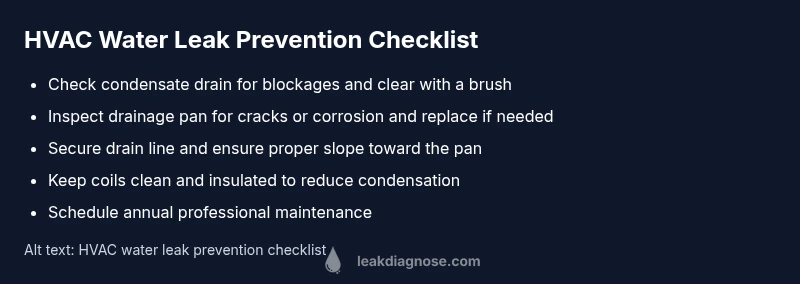
Schedule annual maintenance, install a pan overflow switch or alarm, and keep coils clean and properly insulated to reduce condensation. Verify proper drainage slope and consider replacing old or corroded components.
Tip: Preventive maintenance is the best defense against recurring hvac water leaks.
Diagnosis: Visible water pooling near the HVAC air handler or furnace after unit operation
Possible Causes
- highClogged condensate drain line
- mediumOverflowing condensate pan due to debris or corrosion
- lowLeaking refrigerant coil or compromised seal
- lowDisplaced or loose drain fittings
Fixes
- easyClear the condensate drain line and pan; use a wet/dry vacuum to remove clogs and flush with water-safe cleaner
- mediumRepair or replace the condensate pan; secure drain line slope and fittings
- hardTest and repair the evaporator coil seals or refrigerant connections; consult a licensed technician
Questions & Answers
What is the most common cause of an HVAC water leak?
Most HVAC water leaks originate from a clogged condensate drain line or an overflowing drain pan. A persistent leak may indicate a larger issue. Always inspect safety first and contact a professional if you’re unsure.
The most common cause is a clogged condensate drain line or overflowing drain pan. If the leak lasts, contact a professional.
Can I fix an HVAC water leak myself?
You can perform basic checks like clearing a clog from the condensate drain line and inspecting the pan, but avoid refrigerant-related repairs. For anything involving coils or refrigerant, hire a licensed technician.
You can handle basic drain clearing, but avoid touching coils or refrigerant. Call a pro for those parts.
What signals a refrigerant leak vs a drain issue?
Refrigerant leaks often show oily residue around connections or coils and may cause cooling issues. Drain issues usually involve visible water pooling and a blocked drain line. If unsure, have a tech diagnose.
Oily residues suggest refrigerant; water pooling points to drain issues. When in doubt, get a diagnosis.
Is a water leak dangerous for home safety?
Water near electrical components can create shock hazards and promote mold growth. Shut off power to the unit and contact a professional if you suspect any electrical exposure.
Water near electricity is dangerous—shut off power and call a pro.
How often should I service my HVAC to prevent leaks?
Annual professional maintenance is recommended to catch developing issues early and keep drainage and condensation under control.
Aim for at least yearly professional maintenance to prevent leaks.
What maintenance helps prevent hvac water leaks?
Keep the condensate drain clear, ensure proper pan condition, insulate ducts, and install a safety switch to detect overflow early.
Keep drains clear, seal pans, and consider an overflow alarm.
If I hear dripping after a repair, what should I do?
Stop the unit and reassess the area. If leaks persist, contact the HVAC professional who did the repair for a follow-up evaluation.
If dripping returns, stop the unit and call your tech for a recheck.
Watch Video
Main Points
- Shut power off before inspecting any HVAC components.
- Condensate drain line blockage is the most common leak cause.
- If the leak persists after basic fixes, call a licensed HVAC professional.
- Regular maintenance helps prevent hvac water leaks in the future.