Why is My AC Leaking Water? Troubleshooting Guide
Urgent guide to diagnose why is my ac leaking water and fix condensate leaks safely. Learn quick checks, diagnostic flow, and prevention tips from the Leak Diagnosis team.


Why is my AC leaking water? In most homes the culprit is condensate drainage problems. Start by turning the unit off, then inspect the condensate drain line and overflow pan, and check that the air filter is clean. If the puddle remains, follow the step-by-step guide to flush the drain, inspect for ice or blockages, and know when to call a professional for refrigerant or major component issues.
Understanding Why an AC Leaks Water
If you're asking why is my ac leaking water, you're not alone. Most residential leaks stem from condensation drainage that cannot keep up with the evaporator coil. According to Leak Diagnosis, addressing these leaks early saves damage and costly repairs. In a typical home, condensate water should drain through a dedicated line to an outside drain. When that path is blocked, water escapes into the cabinet, onto the floor, or onto nearby surfaces. The good news is that many leaks come from issues a confident DIYer can tackle with basic tools and careful safety. This section explains the common causes, why they happen, and how to approach fixes safely. You’ll learn to distinguish a simple blockage from a more serious failure requiring a professional HVAC technician, especially when refrigerant or electrical components appear involved. The goal is to restore safe operation and prevent mold growth or water damage.
Quick Checks You Can Do Today
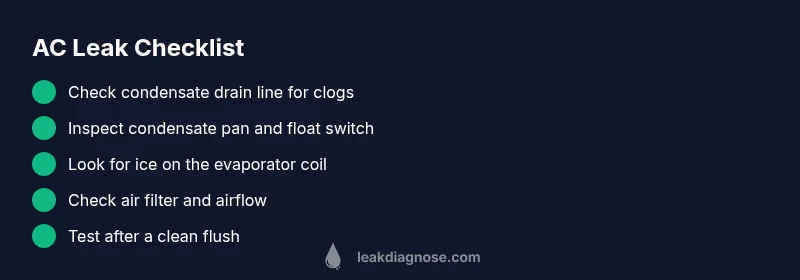
Before you jump into repairs, perform these fast checks. Safety first: shut off power to the AC at the breaker to reduce shock risks. Look for obvious obstructions around the outdoor unit and indoor access points that could trap condensate. Inspect the condensate drain line for kinks, blockages, or disconnections and verify it slopes toward the drain or outside. Check the condensate pan under the evaporator; if it's cracked or corroded, water can escape into the plenum. Inspect and replace the air filter if dirty; poor airflow can cause the evaporator coil to frost and melt, creating leaks. Finally, observe whether a puddle appears at specific times of day or after heavy cooling demand; note these patterns to help your diagnosis.
Diagnosing the Most Common Cause: Clogged Condensate Drain
Condensate drainage is designed to carry water away from the evaporator. When the line gets clogged with algae, sediment, or mineral buildup, water backs up and spills out of the drain outlet or overflow pan. In many homes, this is the leading cause of indoor leaks. Start by locating the condensate drain line—it's usually a PVC tube that exits near the air handler. If you can, remove the cap or access plug and inspect for a visible clog. Use a wet/dry vacuum to pull out any obstruction from the drain line; you can also flush with a small amount of distilled water or a mild vinegar solution through the line, then rinse with clean water. Reattach caps, ensure the line is sealed, and run the system for 10-15 minutes to test. If you see water still backing up, the pan float switch or the drain line may be faulty and require replacement.
Other Possible Causes and How to Spot Them
Leaks may originate from issues beyond the condensate line. A frozen evaporator coil caused by restricted airflow from a dirty filter or low refrigerant will melt and drip water once the ice thaws. Inspect the evaporator coil for ice buildup when the unit is off and airflow is paused. A damaged or rusted condensate pan can leak; check under the evaporator cabinet for signs of corrosion or pooling. Improper unit slope or a dislodged drain line may cause water to pool in the wrong area. If the drain pan or line appears clean, consider whether installation was done with the wrong tilt. Finally, non-water leaks like a refrigerant line sweating can mimic leakage; if you suspect refrigerant issues, look for frost on the coil or hissing sounds and call a professional.
Safety and Next Steps If Water Continues
When a puddle persists after basic checks, stop DIY fixes and seek professional evaluation. Electrical components, refrigerant handling, and disposal require proper safety training and certification. If you notice buzzing sounds, burnt odors, or water near electrical components, shut off power at the breaker and call a licensed HVAC technician immediately. Document symptoms (time of day, outdoor temperature, and whether the leak correlates with cooling cycles) to help the technician diagnose quickly. A pro can clean, test, and repair the drainage system, replace a faulty condensate pan or float switch, and address refrigerant-related issues safely. Meanwhile, keep the area dry to minimize slip hazards and mold growth.
Prevention Tips to Stop Leaks in the Future
Regular maintenance is the best defense against AC water leaks. Schedule annual professional inspections and replace aging condensate lines if worn. Clean or replace the air filter every 1-3 months, depending on usage and dust levels, to maintain proper airflow and prevent coil freezing. Keep the outdoor unit clear of debris and ensure at least 2 feet of clearance for air intake and drainage. Consider a condensate overflow alarm or a secondary drain to catch failures before water damage occurs. The objective is to detect and resolve issues before they escalate into costly repairs.
Steps
Estimated time: 60-90 minutes
- 1
Power down and access the unit
Turn off the AC at the breaker. Remove the access panel from the indoor air handler to inspect for visible water or corrosion and ensure you have a dry workspace. Wear protective gloves and eye protection as you work near electrical components.
Tip: Use a flashlight to inspect dark corners and take photos before removing components. - 2
Locate the condensate drain path
Find the condensate drain line, typically PVC, and trace its path to the exterior or drain. Look for signs of a disconnection, kink, or blockage along the line. If you see standing water inside the drain line, you'll need to clear the obstruction.
Tip: Do not force fittings; loosen caps gently to avoid cracking the pipe. - 3
Clear the condensate drain line
If you detect a clog, use a wet/dry vacuum to suck out debris from the drain opening, then flush with a small amount of distilled water or mild vinegar solution. Rinse with clean water and ensure the line is sealed after reassembly.
Tip: Limit chemical use; vinegar is safer for line materials than harsh cleaners. - 4
Inspect the condensate pan and float switch
Check the drain pan for cracks or rust and verify the float switch moves freely. A stuck or failed float switch can cause the unit to overflow. If damage is found, replace the pan or switch as needed.
Tip: Take a photo of the underside before removing parts to aid reassembly. - 5
Check air filter and coil condition
Examine the air filter; replace if dirty. A clogged filter reduces airflow and can lead to coil freezing, which melts into water leaks. If you see frost on the evaporator coils, thaw them and ensure proper airflow before testing.
Tip: Regular filter changes prevent repeat leaks and improve efficiency. - 6
Test drainage and operation
Reassemble the panel and power the unit back on. Run the system for 10-15 minutes and observe the drain line for continuous flow. If leaks persist, note timing and patterns for a technician visit.
Tip: Keep a notebook handy to log times when leaks occur. - 7
Know when to call a pro for refrigerant issues
If you suspect a refrigerant leak or if the coil remains frosty after thawing, contact a licensed HVAC technician. Refrigerant handling requires certification and specialized equipment.
Tip: Do not attempt to recover or refill refrigerant yourself.
Diagnosis: AC unit leaking water
Possible Causes
- highClogged condensate drain line
- highOverflowing condensate pan
- mediumFrozen evaporator coil due to dirty filter or low refrigerant
- lowImproper drainage or incorrect unit slope during installation
Fixes
- easyClear and flush condensate drain line; ensure unobstructed flow to drain/outdoor
- easyInspect/clear condensate pan and replace float switch if faulty
- mediumClean or replace air filter; thaw coils if frozen and verify refrigerant levels with pro
- mediumCheck unit slope and reseal/adjust drain line if needed
Questions & Answers
Why is my AC leaking water indoors?
Indoor leaks are usually caused by condensate drainage problems, a frozen coil, or an overflow pan. Start with a safety shutoff, then inspect the drain path, pan, and filter. If the leak persists after basic checks, follow the step-by-step guide to determine whether a professional is needed for refrigerant or major components.
Most indoor leaks come from condensate drainage problems. After turning off power, inspect the drain line, pan, and filter, and if the leak continues, follow the steps or call a pro.
Is a leaking AC dangerous?
Leaks can pose electrical hazards and lead to mold growth. Water near electrical parts is unsafe, so shut off power and assess carefully. If you are unsure, contact a licensed HVAC technician promptly.
Water near electrical parts is dangerous—shut off power and call a pro if unsure.
Can I fix a condensate drain myself?
Yes, for minor clogs you can clear the line with a vacuum and gentle flush. If the line remains blocked or you see ongoing leaks, stop and consult a professional to avoid damage or refrigerant issues.
You can try clearing minor clogs, but stop if it doesn’t improve and call a pro.
What tools do I need to fix a condensate drain?
Common tools include a wet/dry vacuum, a flashlight, a small funnel, and a gentle cleaning solution like diluted vinegar. Avoid harsh chemicals that could damage tubing. Always turn off power first.
A vacuum, flashlight, funnel, and a mild cleaner can help; remember to turn off power first.
When should I replace the condensate pan?
Replace the condensate pan if you see cracks, heavy corrosion, or persistent leaks after cleaning. A damaged pan can cause repeated leaks and mold growth.
Replace a cracked or corroded pan to prevent ongoing leaks.
Can a dirty filter cause water leaks?
A dirty filter can reduce airflow and freeze the evaporator coil, which melts and leaks water. Regular filter changes help prevent this issue.
Yes—dirty filters can cause coil freezing and leaks. Change filters regularly.
Main Points
- Identify condensation issues first
- Keep filters clean to prevent coil freeze
- Flush and test the condensate drain
- Inspect the drain pan and float switch
- Call a pro for refrigerant-related leaks