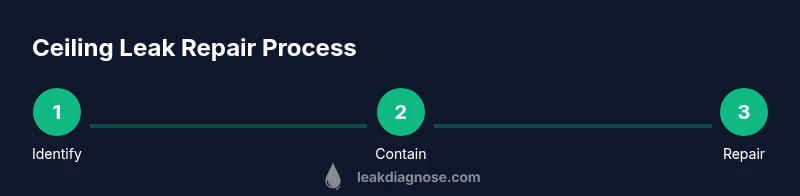
How to Fix a Ceiling Leak: A DIY Guide
Learn how to identify, contain, and repair a ceiling leak safely. This practical DIY guide covers sources, materials, timing, and steps for a lasting fix.


This guide shows you how to fix a ceiling leak safely, including identifying the source, containing water, and completing a permanent repair. You'll need basic tools, a stable ladder, and protective gear. Start by turning off affected utilities if needed and locating the leak's origin before proceeding with patching or replacement.
Understanding the causes of ceiling leaks
Ceiling leaks are rarely the result of a single incident. Most ceiling stains come from three common sources: roof faults, plumbing penetrations in the attic or overhead space, and HVAC condensate lines. According to Leak Diagnosis, the origin often determines the repair method and materials required. Roof leaks usually travel along joists before appearing as stains on a ceiling, while plumbing leaks often show up near bathrooms or kitchens directly above the affected area. In some homes, an HVAC condensation line or a failed pan can drip slowly, saturating insulation and drywall from above.
To diagnose effectively, look for patterns: fresh stains near an upstairs bathroom suggest plumbing, while staining near the roof line after a storm hints at a roof leak. If you can see active dripping, that confirms an active leak somewhere above. Keep a log with dates and rainfall amounts to help correlate events with the leak. This information helps you decide whether the fix is a quick patch or a larger repair that involves roofing, plumbing, or both.
Safety and immediate containment
Before you do any repair work, prioritize safety. If water is actively dripping onto electrical fixtures, switch off the circuit at the main breaker for that zone and keep people away from the area. Protect floors and furniture with plastic sheeting and place a sturdy bucket or container under the leak to catch drips. Do not climb on a sagging ceiling or crawl into the attic if the roof is compromised. If you are unsure about the structural integrity, wait for a professional assessment. Wearing rubber-soled shoes, gloves, and eye protection reduces the risk of injury and exposure to mold or sharp materials. If you must work in wet conditions, ensure the space is well-ventilated and avoid using heat guns or strong dryers that can damage wet drywall or spread mold spores.
Assessing water damage and mold risk
Water intrusion can cause hidden damage beyond what you see on the surface. Use a moisture meter to measure drywall moisture and check wood framing in the attic or crawlspace for dampness. Drying the area quickly reduces mold risk; run dehumidifiers and fans to circulate air, but avoid airtight sealing that traps moisture. Wood decay or hidden mold can appear as soft spots, musty odors, or a peppery dust when dry rot is present. If you notice signs of mold growth (visible mold, musty smell, or water-soaked insulation), treat it as a mold risk and seek professional guidance. Documenting moisture and mold risks helps you plan the renovation and prevents future leaks from becoming bigger problems.
Locating the source: roof, plumbing, or HVAC
Start above the ceiling in the space where the stain appears. In most homes, this means checking the attic for roof penetrations, missing shingles, damaged flashing, or clogged gutters that allow water to run down joists. If the area above is a bathroom, kitchen, or laundry space, inspect for leaking supply or drain lines, loose fittings, or dripping connections. HVAC condensate lines should be inspected for blockages or leaks where the line enters the ceiling. If you cannot locate a source after a careful inspection, consider using non-toxic dye tablets in the suspected lines or a thermal camera to reveal hidden moisture paths. The goal is to pinpoint the origin with minimal disruption to ceiling material.
Choosing a repair approach: patch, replace, or call a pro
For small, non-structural leaks with minimal drywall damage, you can patch and finish the ceiling using standard drywall techniques: cut out the wet portion, install a patch, apply joint compound, sand smooth, and repaint. If the drywall has large areas of staining or the insulation behind is wet, replacing the affected drywall panel and reattaching it to the studs may be necessary. When the roof or plumbing requires attention, you may need to hire a roofer or plumber to fix the root cause. For complex leaks or if mold is suspected, involve a licensed contractor to ensure safety, proper remediation, and compliance with local codes. Plan the work with a dry-down period after repairs to ensure durability.
After repair: drying, sealing, and prevention
Once the repair is complete, focus on thorough drying to prevent mold and future leaks. Use a dehumidifier in the room and a fan aimed at the ceiling to promote evaporation. Seal the repaired area with primer and two coats of paint, matching your existing ceiling color. Finally, implement prevention steps: inspect the roof regularly after storms, clear gutters, maintain plumbing joints, insulate a potentially cold attic space, and consider an attic vapor barrier to reduce condensation. Regular inspections and quick action when you notice stains help protect your home.
Authority sources
- OSHA: https://www.osha.gov
- FEMA: https://www.fema.gov
- EPA: https://www.epa.gov
Tools & Materials
- Flashlight(Bright handheld flashlight)
- Ladder(Stable, tall enough for attic access)
- Plastic sheeting(6-mil or heavier)
- Drop cloths or tarps(Cover floors and furniture)
- Wet/dry vacuum(If visible water pooled)
- Putty knife(For scoring drywall)
- Joint compound(Pre-mixed and lightweight)
- Drywall patch or drywall sheet(Size to cover damaged area)
- Drying equipment(Dehumidifier or fan)
- Safety PPE(Gloves, goggles, mask)
- Caulking and sealant(If sealing joints)
Steps
Estimated time: 4-6 hours
- 1
Turn off power and protect area
Locate the circuit for the affected zone and switch it off at the main breaker to prevent shock. Clear people and pets from the space and place a plastic sheet to contain drips. Why: electricity and water are a dangerous combination.
Tip: Use a non-contact voltage tester to confirm power is off. - 2
Contain the leak and protect belongings
Place a bucket under the drip and cover the floor with tarps. Move valuables away from the leak area and avoid walking on wet spots. Why: minimizes damage while you work.
Tip: Creatively position tarps to direct water into the bucket. - 3
Inspect from the attic to locate source
Climb safely into the attic and examine the area above the stain. Look for roofing gaps, plumbing pipes, or HVAC condensate lines that could be the entry point.
Tip: Work slowly and avoid stepping on insulation or weak boards. - 4
Mark the damaged drywall
From the attic or below, mark a clean square around wet drywall to guide replacement. Use a straightedge to ensure cuts are square.
Tip: Leave a margin of undamaged drywall to anchor the patch. - 5
Cut out wet drywall
With a utility knife, cut along the marks and remove the damaged panel. Avoid tearing wet insulation if possible to reduce debris and mold risk.
Tip: Keep the cut edges straight for easier patch installation. - 6
Install patch or new drywall
Fit a drywall patch or a fresh sheet into the cut area and screw it to the studs. Apply joint compound over seams and smooth.
Tip: Let screws sit flush and avoid over-tightening. - 7
Sand, prime, and paint
Once the joint compound is dry, sand smooth, apply a primer, and repaint to match the ceiling. Use light coats to prevent ridges.
Tip: Dust masks help during sanding and painting. - 8
Address root cause and test
Repair the roof, plumbing, or HVAC as needed. After repairs, run water to test the area and observe for any further leaks over 24-48 hours.
Tip: Document the test with photos for your records.
Questions & Answers
What is the first step when I notice a ceiling leak?
Turn off power to the area if water is present and protect yourself. Then locate the source by inspecting the attic or space above the stain.
First, cut the risk: switch off power, then check the area above the stain to find the source.
How can I tell if the leak is from the roof or plumbing?
If staining follows roof lines after a storm, likely a roof leak. Stains near bathrooms or kitchens above indicate plumbing. Observe dripping pattern and timing to help distinguish.
Look at where the stain is and when it appears to guess the source.
Do I need to hire a professional?
For active leaks, large damaged areas, or suspected mold, a licensed professional is advised. Minor repairs may be DIY if you’re comfortable with drywall work.
If in doubt or there's mold, call a pro.
What safety gear should I wear during repair?
Wear goggles, gloves, and a dust mask; use non-slip shoes and protect your eyes from debris.
Put on safety goggles, gloves, and a mask before you start.
How long does it take to dry after repair?
Drying times vary; expect 24-72 hours with proper ventilation and a dehumidifier. Recheck moisture before finishing the patch.
Drying usually takes a day or two with good ventilation.
Can I patch drywall myself?
Yes, for small patches. If the area is large or insulation is wet, replace the drywall and consider professional help for the root cause.
You can patch small areas, but large repairs or mold means call a pro.
Watch Video
Main Points
- Identify the leak source before patching
- Contain water and protect valuables
- Dry thoroughly to prevent mold
- Patch, then paint to match ceiling
- Monitor area after repair for new leaks