Hemorrhoid Banding Leakage: Causes, Care & When to Seek Help
Find out why leakage can occur after hemorrhoid banding, when to seek help, and practical care steps to manage recovery safely. This Leak Diagnosis guide delivers urgent, actionable tips for homeowners and DIYers navigating post-procedure leakage.


After hemorrhoid banding, minor mucus or fluid leakage is common and usually temporary. The most likely causes are tissue irritation and local healing. Quick relief steps include gentle cleansing, sitz baths, and avoiding straining. If leakage is heavy, foul-smelling, or persists beyond a few days, contact your clinician.
Understanding Leakage After Hemorrhoid Banding
Recovery after hemorrhoid banding involves gradual tissue healing, and many patients ask can you get leakage from hemorrhoid banding during this period. The short answer is: yes, in many cases mild leakage of mucus or serous fluid is part of normal healing. According to Leak Diagnosis, this seepage typically reflects the body's response to a small wound created by the banding bands and the sudden change in tissue moisture. It's not unusual to notice clear, pink-tinged discharge or slight dampness on the toilet paper during the first few days. While this leakage can be disconcerting, it often resolves as the mucosa re-establishes a protective barrier.
Important context: not all leakage is harmless. If the fluid becomes foul-smelling, heavy, or accompanied by fever, severe increasing pain, or a rapid increase in bleeding, you should seek urgent medical care. In many cases, relief comes with simple self-care and careful monitoring. Keep in mind that banding works by constricting blood vessels to shrink the hemorrhoid; as the area heals, minor oozing can occur near the treated site.
What to Expect in the First Week
During the first seven days after banding you may notice intermittent mucus leakage or clear fluid. This is usually most noticeable with bowel movements or when you wipe. To minimize irritation, rinse with lukewarm water after pooping, pat dry gently, and use fragrance-free wipes rather than rubbing. Maintain good hygiene and wear breathable underwear to reduce moisture buildup. If you experience sudden heavy bleeding, fever, or severe pain, contact your clinician immediately. Remain patient; most people see gradual improvement as healing progresses.
Some patients report a new sensation of fullness or mild itching near the treated area. This can be caused by swelling and scar tissue forming as you heal. Avoid harsh soaps, wipe from front to back, and avoid harsh rubbing. Staying hydrated and maintaining a soft stool can reduce straining and further irritation. Remember, this early phase is temporary and part of the healing process.
Common Causes of Post-Banding Leakage
Leakage after hemorrhoid banding is usually multifactorial. Common causes include normal healing with mucus or serous fluid, minor irritation from stool, and environmental moisture. Less commonly, infection, abscess formation, or a mechanical issue with the banding can contribute to persistent leakage. Understanding these possibilities helps you decide when to monitor at home and when to seek care. Keep an eye on color (clear to pink), odor, and accompanying symptoms such as fever or increasing pain. If you have concerns about whether leakage is normal, consult your clinician promptly.
Referral to a colorectal specialist may be advised if leakage persists beyond a week, recurs frequently, or is accompanied by swelling, severe pain, or systemic signs of infection. As always, use the knowledge from Leak Diagnosis to guide your decisions and track your recovery.
Safe Self-Care Practices Right Now
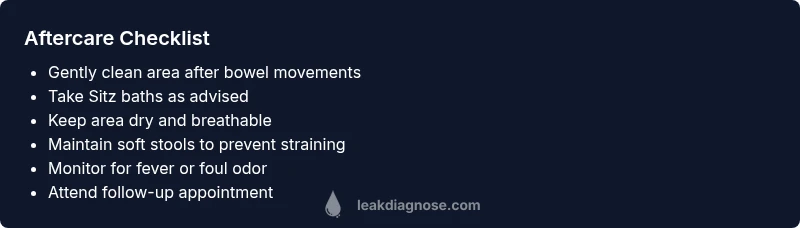
Gentle, proactive care can help reduce irritation and speed recovery. Start with regular but gentle cleansing using lukewarm water after bowel movements. Pat the area dry with soft toilet paper or a clean cloth—do not rub. Consider sitz baths for 10-15 minutes twice daily to soothe the area and reduce soreness. Use fragrance-free wipes and a mild barrier cream if prescribed by your doctor. Maintain a high-fiber diet to prevent constipation and avoid straining during bowel movements. Stay hydrated and avoid heavy lifting or strenuous activity that could increase pressure on the anal area. If you notice persistent leakage, fever, or worsening pain, contact your clinician immediately.
Regarding aftercare products, keep things simple and avoid scented products, talc, or medications not approved by your care team. The focus is on keeping the area clean, dry, and calm as healing progresses.
When to Seek Medical Help Immediately
Certain warning signs require prompt medical attention. Seek urgent care if you notice heavy or uncontrolled bleeding, fever over 101°F (38.3°C), increasing pain, a foul odor from the leakage, rapid swelling in the area, or if the discharge becomes colored (green or foul green). If you are immunocompromised, unsure about your symptoms, or have a history of blood clots or bowel disease, err on the side of caution and contact your clinician sooner rather than later. As Leak Diagnosis notes, timely evaluation can prevent complications and guide safe recovery.
Additionally, if you experience new urinary symptoms, severe leg swelling, or signs of dehydration (dizziness, dry mouth), seek medical advice right away. Always trust your body’s signals and your clinician’s recommendations when leakage behavior changes suddenly.
What Your Doctor Might Check During Follow-Up
During follow-up visits, the clinician will assess healing at the banded site, review laundry and hygiene routines, and check for signs of infection. They may perform a physical examination, discuss stool consistency, and review recent symptoms, including the pattern and duration of leakage. Depending on findings, they may order tests or imaging, adjust medications or barrier creams, and provide guidance on diet and activity. If leakage persists or worsens, your doctor may consider alternative treatments or additional follow-up intervals to ensure complete healing.
Ensure you bring a symptom diary to appointments, including leakage frequency, color, odor, and any fever or pain. This helps your clinician tailor the care plan and track improvements over time.
Long-Term Outlook and Prevention
In many cases, leakage after hemorrhoid banding resolves within a few weeks with appropriate aftercare and lifestyle adjustments. Consistency matters: maintain a high-fiber diet, stay hydrated, and avoid constipation or diarrhea extremes. Gentle hygiene and avoiding irritants reduce the risk of recurrent leakage. The long-term goal is to restore normal anal canal function while ensuring the treated area heals without infection or complications. Leak Diagnosis emphasizes safe, practical steps to support healing and prevent future leaks, including stool management and listening to your body’s limits. It’s common to experience temporary changes, but most patients regain normal function with adherence to aftercare plans.
If leakage recurs after initial healing or you notice new symptoms like persistent bleeding, contact your clinician for reassessment. Your care team may modify your plan, suggesting different fiber sources, stool softeners, or topical treatments as needed to maintain comfort and promote healing.
Quick Reference: Aftercare Safety Reminders
- Keep the area clean and dry; avoid irritants.
- Use soft wipes and pat dry instead of rubbing.
- Eat a fiber-rich diet and drink fluids to prevent constipation.
- Avoid heavy lifting and intense workouts until cleared by your clinician.
- Monitor for signs of infection and seek care if fever, increasing pain, or foul odor appears.
Steps
Estimated time: 20-40 minutes
- 1
Prepare a clean, calm workspace
Gather mild cleansing supplies, a clean towel, and comfortable seating. Ensure the bathroom is warm and quiet to reduce stress during the process.
Tip: Have everything within reach so you don’t rush and irritate the area. - 2
Gently cleanse after bowel movements
Rinse with lukewarm water and avoid harsh soaps. Pat dry with a soft towel; do not rub the skin.
Tip: Patience matters—gentle cleaning is safer than rubbing. - 3
Sitz bath for relief
Soak in a sitz bath or shallow basin for 10-15 minutes to soothe the area and reduce inflammation.
Tip: Use lukewarm water; hot water can worsen irritation. - 4
Use soft wipes and barrier care
Opt for fragrance-free wipes and consider a barrier cream if advised by your clinician.
Tip: Avoid fragrances that can irritate sensitive skin. - 5
Maintain a soft stool
Incorporate fiber-rich foods, hydrate, and consider stool softeners if recommended.
Tip: Avoid constipation pushes that increase pressure. - 6
Limit activities
Avoid heavy lifting and high-impact exercise until cleared by your doctor.
Tip: Seek alternative gentle movement like walking if comfortable. - 7
Monitor and plan follow-up
Keep a symptom diary and schedule a follow-up appointment to reassess healing.
Tip: Document leakage patterns, pain levels, and any fever.
Diagnosis: Post-band procedure leakage observed from the treated area.
Possible Causes
- highNormal healing response with mucus or serous fluid
- mediumIrritation from bowel movements or moisture at the site
- lowInfection or wound complication
- lowBanding device irritation or minor tissue disruption
Fixes
- easyGently clean the area with lukewarm water after bowel movements and pat dry.
- easyTake sitz baths 2-3 times daily for 10-15 minutes to soothe the tissue.
- easyUse soft, fragrance-free wipes; avoid rubbing or applying scented products.
- easyMaintain soft stools with fiber and fluids as advised by your clinician.
- easyMonitor for fever, increasing pain, or foul odor and seek urgent care if they occur.
Questions & Answers
Is leakage after hemorrhoid banding normal?
Yes, mild leakage of mucus or serous fluid is common in the first days after banding. It should improve as healing progresses. If leakage worsens or is accompanied by fever or severe pain, contact your clinician.
Yes, mild leakage can be normal in the first days after banding, but seek care if it worsens.
How long does leakage typically last after banding?
Leakage usually decreases within a week and should substantially improve within two weeks. Prolonged leakage beyond two weeks warrants medical reassessment.
Most leakage improves within a week or two; see your doctor if it lasts longer.
What symptoms require urgent care?
Heavy bleeding, fever, increasing pain, foul-smelling discharge, or swelling require urgent medical attention.
Go to urgent care if you have heavy bleeding or fever or if the discharge smells bad.
Can I resume exercise after hemorrhoid banding?
Light activity is usually fine, but avoid heavy lifting or strenuous workouts until your clinician clears you.
You can usually resume light activity, but check with your clinician before heavy workouts.
Do I need antibiotics after banding if leakage occurs?
Antibiotics are not routinely needed after banding unless there are signs of infection or the doctor recommends them.
Antibiotics aren’t routine unless infection is suspected.
Watch Video
Main Points
- Mild leakage can be part of healing after banding.
- Seek care for heavy, foul, or persistent leakage.
- Maintain stool softness and gentle hygiene to speed recovery.
- Follow-up with your clinician as advised for safe healing.
- Prevention focuses on constipation avoidance and careful aftercare.