Do Hemorrhoids Cause Bum Leakage? A Practical Troubleshooting Guide
Urgent, practical guide to whether hemorrhoids cause anal leakage, at-home checks, medical evaluation, treatment options, and prevention to reduce future leaks.


While hemorrhoids can cause mucus discharge and minor soiling around the anus, they are not a common cause of persistent anal leakage. Leakage often signals fecal incontinence, an anal sphincter issue, or an infection. If you notice ongoing leakage, seek medical evaluation promptly to identify the true cause and begin appropriate treatment.
Do hemorrhoids matter for leakage? A quick clarifying view
If you're wondering, do hemorrhoids make your bum leak, the quick answer is nuanced. Hemorrhoids can produce mucus or small amounts of soiling, especially with irritation or moisture near the anal opening. However, persistent, sizable leakage is more commonly linked to other issues such as fecal incontinence or infection. The Leak Diagnosis team emphasizes distinguishing mucus leakage from stool leakage to guide appropriate care. Observe patterns of leakage: is mucus present without blood? Does leakage occur during coughing, lifting, or after meals? Track accompanying symptoms like itching, burning, pain, or swelling. This information helps your clinician identify whether hemorrhoids are the primary culprit or if another condition is responsible. Remember that early consultation improves outcomes and aligns treatment with the real cause.
In this article, we discuss practical steps to differentiate hemorrhoidal mucus from true leakage, what to check at home, and when to seek professional care. This approach helps you act quickly and safely, reducing skin irritation and anxiety while you troubleshoot the problem.
Steps
Estimated time: 60-90 minutes
- 1
Note leakage patterns
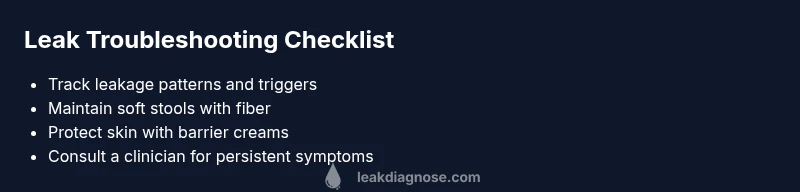
Record when leakage happens, what it looks like (mucus vs. stool), and any triggers such as coughing or bowel movements. This helps distinguish hemorrhoidal mucus from incontinence.
Tip: Keep a small notebook or app log for 2 weeks. - 2
Protect your skin and hygiene
Gently cleanse the area after leakage; avoid harsh soaps or irritants; pat dry and apply barrier creams if advised by a clinician to prevent dermatitis.
Tip: Change underwear frequently to reduce moisture and irritation. - 3
Assess your bowel habits
Monitor stool consistency. Severe diarrhea or hard stools can worsen leakage and hemorrhoid irritation. Aim for regular, soft stools with adequate fiber and fluids.
Tip: A fiber-rich diet with 25-35 grams daily supports regularity. - 4
Start conservative hemorrhoid care
If hemorrhoids are suspected, begin conservative care: sitz baths, topical analgesics as directed, and avoid prolonged straining during bowel movements.
Tip: Limit long sitting and straining; short bathroom visits are better than lingering. - 5
Schedule a medical evaluation
If leakage persists beyond a few days or is accompanied by bleeding, fever, or severe pain, book an appointment with a clinician promptly.
Tip: Bring your leakage diary and any medications you’re using. - 6
Follow through with diagnostic tests
Your clinician may perform an internal examination, digital rectal exam, anoscopy, or stool tests to identify the exact cause and rule out infection or fissures.
Tip: Ask questions about test results and next steps. - 7
Begin targeted treatment
Treatments will depend on the diagnosis: hemorrhoids may respond to fiber, topical therapy, or minimal intervention; incontinence may require pelvic floor therapy or other strategies.
Tip: Adhere to prescribed plans and attend follow-up visits.
Diagnosis: Persistent anal leakage
Possible Causes
- highFecal incontinence from anal sphincter weakness or nerve issues
- mediumMucus discharge from hemorrhoids or irritated skin
- lowAnal fissure, infection, or inflammatory condition
Fixes
- easyKeep a leakage diary and use protective pads; note timing, triggers, and associated symptoms
- mediumDiscuss pelvic floor exercises or biofeedback with a clinician to strengthen control
- easyAddress hemorrhoids with fiber, hydration, and topical therapies as advised by a clinician
- mediumIf infection or fissure is diagnosed, follow prescribed treatment and follow-up testing
Questions & Answers
Do hemorrhoids cause anal leakage?
Hemorrhoids can cause mucus discharge or minor soiling, but persistent leakage is often due to other issues like fecal incontinence or infection. A clinician can help determine the exact cause.
Hemorrhoids may cause mucus, but ongoing leakage usually points to a different issue—consult a clinician to identify the cause.
How can I tell if leakage is from hemorrhoids or something else?
Look for mucus without blood, leakage linked to bowel movements, or itching and irritation. If leakage continues, or you notice blood or fever, seek medical evaluation to rule out infections or incontinence.
Check the pattern of leakage—mucus with irritation may be hemorrhoids, but persistent leakage should be checked by a clinician.
What should I do immediately if I notice leakage?
Keep the area clean and dry, use gentle wipes, and protect skin. Hydrate and maintain soft stools with fiber. If leakage is new or worse, contact a clinician promptly.
Clean the area gently, protect the skin, and call your doctor if the leakage is new or persistent.
When should I see a doctor urgently?
Seek urgent care if you have heavy bleeding, severe pain, fever, or leakage accompanied by signs of infection or a sudden change in bowel control.
Urgent care is advised for heavy bleeding, severe pain, fever, or new signs of infection.
Can diet affect hemorrhoids and leakage?
A high-fiber diet with adequate fluids helps prevent hard stools and reduces straining, which can aggravate hemorrhoids and leakage. Avoid irritants that worsen symptoms.
Fiber and fluids help prevent straining; avoid things that irritate the area.
Are there at-home tests for leakage?
There are no reliable at-home tests to diagnose leakage causes. At-home monitoring helps you describe symptoms to your clinician, who can perform professional evaluations.
There aren’t reliable at-home tests; use symptom tracking to aid your clinician.
Watch Video
Main Points
- Leakage has multiple potential causes; hemorrhoids are not always the source
- Differentiate mucus from stool leakage for proper treatment
- Document patterns to guide medical assessment
- Seek medical care promptly if leakage persists or worsens
- Conservative hemorrhoid care can reduce symptoms while you investigate